What the picture shows
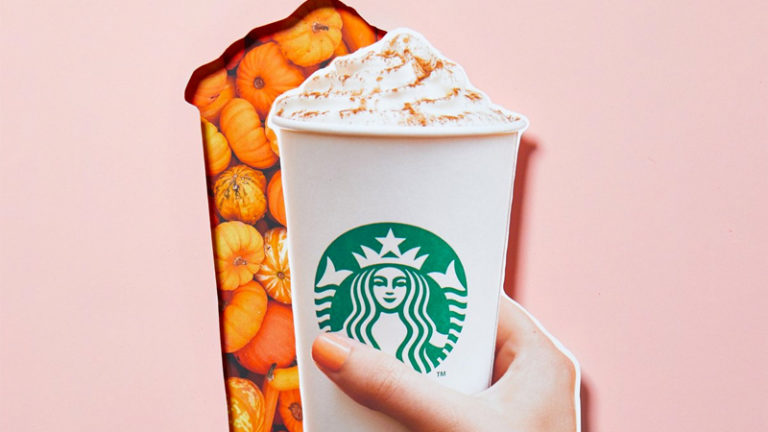
A hand with orange nail polish holds a white paper cup with the green Starbucks logo: a mermaid inside a circle. Above rises a cap of whipped cream sprinkled with brown spiced crumbs. Behind the cup, on a light pink background, is a cutout silhouette with a photo of many orange pumpkins of different shapes.
The frame looks like a stylized advertising photo, neat and warm in color. That is exactly why it is easy to mock: the serious, almost glossy presentation sits poorly with the everyday wish to drink a coffee.
What the drink is
Pumpkin Spice Latte, in Russian “пряный тыквенный латте,” is a seasonal drink from the Starbucks chain. According to the company itself, it first appeared on the menu in autumn 2003. It is espresso with milk, a syrup with the flavor of pumpkin pie, whipped cream, and spices such as cinnamon and nutmeg. It is usually sold during the autumn period, and in the US traditionally from late summer.
For many customers the drink’s return to the menu has become the unofficial start of autumn. In English it even got the abbreviation PSL, and every year a ritual grows around it: photos of the cup, discussions, and ironic declarations that “the season is open.”
Where the jokes about ‘Typical Girls’ come from
The drink has long been associated with the image of the so-called “basic” girl, a stereotype of a person who follows mass trends: fashionable boots, autumn sweaters, a latte with a seasonal flavor. This is a joke about a stereotype, not an accurate description of real people, and the debate over how fair it is has gone on for a long time.
The exact date this template appeared and its author have not been established. The claim that the meme arose in a specific year is unconfirmed, so it is better to say only that it became a seasonal phenomenon and returns every autumn along with the drink.
How the joke works
The main device is self-irony. People who really love such a latte usually enjoy teasing themselves: the admission “yes, that’s me” lands more gently than mockery of others. The picture serves as a shared sign, understood without words.
A second line of humor concerns marketing: a seasonal product creates a sense of event, although it is simply a drink with a new syrup. But it is worth pointing this out carefully, so as not to turn the joke into a reproach aimed at particular customers.
Caption examples
“September 1st. The calendar says autumn. Me: finally.” The season as a personal holiday.
“I don’t buy it, I’m just keeping up the tradition.” An excuse for one’s weakness that fools no one.
“It’s twenty-five degrees and I’m already in a scarf with a cup.” Autumn starts before it actually arrives.
“Barista, when I come in for the third time this week.” A recognizable everyday situation: a habit grows into a ritual.
How to use the picture
The picture works best in autumn: it signals that the season has begun and offers a reason for self-irony. A caption can be built on contrast, where one action promises coziness while the real outcome is quite different.
Do not aim the joke at any group of people or at anyone’s appearance: it is safer to poke fun at yourself and at common habits, such as choosing between tea, coffee and a warm blanket.