The song and its artist
"Patimeyker" is a track by the Rostov-based performer Pika, released in 2016. The exact release date and details of the studio work are not known. The track is built on a simple, easy-to-pick-up tune that sticks after a single listen and quickly spread across social media.
The title apparently derives from the English "party maker." That's how Russian slang came to refer to someone who sets the mood for a group, is the first to start dancing, and gets everyone else involved. The word caught on in slang primarily thanks to the song, and its tune made it recognizable even to people who don't listen to rap.
The dance and the music video
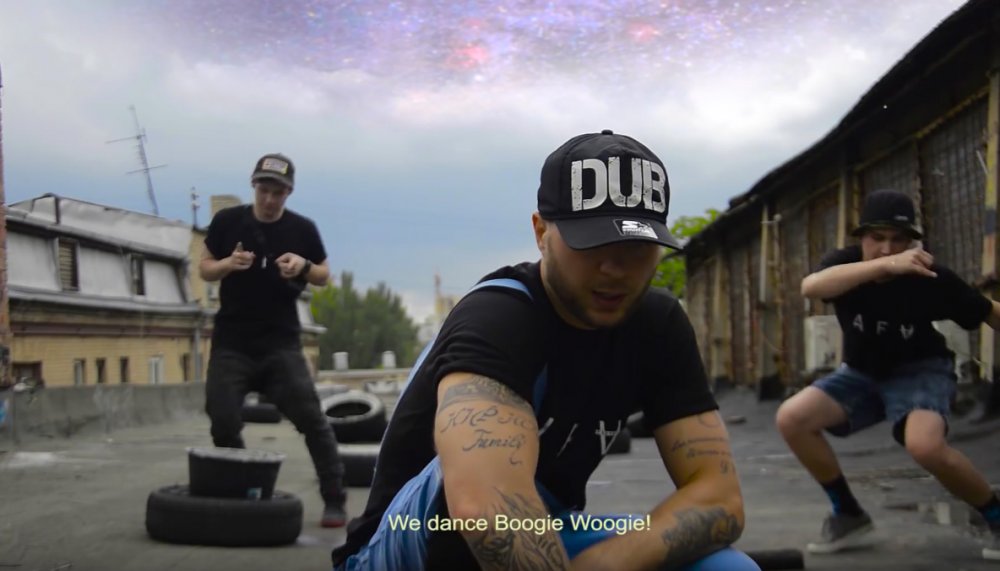
The shot used to illustrate this article was filmed on a rooftop among tires and old structures. In the video a group of dancers repeats a set of distinctive moves, while the line "We dance Boogie Woogie!" appears as a subtitle. A figure in a cap in the foreground strikes an energetic pose that became recognizable for the scene and works well as a caption under photos of people getting something going.
As the visual basis of the meme, the video works on contrast: an unpolished urban setting paired with a cheerful, almost naive dance. It's exactly this energy that carries over into memes, where the image of the dancer is used as a sign of collective excitement and readiness to have fun, regardless of whether the viewer knows the original song.
How the word became slang
In the Russian-speaking internet, the word "patimeyker" quickly became a jokey label. It's used in messages, in captions under party photos, in comments under party videos. The usage is usually ironic or approving: it's what people call friends who organize get-togethers and those who know how to lift the mood at a gathering.
The word also became a marker of its era: many people who remember 2016 associate it with that specific tune. The exact rate of its spread and the number of mentions in open sources haven't been verified, so claims about its scale can only be made in general terms, based on how firmly the word has stuck in everyday speech.
Why the meme endures
The meme has staying power because it combines a catchy sound, simple vocabulary, and a clear meaning. Users easily pick up the tune and the word, and the image of "the person who gets the crowd going" is universal. That's why the joke can be applied to any situation where someone livens up an evening, whether it's a school dance or an office party.
This is a path typical of many song-based memes from the Russian-speaking internet: first the track spreads across networks, then the phrase moves into everyday speech, and the artist becomes known through a recognizable tune. The word's meaning may shift over time, but at its core it still carries the energy of a party and the readiness to lift a crowd's spirits.
In everyday use, the word is dropped into all kinds of captions. Examples invented for illustration: "Our patimeyker brought the speaker again" under a group photo, or "No patimeyker, no real evening" in a chat before a get-together. The word is light, approving, and needs no explanation, so it suits friendly jokes well.