What's in the picture
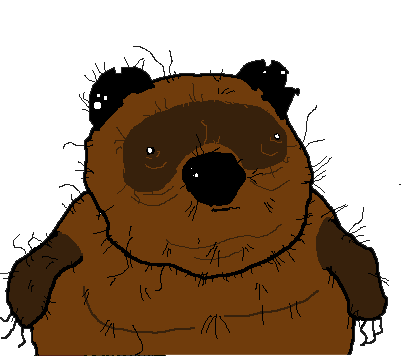
At the center of the series' most recognizable frame stands Vonni, drawn with careless, almost trembling lines. He's a brown bear cub with a shaggy fur outline, dark circles under his eyes, and a dull, absent stare. His distinctive muzzle with a black nose still resembles the original character, but the facial expression and drawing style make him unsettling and unpleasant.
Alongside him, Potachok and other characters from children's books appear in the comics, which the creators transplant into black-and-white rural, industrial, or post-apocalyptic settings. The characters look exhausted, and the storylines are short, like a caption in a photo album: a few lines of dialogue, a punchline, and no moral.
The series' main visual device is the contrast between characters familiar from a Soviet childhood and a grim setting. It's precisely this contrast that makes the characters recognizable while also creating an uncomfortable sense of displacement.
Origin
The prototype was a Finnish comic featuring Disney characters that was published on the Finnish imageboard Kuvalauta. There, Donald Duck was called Uncle Dolan, and everyday situations were turned into grim puns. It was precisely this version that became the basis for all the subsequent adaptations.
In August 2011 the comic appeared on 4chan, then spread to other English-language boards and made its way to the Russian internet. Users of the imageboard 2ch adapted it and created a version about Winnie the Pooh. The characters got Russian names: Vonni, Potachok, Ai, Korlik, and Svoa. The author of the Russian version hasn't been reliably established, so its origin remains unknown.
The Russian-language adaptation quickly spawned copies. The popular community "Vonni and Dolan" gathered around 60,000 subscribers but was shut down in October 2012. After the peak, interest declined, though the comic periodically resurfaces in feeds in the form of new drawings and reinterpretations.
The language device
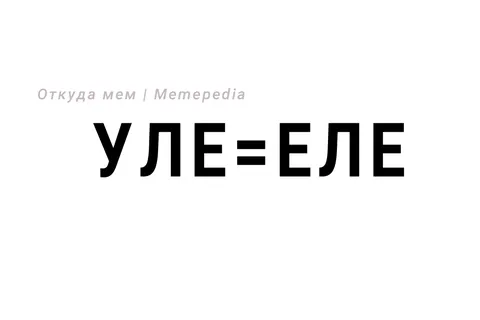
The series' main distinguishing feature is its language. The text is built on letter swaps and the dropping of some vowels, so that words have to be deciphered on the fly. There are no strict rules: what matters is that the phrase stays readable, so the distortions were chosen intuitively and differed from comic to comic.
The most famous line, roughly "Are you high?" rendered with letters dropped, became a hint at a question about drugs. It's a telling example of how the series hides its meaning: a reader who understands the phrase gets the key to the whole joke, while someone who doesn't stays at the level of a children's picture. The abbreviation "zbs" (roughly, "great"/"awesome"), born in this milieu, later became widespread in ordinary online chat as well.
The language game created an effect of secret knowledge. The reader had to piece the meaning together themselves, and this brought the audience closer together: decoding became a shared activity rather than simple reading.
Content and themes
Most of the storylines boil down to the theme of drugs. The characters are either taking something or suffering the consequences, and everyday scenes from a village or an abandoned factory turn into pictures of decay. The comics don't preach a moral and don't openly condemn the characters: they simply record a state of being, and this coldness is what makes them memorable.
The series' tone combines absurdity and gloom. Familiar lines from children's books sound as if they were spoken with a hangover, and plot twists are delivered without explanation. That's why the comic reads easily both as a parody of children's literature and as a sketch of the hard life of young people.
The meme sparks debate: some see it as a crude joke, others as satirical commentary on post-Soviet daily life. What all these readings share is this: the series' power lies in the contrast between the innocent image and the dark content.
Why the meme lives on
Vonni and Potachok went through several waves of popularity because it rests on a simple device: a familiar character plus an unexpected context. This formula is easy to reproduce, which is why new comics, parodies, and drawings in the same style kept appearing.
The environment it spread through also played an important role. Early copies circulated on imageboards and topical communities, where humor was built on irony and in-group jokes. This shaped a recognizable folklore that still resonates with those who remember that era of the internet.
Finally, the meme became part of the language. Expressions from the series and its abbreviations made their way into everyday chat, and the character itself remains a symbol of how a children's image can be reimagined beyond recognition.