Original source: the Safely Endangered series
On July 5, 2013, artist Chris McCoy posted a four-panel comic on his Tumblr page as part of his author series Safely Endangered. The series features simple colored figures, animals and recognizable cartoon characters who fall into absurd everyday situations.
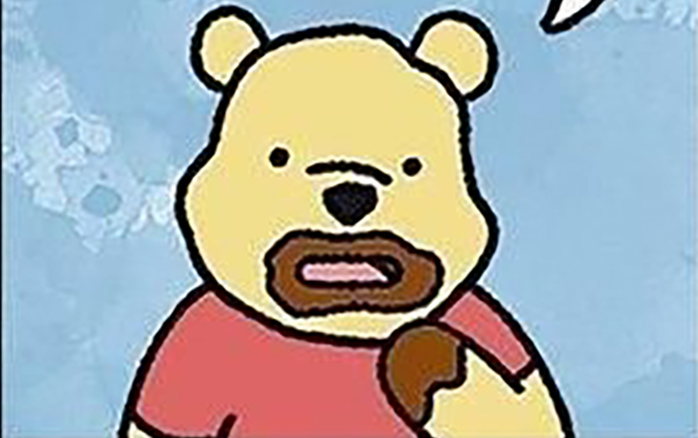
In the original, Winnie the Pooh sits with a little pot and eats its contents with obvious enjoyment. In the second panel Tigger grabs his head in horror and shouts that it isn't honey but the ashes of his late father. In the last panel a smeared Pooh calmly says his signature “oh, bother” (in Russian, “ai, nezadacha”), a short line that makes the comic's dark humor work as absurdist comedy rather than tragedy.
From viral picture to meme
The comic quickly brought McCoy fame well beyond his regular audience, as the image spread through reposts across various platforms. It acquired actual meme status, meaning a template with a swappable final line, later, around 2015, when users began massively remaking Pooh's last line for different situations while keeping the first panels unchanged as the setup.
Reinterpretation on the Runet
In the Russian-speaking internet the story was simplified and slightly changed. The canonical version became one where Tigger directly warns Pooh that he is eating feces, yet Winnie calmly keeps on eating. The emphasis shifted from the original's dark humor to the homegrown format of a “template with a swapped caption,” where the bear's final line, which carries the main joke, gets replaced.
It is exactly this property, a minimal and easily swapped text element over a recognizable image, that made the comic a handy tool for mocking other people's tastes and preferences in all kinds of areas: music, film, food, hobbies.
Meaning and mechanics of the joke
The Pooh meme became a visual metaphor for talking about “govnoyedstvo” (“shit-eating”), an ironic label for people who knowingly consume or use things considered low quality but do so with clear enjoyment and feel no shame about their choice. In this scheme Tigger acts as the voice of public opinion or common sense, and Pooh is the “shit-eater” who ignores the warning.
This structure, a warning followed by a deliberate ignoring of it, turned out to be universal and easy to transfer to any topic where someone openly admits to controversial preferences.
Typical captions and ways to use it
On the Runet the picture is usually captioned with Tigger's line delivered neutrally (“this is trash, why are you listening to it”), while Pooh's answer is adapted to the situation, something along the lines of “but it's mine,” keeping the same tone of indifference to others' opinions.
There are also versions that change both lines: Tigger names a specific annoying subject of dispute (a TV series, a music genre, fast food), and Pooh, with his characteristic calm, confirms he knows about it and keeps enjoying it anyway. A gallery of the meme on themed sites counts several dozen such variations, which confirms the format's staying power as a universal template for a joke about incorrigible fans of “bad” things.