What is drawn
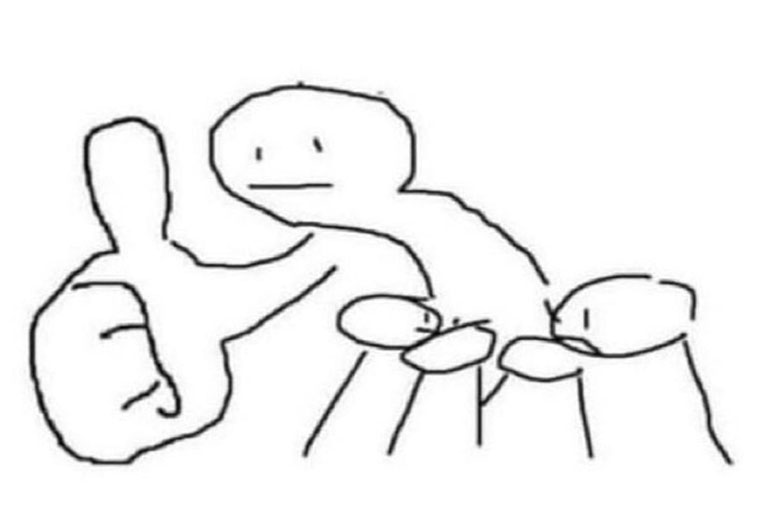
The picture is done in black outline on a white background, as if drawn with a mouse in a simple editor. On the left is a giant hand with a raised thumb; beside it is a round head with dot eyes and a straight line for a mouth. Below, two small figures stand facing each other and, apparently, are talking.
The figures are drawn deliberately crudely, without volume or shading. This is not a mistake but part of the style: the simpler the line, the stronger the contrast between the naive drawing and the cold politeness of the main character.
Two versions of one drawing
According to a meme encyclopedia, the original comic was drawn by Brazilian artist Caio Slikta, known as Furfles, and it appeared no later than November 2010. In it, a group discussed something with enthusiasm while a person outside criticized it and was met with a silent thumbs-up and ignored. In that period the joke circulated mostly in Portuguese- and Spanish-speaking communities.
The version in the picture is a later rough redraw with a giant thumb. According to the same encyclopedia, it was posted on Twitter on 19 July 2021, and the next day it was already being used as a reaction. The original source of the comic is unknown.
The English name “Giant Thumb Guy” describes the picture literally, while the name “I Do Not Like That Thing” refers to captions in which a critic voices displeasure. Neither name belongs to the artist of the drawing.
How the joke works
A thumbs-up usually means approval. Here it means something else: “you spoke, I nodded, now let’s move on.” Politeness becomes a way to close the discussion without entering an argument.
The exaggerated size of the thumb turns the gesture into a weapon of passive refusal. The hero’s face stays perfectly calm, and everything rests on that contrast: the more noise around, the more indifferent the thumb.
Caption examples
Over the arguing figures you can write “Fans of the game discussing the long-awaited update”, and over the thumb “The person who didn’t like the interface”. The joke shows that the criticism has been heard, but the group is not going to change course.
“Me when someone says hot tea should be left to cool before drinking.” A small conflict about habits is resolved with a polite reaction.
“Boss: ‘Let’s do it the old way.’ Team: discussing the new system.” The thumb plays the boss, formally supported and then ignored.
“A colleague on how I arrange my documents.” The caption turns an everyday remark into a theater of the absurd.
One more important feature: the character has neither anger nor mockery. If he frowned or smirked, the joke would turn into an argument. Here there is only polite indifference, and because of it the caption sounds quieter and the reply more hurtful than any words. That is why the template is so popular under discussions where each side is sure it is right.
Tips
The template suits disputes over taste, empty remarks and unsolicited advice. Caption the thumb as the critic and the rest as a group that carries on with its work; otherwise the meaning blurs.
Don’t apply the picture to real people when a serious request or pain is involved. The meme is good for light dismissal of minor criticism, not for brushing off other people’s problems.