General information
Vladimir Putin is one of the most frequent subjects of Russian-language internet memes. Images featuring him began spreading en masse in the 2000s, as blogs, forums, and imageboards developed rapidly in Russia. According to the catalog, over the years of his rule Putin has not generated a large number of original memes, but remains the country's most memed political figure: most of the material was created not by him or his entourage, but by internet users.
The term "memes" here covers various formats: photozhabas, jokes, caricatures, captions on news footage, and short videos. What unites them is reliance on a recognizable public image, rather than on a single event that is quickly forgotten.
Origin of the photozhaba genre
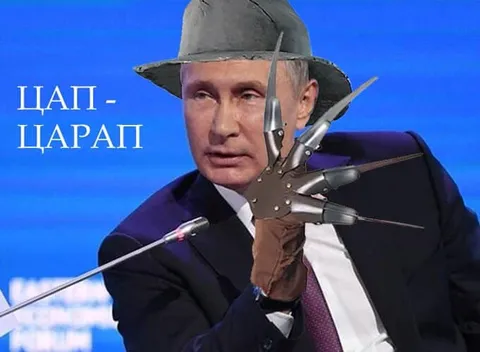
A photozhaba is a Russian take on the photoshopped joke. The name comes from the word "photoshop," which in the mid-2000s was used colloquially to mean any editing of images. According to reference materials, the term first appeared in August 2004 in a blog on LiveJournal, used by a blogger under the handle usachev. The technique itself is older than the term: in the late 1990s and early 2000s, forum users played "Photoshop tennis," in which several participants took turns altering the same image.
It was in this environment that the tradition of reworking photographs of politicians took shape. Pictures of public figures are accessible, easy to recognize, and storylines involving them are routinely played with in satire. That is why many photozhabas featuring Putin appeared on the wave of growing blogs and online discussion, rather than as isolated events. It was not possible to establish the specific first image that started this genre.
Main types of material
The most notable group consists of photographs that have been altered: new captions, inserted objects, or combinations with other frames or characters. Such works often keep the composition of the original and change only the meaning of the caption. Some materials imitate posters, magazine covers, or film stills.
The second group is drawn caricatures and text-based jokes. They spread on the same social networks but last longer because they are easy to forward and retell. The third group is stylized images created by algorithms. An example is the "spaghetti face," which the catalog links to a portrait of Putin; more on this genre is covered in its own entry.
Spread and use
Memes about Putin first spread through blogs and forums, then through social networks and messaging apps. Users post them as comments on news stories, in replies to posts, and in compilations. In this context, a meme often functions as a short remark in a discussion: it does not explain a position but immediately sets the tone of the conversation.
The legal status of such material differs from country to country. In 2025, according to media reports, a court in Omsk banned the distribution of a number of memes comparing Putin to Hitler. That ruling concerns a specific kind of image, not the entire genre. In this encyclopedia, such material is described neutrally, without judging its content.
A note on the illustration
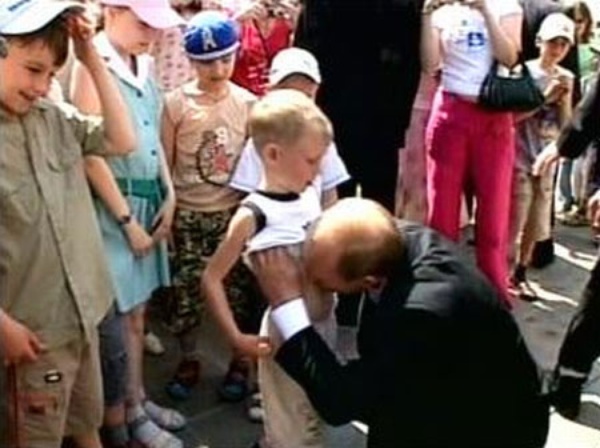
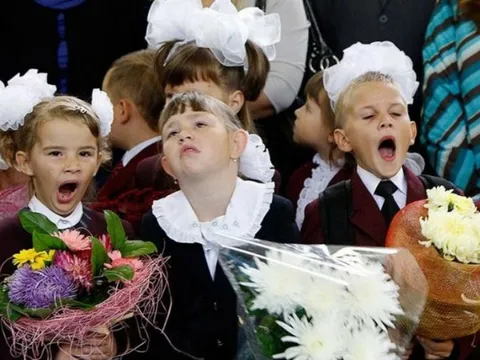
The article's illustration is a single photograph, not a collage of photozhabas. It shows a man in a dark suit leaning down toward a small boy among a group of children. The frame matches the genre's theme: official events involving public figures often become the basis for reworkings. However, the photograph itself does not show any specific photozhaba.
It cannot be confirmed from the frame alone that it depicts Putin specifically: there is no caption or other identifying marker in the photo.