What's in the picture
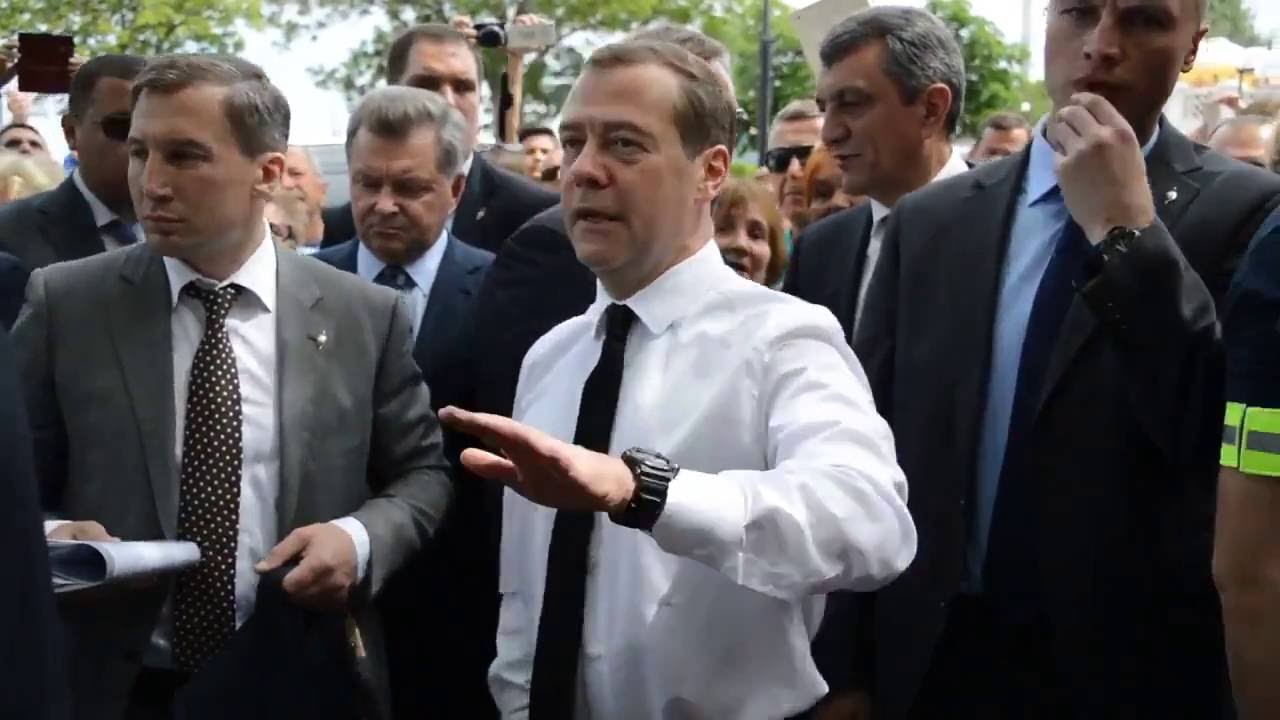
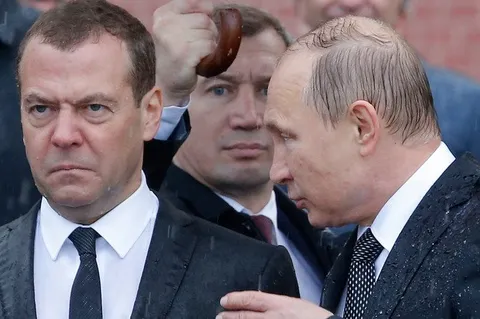
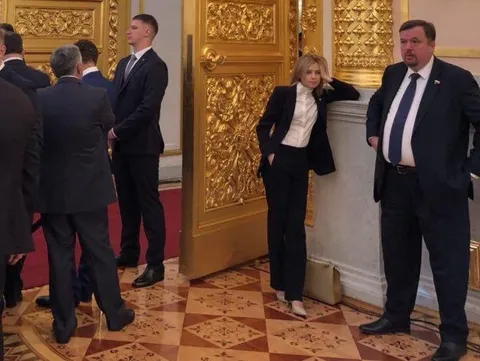
The photo shows Dmitry Medvedev during a public outing: he's wearing a white shirt and black tie, standing amid a dense crowd of people and officials in business suits. He's looking off to the side, his hand spread palm-down, and judging by the gesture he's explaining something or answering a question. Security guards and people with cameras are visible around him, which creates the impression of an official event.
The shot is used as an illustration of the phrase rather than as a record of a specific meeting. The gesture and facial expression create the impression of someone explaining something, which fits the format of the joke well. The photo conveys a scene of public interaction in which an official answers questions, so the shot works well as a visual symbol of the standard non-answer.
Origin and history
The phrase was said in May 2016. Speaking to pensioners in Crimea, Medvedev said that there was no money right now, but that pensions would be indexed once funds were found, and he wished his listeners well and told them to hang in there. The words quickly spread online and in the media as an example of a standard answer to any question.
In December 2016, Yandex put the phrase in second place on its list of the year's most popular memes. But interest faded quickly: according to Google Trends, search demand had dropped roughly tenfold by the end of summer and had nearly disappeared by the end of the year.
Medvedev himself returned to the topic: in December 2016 he answered journalists with the phrase "There IS money!", and in January 2017 he brought up "Karl," referencing another meme. These callbacks added a second layer of irony to the story.
How it's used
In jokes, the phrase is used as an ironic response to any kind of hardship: rising prices, long lines, budget cuts, or everyday inconveniences. The structure of the caption is simple: first the lack of something is acknowledged, then comes a call to endure it.
The meme often accompanies pictures of lines, empty wallets, and everyday problems. Sometimes it's reworked by changing the first part of the phrase while keeping the second, consoling part intact. The phrase has also shown up in comments on news about tariffs and taxes, where it was used as an ironic summary. That's how the meme became established as a universal line.
Why the meme works
The phrase is convenient because it sounds both mundane and absurd at once: an admission that there's no money is paired with a request to hang in there, and that contrast is instantly recognizable. That's exactly why it became a universal label for any situation where promises don't match reality.
The meme also shows how a political statement can outlive its original context. Viewers remembered the form rather than the specific occasion, so the phrase gets applied to everyday irony with no tie to Crimea or to pensions.
It matters that jokes about the authorities target the public statement, not the person. The meme captures a single verbal formula that anyone can connect to their own experience with official non-answers, which is why it stays understandable in everyday speech too. It's worth noting that the meme describes the shape of the answer, not an opinion on any specific policy, which is why it's used equally by very different audiences for irony.