The meeting and the detention
On December 11, 2018, the Council for Human Rights under the President discussed, among other things, the arrest of human rights activist Lev Ponomarev for calls to take part in an unauthorized rally. He was given administrative detention of several dozen days, and the term was later cut to sixteen. These dates are confirmed by Russian publications of the time.
During the conversation the talk turned to France, where the “yellow vest” protests were taking place: according to media reports, cars were burned and paving stones torn up on the streets of Paris at the time. The president cited this picture as an argument for caution. As outlets reported, he also promised to ask the Prosecutor General to look into the case.
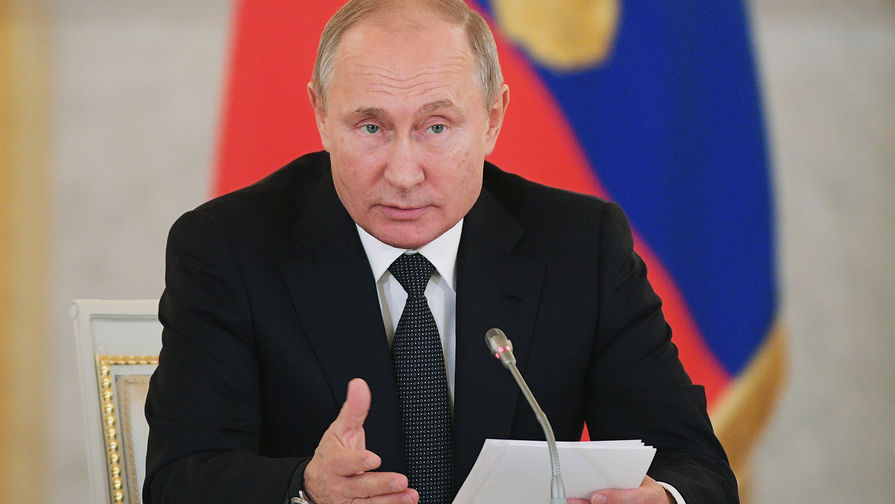
What is visible in the photo
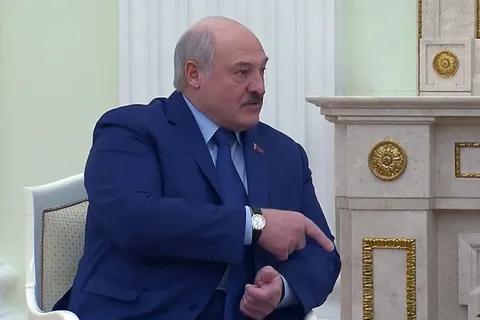
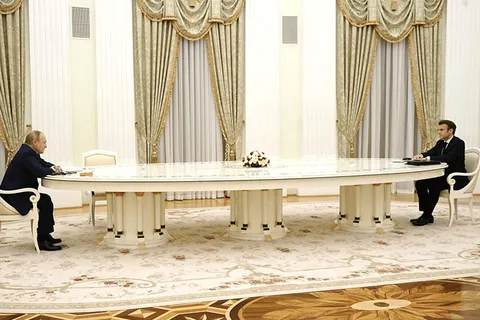
The photo was taken in an official setting. A man in a dark suit, white shirt, and dark tie with a small pattern sits at a table; sheets of paper lie in front of him, and to the right stands a microphone on a thin stand. His right hand is raised and pointed forward, as if he is explaining something. Behind him one can see the red and blue panels of a flag and the golden trim of the interior.
The frame itself says nothing about specific words or a place: the photo fits any caption about official statements. The face is serious, so the contrast with an everyday caption comes out especially sharp.
The exact wording and discrepancies
Outlets reported the words differently. In some versions the line is “we do not, after all, want it to be like in Paris,” in others the speech is retold without quotation marks. The form “Do you want it to be like in Paris?” is shorter and more colloquial, and it took hold online, but it is not necessarily a verbatim quote.
For text jokes this does not matter: recognizability rests on the rhythm and on the image of the “terrifying alternative.” But when referring to the original, it is better to check the exact words against the official transcript.
How the phrase became a meme
The formula is handy because it contains a ready-made logic: “either a ban or chaos.” Any similar dilemma can be slotted into the joke, so the phrase outlived its occasion and turned into a universal hint at the argument used to cover a ban without evidence. The exact dates when it began to be captioned under photos have not been established.
The phrase works as irony on a method of argumentation, not on the person in the photo: what becomes funny is the template of the “frightening example.”
Examples of captions
“We need to ban breakfast, in case someone chokes, like in Paris.” The logic of the argument is parodied: a ban is introduced on an ordinary action, and the danger is borrowed from someone else’s example.
“Allow walking in the park, but so there is no ‘like in Paris,’ and count the benches.” The construction sounds weighty, while the object of fear turns out to be a trifle, and the gap between pathos and everyday life gives the effect.
“Do you want it to be like in Paris? No? Then let it be like Monday.” The everyday ending makes the caption short and recognizable.
“A queue at the checkout, like in Paris: one cashier for everyone, and nobody leaves.” The phrase is carried over to an ordinary situation, and the familiar argument becomes a noticeable exaggeration.
All the examples keep the rhythm of the original phrase, while the scale shifts from political to everyday.
How to use the picture
The template fits disputes where an opponent justifies categorical statements with a “frightening example”: in comments, in discussions of rules, or in chat polls. For the joke to work, the caption should be short and rest on a recognizable phrase, not on a retelling of a political news story.