The anime frame and the text
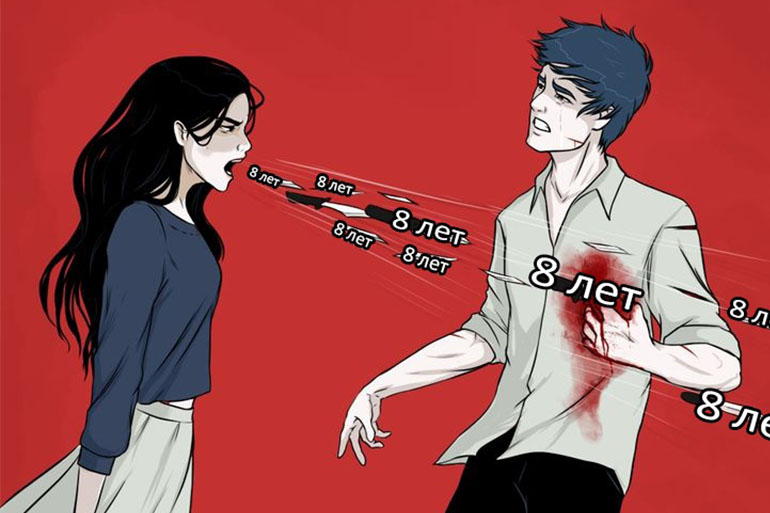
On a red background are two anime-style characters: one aims a weapon, the other sits motionless. The words "eight years" are repeated between them and over the frame. The meme turns a political accusation into a scene of interrogation or attack. The title phrase "Why were you silent for eight years?" refers to a rhetorical formula widely used after Russia's full-scale invasion of Ukraine in 2022. It alludes to the armed conflict in Donbas that began in 2014.
What the eight-year period refers to
After Russia's annexation of Crimea and the start of hostilities in eastern Ukraine in 2014, an armed conflict was fought in the Donetsk and Luhansk regions between Ukrainian forces and Russia-backed formations. The sides signed ceasefire agreements that were violated many times; the conflict claimed thousands of lives and displaced many residents. The phrase "eight years" invokes this duration, but by itself it does not explain the course of the war, the responsibility of the parties or the content of the international agreements.
How the question became a propaganda cliché
In 2022 the question was often asked in reply to protests against the full-scale invasion: the opponent was accused of supposedly not having cared about the residents of Donbas before. This rhetoric picks out part of the real history and uses it to justify a new invasion. That does not mean the suffering of Donbas residents was invented; the manipulation lies in reducing a complex conflict to an accusation against the protesters and in using suffering as an argument for war. An article should therefore separate the acknowledgment of the facts of 2014-2022 from the political conclusion the meme phrase imposes on them.
What creates the visual effect
The repeated number "eight" and the pointed weapon convey pressure: the character is not asking a neutral question but demanding an answer under threat. In memes this style is used for jokes about an endlessly repeated complaint, but the political context remains heavy. The form can be transferred to a harmless "why haven't you changed your password in eight years?", though it is best not to confuse an everyday parody with the original rhetoric. It is the combination of question, accusation and visual aggression that explains why the entry provokes different reactions.
Checking claims and respecting victims
The number of dead, the periods of fighting and the terms of ceasefires should be verified separately, not derived from a meme. Do not use the question as proof that one people or group did nothing for all eight years. It is not a neutral historical inquiry when it is used to justify a new military action. The image in the catalog does not identify the author, the source anime series or any particular politician. In an article, an accurate chronology, attribution of the rhetoric and acknowledgment of civilians' suffering matter, without turning that suffering into an instrument of accusation.
To read the formula carefully, three layers need to be kept apart. First, the chronology: since 2014 an armed conflict had been under way in Donbas, preceded by the annexation of Crimea and a political crisis. Second, the experience of people who lived through shelling, loss and forced relocation; these are real consequences, and they do not become less important because rhetoric exploits them. Third, the claim that the eight-year history automatically justifies the full-scale invasion of 2022. That is a political argument, not an established consequence.
Because of the heavy context, it is better to keep an everyday parody clearly separate from the real war. For example, "eight years" can be replaced with "eight minutes" and the scene directed at a person who has not answered a message all this time, but the formula should not be used to mock the residents of the region or those affected. When discussing the war itself, it is worth explaining who is speaking, to whom the question is addressed and for what purpose; otherwise the meme may repeat the accusation without a critical frame. The image does not give the exact title of the work and does not establish who made the edit.