The character appears
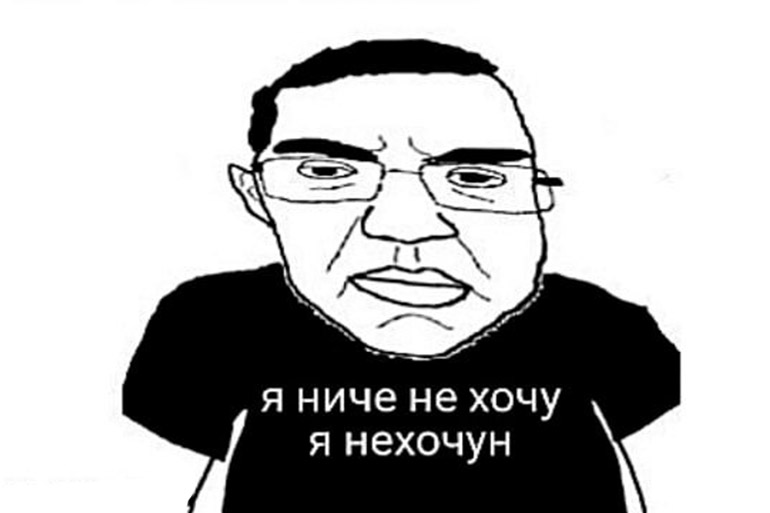
The visual foundation is a reworked internet character from the Chud/Chudjak family, usually drawn as a stern man in glasses. On the Russian internet in early 2025, he was given a shirt bearing the phrase "I don't want anything, I'm an unwanter," and short comics began to be built around refusal. Publications about the trend say it spread through communities and channels in the middle or end of January, but the exact author and first posting of this Russian version have not been reliably established.
The local version shows one character filling almost the whole frame; the text on his chest restates his position. Unlike multi-panel comics where the hero responds to several offers, this static portrait already works as a reaction. The history of the drawing shouldn't be conflated with the biography of the presumed prototype: details about who the character was drawn from aren't necessary for understanding the joke and are often retold without sufficient accuracy.
Why refusal is funny
Normally someone refuses a specific task because they're busy or don't like it. The unwanter cancels the scale of preferences itself: he wants neither pleasant nor unpleasant things and states this as a permanent identity. The clumsy word "unwanter" sounds childlike and seems to explain all possible decisions with a single diagnosis. This mix of exhaustion and absurdity is what makes him recognizable.
An identical face is especially effective in a series of panels or a stream of captions. The people around him may change plans, coax, and act surprised, but the hero maintains his expression and reply. The more tempting the offer and the firmer the refusal, the stronger the contrast. At the same time, the image can resonate not only as a joke: if someone close truly speaks about exhaustion, the meme shouldn't replace an attentive conversation.
Two new captions for 'I don't want anything, I'm a Nehochun'
"Friends: let's go for a walk, it'll be sunny and there's coffee. Me: sounds good, but I'm an unwanter"—stresses the absurdity of rejecting a whole set of pleasant arguments at once. The first part gradually makes the offer attractive, but a brief final reply cancels out the expectation. It's funny not because walking is bad but because of the character's insurmountable laziness.
"To-do list: choose a show. Me: don't want to choose; just put on something I also don't want to watch"—turns choosing what to watch from relaxation into one more chore. The caption supports the character's personality and offers a new turn rather than simply copying the shirt text. For a series, you could add friends who persuade, but one short reply is enough if the image is used in chat.
How to apply the template
The meme works for a soft refusal of an optional plan, picking a movie, ordering food, or yet another call invitation. It's especially clear to friends and family who know the sender is joking. In a work chat, it's better to add a specific reply on the subject: the image doesn't say whether someone is truly unavailable and may confuse deadline coordination.
The shirt's slogan works because it's a joke about laziness, not a diagnosis—so it's the wrong image to send someone who is actually asking for help: the line about not wanting anything can describe real exhaustion as easily as mock refusal. Kept to small, optional choices—a walk, a show, a food order—the unwanter stays a joke about the sender's own inertia rather than a judgment of someone else's obligations.