The in-game meaning of "power"
In mobile strategy games, "power" is a conventional measure of account progress. It can account for the army, buildings, technologies and other game parameters. It is not an objective measure of a person's intelligence or skill. The number "20 million" sounds impressive and suits an advertising dialogue in which a character suddenly learns of someone else's result and asks how to achieve it.
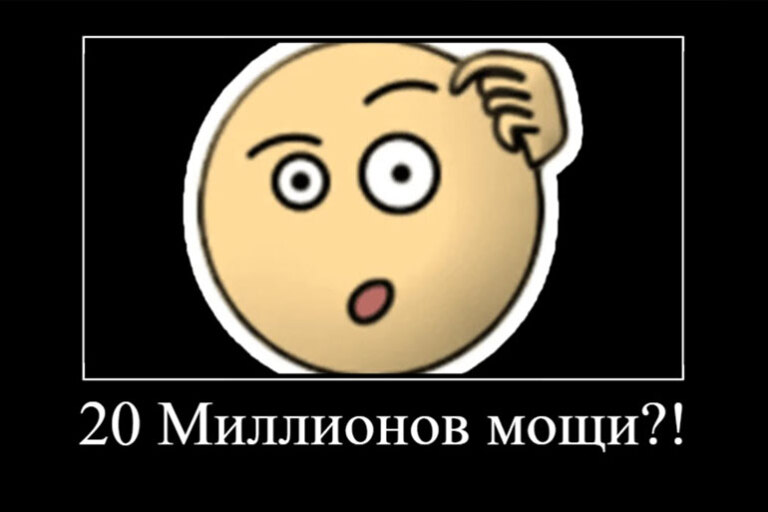
The meme is linked to a Rise of Kingdoms ad. What went viral was less the gameplay than the reaction to the huge number and the tone of surprise. The image shows a simplified cartoon hero with wide-open eyes and a phrase beneath. This is already a redrawn picture or edit, not an exact copy of the ad; the graphics should be distinguished from the original scene.
Why surprise works
The joke comes from disproportion: an ordinary figure is spoken as if it changes your whole life. Even someone who does not play the game reads the surprise and understands the scale of the exaggeration. Those who know the game's audience get a second layer: behind the stat is account development, but to an outsider the number seems arbitrary. A clear gesture and a short line keep the meme recognizable without detailed explanation of the game mechanics.
Advertising language also becomes an object of parody. Games often promise fast growth and grand achievements; the meme repeats that tone with excessive seriousness. One should not conclude from a single ad how much time or money it actually takes to reach such a stat. The comic effect rests on the impression made by the number, not on a verified calculation of a player's progress.
How to use the template
The template is applied to a figure that seems too high or overly specialized to the listener. The number can be replaced with the count of unread emails, miles driven, views of an old video or open tabs. The structure is usually a dialogue: one participant reports an impressive result, and the other answers with bewildered admiration. A third caption can push the reaction into absurdity and indicate that nobody knows how to achieve such a thing.
Examples of new captions: "You have twenty thousand notes? Will you teach me to do the same?" or "I have four hundred browser tabs open, and at this point it feels like a skill." The first is hyperbole about someone else's impressive number, the second self-irony about your own. If the phrase is used next to real news or the name of a specific player, it helps to clarify the joke: otherwise it can look like a literal statement or mockery of a person.
From ad to common language
A commercial video sometimes gets a second life that its creators did not plan. Users cut out one expressive line, remove the game's name and carry it into everyday situations. The meaning shifts from promoting a strategy game to mocking pompous numbers and excessive surprise. A familiar formula can keep working even for an audience that does not know the product originally shown in the ad.
The history is better understood as a link to the game's ad and later reworkings, rather than treating a casual redraw as the original. This version preserves the verbal formula but differs graphically. This is how internet templates often work: the line outlives the video, changes its image and becomes available to new communities. Separating the source from the later edit helps show more precisely where the ad ends and the meme begins.