What's visible in the image
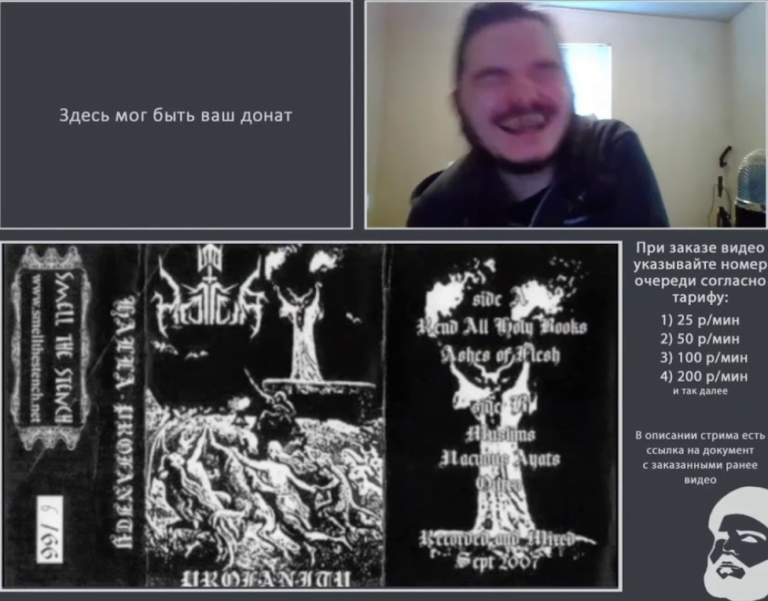
The picture is assembled as a collage of several windows, the way a stream typically looks. In the upper left is a dark bar reading "A donation could have been here." In the upper right is a webcam window: a laughing, bearded man with dark hair pulled back, set against a light-colored room. At the bottom is a cassette cover with black-and-white graphics and small English text, with the year 2007 visible in it. On the right is a column of prices for ordering videos: 25, 50, 100, and 200 rubles per minute, below which is a short note about the queue and a link to the list of ordered clips.
The date 27.07.21 itself isn't written anywhere on the image. The image shows the format of the stream the meme is linked to, not the prophecy itself.
The stream and the phrase from the music
Ubermarginal is a Russian-speaking streamer: according to reference sources, he ran a channel on Twitch (created in June 2015), answered questions about philosophy, languages, history, and film, and played various music selections during his streams. The paid video-request format is visible on the panel to the right of the camera.
According to one account of the meme's origin, during a stream he was listening to Iranian black metal and heard the date "27.07.21" in the recording, which he then told his viewers about. This account appears mainly in a single source; the exact date of the stream and details about the recording itself aren't specified and remain unverified.
A timeline with no answer
The joke first took hold in the Russian-speaking internet, then moved over to TikTok. There it was fueled by videos in the style of urban legends: someone supposedly arrived from the future with a warning, someone else told a story about the Chernobyl sarcophagus collapsing.
All of these stories were made up by their own creators. No real event tied to the date ever happened. When July 27, 2021 passed without consequences, users didn't abandon the format — they just started scaring people with other dates instead.
Why the scary story works
The meme uses a familiar trick: a serious tone plus a mystery. The less concrete detail there is, the more the imagination fills in the picture. A few numbers and the phrase "be careful" are enough — the viewer does the rest.
The second part of the humor is self-irony. Everyone knows the "prophecy" is empty, but they play along anyway. The result is a collective game of pretend anxiety, where everyone hams it up just a little.
Example captions
Made-up examples. "27.07.21 — the day I finally start working out. Scared?" The caption leans on the expectation of catastrophe, then delivers an everyday plan instead, and that contrast is the whole joke.
"Don't drink tea on 27.07.21." An absurd ban with no explanation copies the intonation of the scary story.
"An hour later: the date has passed, but my overdue coursework is still there." Here the meme's "epilogue" turns into a complaint about ordinary life.
Every caption needs either false seriousness or a sudden drop into the mundane; without that, the date is just a date.
How to use the template today
The meme is tied to a specific day, so as a living joke it could really only work in July 2021. These days it's good for a retrospective: a reminder of the fad for prophecies, or a way to poke fun at your own panic over nothing.
If you're captioning this collage, don't present it as real messages or events from actual people: make it clear the scary story is made up.