From a clip to a repeatable dialogue
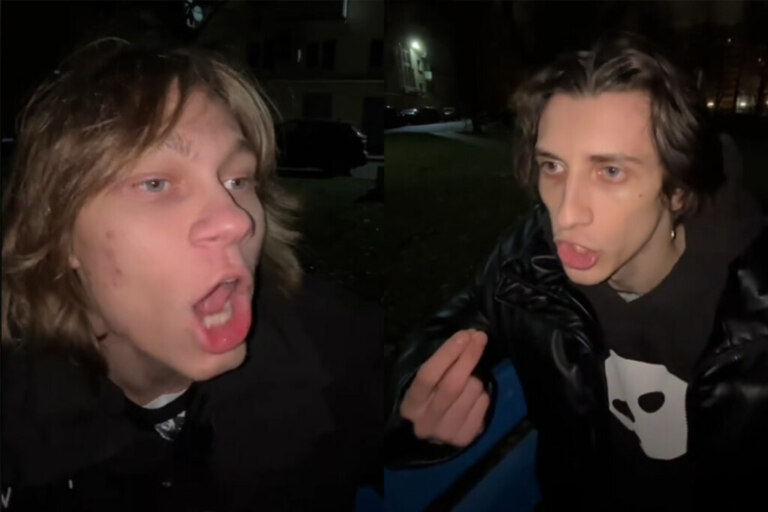
The original frame shows two young men playing at a quarrel, not randomly filmed schoolgirls. The meme encyclopedia links the first clip to Minsk blogger Mishanya and his friend Nazar, who performs under the name Syks: the TikTok post is dated 17 November 2024. Their heroines talk about familiar teenage topics (parties, relationships, parents, vapes) in a deliberately drawn-out way and with an excess of swearing. It is a parody of a recognisable manner, so individual speech traits should not be taken as a documentary portrait of a generation.
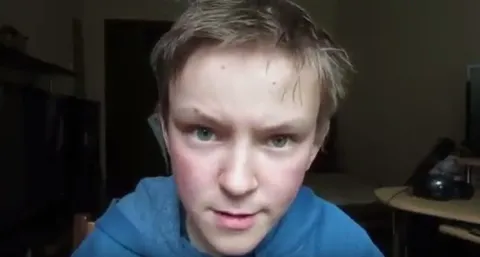
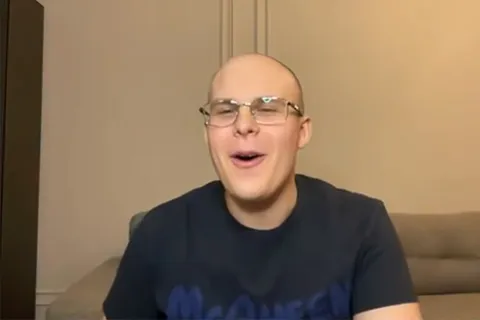
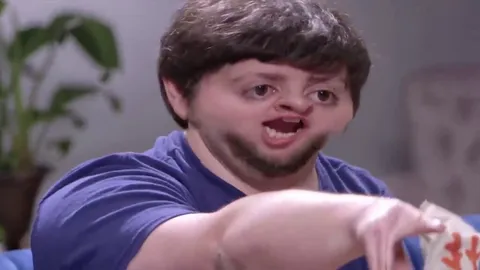
Then the format became a series: situations and participants changed, but the rhythm of mutual accusations repeated. In January 2025 a musical reworking of the line “but what about the fact that…” appeared, after which the expression spread beyond a single video. The established dates describe versions recorded by sources; they do not prove that this was the first use of a similar phrase on the internet.
Why the bickering works
The dialogue rests on symmetry: the first participant accuses her interlocutor of being unhinged, and the second answers in kind and presents her own “proof” with “but what about the fact that I…”. Instead of a calm discussion, each side immediately turns the conversation into a contest of grievances. The comic effect comes from the mismatch between a trivial trigger and a violent reaction, the repetition of the construction and the theatrical intonation. If you keep only the swearword, the recognisable rhythm disappears; if you remove the accusation and the counter-argument, the sense of pointless quarrelling vanishes.
How the captions reveal “You [expletive]?”
A caption for two browser tabs: “You [expletive]? — But what about the fact that I opened twenty-seven tabs for one essay?” Here the argument is played out between a person and their habit, and the long reply comically justifies the obvious chaos. Another variant: “Are you even sane? — But what about the fact that I bought a planner to write down where the planner is?” The self-irony works because the second voice admits the absurdity but presents it as a serious argument.
In a third example the group chat can be used: “You [expletive]? — But what about me writing ‘I'm on my way’ while I'm still choosing socks?” The caption is recognisable because of the gap between the message and reality. These are new examples built on the template's mechanics, not quotes from the original clip.
Where to use it and where to stop
The meme is handy for friendly chats about procrastination, an awkward household habit or an argument with oneself. In a short video you can split the two lines between characters, while in a static image you can leave only the conflict and a brief excuse. Keep the recognisable sequence: accusation, counter-claim, excessively detailed self-justification. The more mundane the topic, the brighter the emotional storm looks.
The original formula contains offensive language and gendered mockery. So do not direct it at a stranger, use it for bullying, or attach it to a real dispute where the other person needs support. It is safer to aim the joke at yourself, at fictional characters or at a common habit. The heroines are played by two young men, and the mockery rests on a stereotype about teenage girls, so the template should not be carried over to women as a group. A parody of exaggerated delivery works as a playful quotation, but it gives no reason to declare all teenagers identical or to present a specific person as stupid.