A line from a train ride
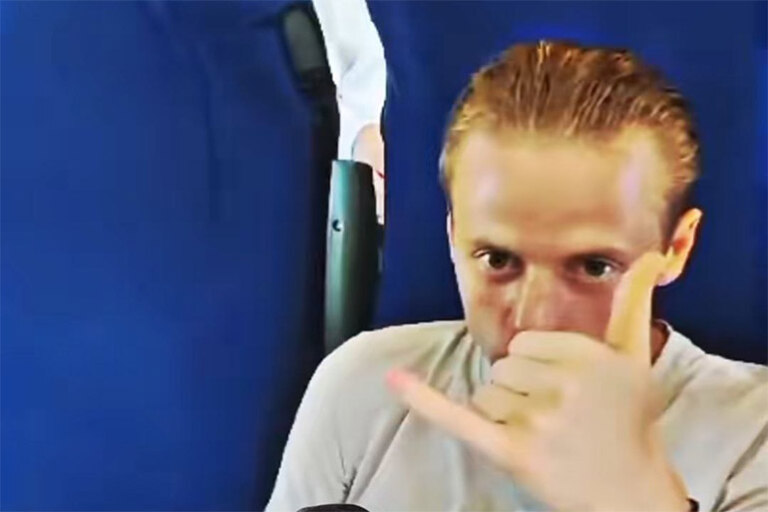
The video that became the meme's source was filmed in summer 2024, as players of the media football team 2Drots were traveling by train from Nizhny Novgorod to Moscow after a match against Amkal. In an argument with a conductor, midfielder Ivan Korshunov demanded she show her ID; when she replied that she wasn't required to do that, he said "Likewise" and made a gesture with his thumb and pinky sticking out. The details of the incident may vary between retellings, so the meme is best tied to the recorded line itself.
How the shot separated from the argument
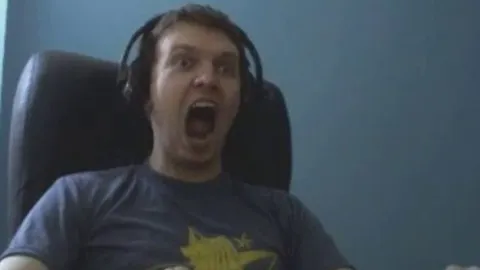
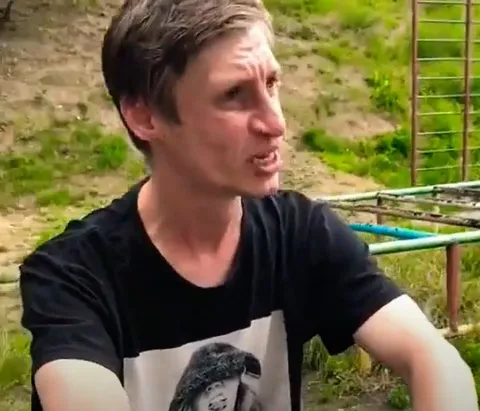
In the image, a man is shown in close-up, looking straight ahead and covering part of his face with his hand while sticking out his fingers in the gesture. A bluish background and the tight crop remove the train and the woman he was arguing with; what remains is the confident delivery of the word. That makes the image handy as a reaction, but it reduces the original context. In ordinary speech, the word "oboyudno" ("mutually"/"likewise") means reciprocity; the meme's intonation turns it into a flat "then same to you."
In retellings, the gesture is called both the "shaka" and the "hang loose" sign. It existed long before this video in various cultural contexts, so its origin can't be credited to Korshunov or this video. What matters in the meme is the specific pairing of the line and the movement, not a claim that the athlete invented the sign himself.
Why it's funny, and where the line is
An ordinary word gets a dramatic delivery: the short reply sounds like an exact mirrored return of the complaint. At the same time, in the original argument the expression was part of a conflict, not a neutral greeting. In joking exchanges it's often transferred to a mutual exchange of requests, habits, or conditions: "You pick the movie — likewise." What's funny is the mismatch between the simple meaning and the theatrical confidence.
Because of the tight crop, the picture can be used as a reaction to an even exchange, but the context of a public conflict remains part of its history. It shouldn't be used to belittle someone or pass off a dig as agreement in a serious conversation. The distorted pronunciation "obayunda" is a later playful variation of the word, not the original line said on the train.
Two new examples
"I sent you a cat meme. You sent me back a cat with a caption — likewise." The joke rests on an even return of the gesture: each party gets an equal share of cat content. "You scheduled a call for eight in the morning; I scheduled it for eight in the evening — likewise." In the second case, the flat delivery underscores a symmetrical decision and a slightly absurd escalation. These are made-up wordings; they don't reproduce anyone's actual messages.
Keeping the tone intact
The phrase lands best after a specific symmetrical situation: both people did the same thing, or traded comparable requests. Add a short caption if a single shot doesn't make clear what exactly was returned to whom. The gesture isn't strictly necessary: in text, reciprocity and a confident pause matter more. For calm conversation, keep the joking tone obvious, since in the original clip the word was said during a tense exchange, not as a universal friendly phrase.