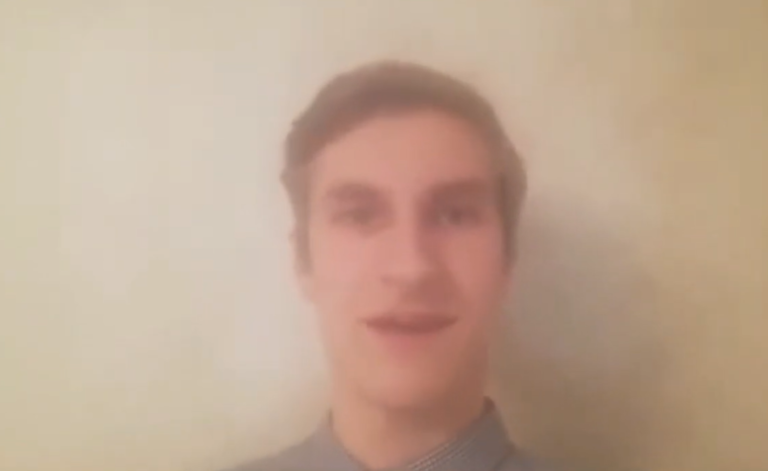
An out-of-focus face against a beige background
The frame is heavily blurred and looks overexposed: a young man with short hair, in a gray collared shirt, looks into the camera against a cream-colored wall. His mouth is slightly open, as if he's talking. The clip was shot on a phone at low resolution, and that's exactly what gives the video its amateur look.
Nothing about who this person actually is can be determined from the frame, and he isn't named here based on his face.
What's known about its origin
According to media reports, the original clip appeared in November 2020: it was posted by Anton Kireev, who simply moved his lips along to a pre-recorded track. According to that outlet, the voice belongs to a voice actor named Alexander from Minsk; his surname hasn't been reliably confirmed and so isn't given here.
The meaning of the full line is known: the announcer says he's the announcer of the channel "Mood Workshop," and that Anton is right now just opening his mouth along with his voice, so viewers understand that in real life Anton sounds completely different. In other words, the clip was originally a joke about swapped-out audio.
It didn't become a mass meme right away: widespread use in short-form video began in September 2021, almost a year after it first appeared. That distinction matters: the clip was made in 2020, while its period of popularity fell in the autumn of 2021.
How the joke works
The mechanics are simple: the face and the voice belong to different people, and the clip says so outright. Any other video where a person opens their mouth turns into a continuation of the joke: now that person, too, seems to be just a puppet for the announcer.
What makes it funny is the calm announcer delivery: it sounds as if this kind of introduction is perfectly normal. The greeting "hi everyone, my name is Sasha" looks like an ordinary vlog opener, and then it turns out the speaker and the person shown are two different people.
There's a separate layer to the joke too — the admission of the fake. Usually dubbing is hidden; here it's put on display.
Example captions
"The cat looks into the camera and explains why it's sitting on the keyboard again." The speaker becomes the animal, and the announcer sounds like its inner voice — the viewer needs no explanation.
"Presenting the project, when you're saying your prepared lines but thinking about something else." Here the voiceover expresses thoughts the person doesn't actually say.
"An old home video where grandma silently looks at the camera, while a cheery voice offscreen narrates what she's thinking." The contrast between the silent subject and the professional-sounding voice makes the scene comical.
"Hi everyone, my name is Sasha, I'm the announcer of this chat." The formula gets transplanted into text: the caption takes only the opening line, and the reader fills in the rest.
How to use it
The formula works wherever you can show a gap between what's seen and what's heard. It's best to pick clips without much background noise, so the announcer's line stays audible. Use your own or publicly available footage, and don't put words or opinions in the mouth of the person shown — it's only a joke about swapped audio.