What's in the frame
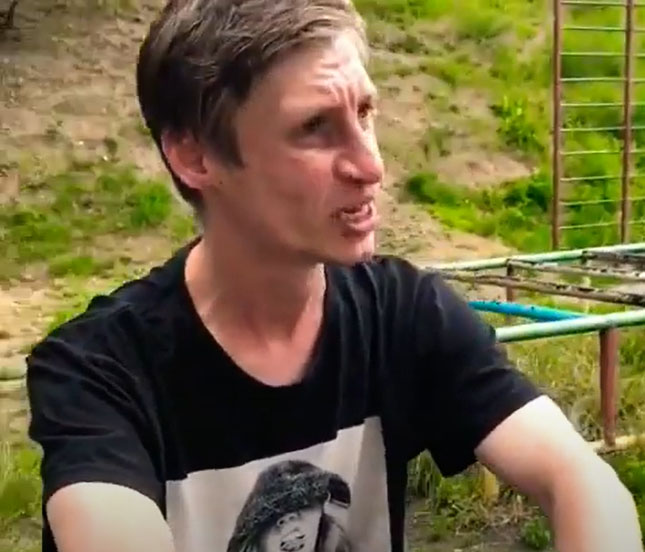
The frame shows a man in a black T-shirt with a large print on the chest (the print shows a face in a hat). He's sitting in an open outdoor area: behind him is grass, dry earth, and rusty metal bars that resemble a children's playground structure. He's turned at an angle, his brows drawn together, his mouth open as if he's shouting the phrase mid-sentence. There's no caption on the image.
From a single frame you can't tell exactly what he's saying or in what mood. But what matters for the joke is visible: a serious, almost dramatic face in a completely mundane setting.
The track and its author
The phrase is taken from a short track by a performer who goes by MC Zipulya. Reportedly he's from Ukraine, and the meme grew out of this track around 2019. The exact title of the original clip and the dates of the first edits vary across different accounts, so they can't be stated precisely.
The author is known for an unusual delivery: choppy rap verses, shouts, and sounds that imitate a beat. Details of his biography are irrelevant to the meme and don't matter.
Why 'tyau-tyau-tyau' doesn't mean anything
The syllable "tyau" (also spelled "tau") has no meaning: it's a vocal filler in the rhythm, the kind rappers use to fill pauses between lines. Both spellings appear, and neither can be called the "correct" one.
The meaningful part is only "well, it's nothing" ("nu nichego strashnogo"). That's the part most often quoted: a bright, deliberately calm remark followed by a rhythmic shout.
How the meme gained momentum
The phrase found its way into video collages, edits, and TikTok clips, where it was laid over unlucky moments: a miss, a fall, a failure. It can be quoted without knowing the context at all: most viewers don't care who's singing or what the rest of the song is about — the intonation is enough.
That's exactly why the meme lives separately from the track: first the shout is remembered, then the face in the frame, and only after that — if at all — the performer.
Example captions and how they work
"Dropped my phone screen-down. Well, it's nothing, tyau-tyau-tyau." The first part states a real problem, and the line from the frame zeroes it out: the scale of the disaster shrinks instantly.
"Slept through the deadline by a whole day: well, it's nothing." A serious mishap delivered in the voice of someone who's already past caring.
"The national team lost 0:5, the fans: it's nothing, tyau-tyau-tyau." The line becomes collective comfort, with fans talking themselves into it.
"The fridge is empty and payday's a week away. Well, it's nothing." The contrast between the hopeless fact and the upbeat tone creates dark humor that needs no explanation.
How to use the frame
The "mishap plus line" formula works best: first a short, real problem, then the line from the frame. The serious face amplifies the effect, so there's no need to overcomplicate the caption. If you're making a video, keep the original audio or the rhythmic shout — without it, all that's left is a photo of a man on a playground.
The caption describes the situation, not the man in the frame: don't attribute feelings, actions, or a biography to the performer that there's no reliable information about.