An appeal amid the fighting for Bakhmut
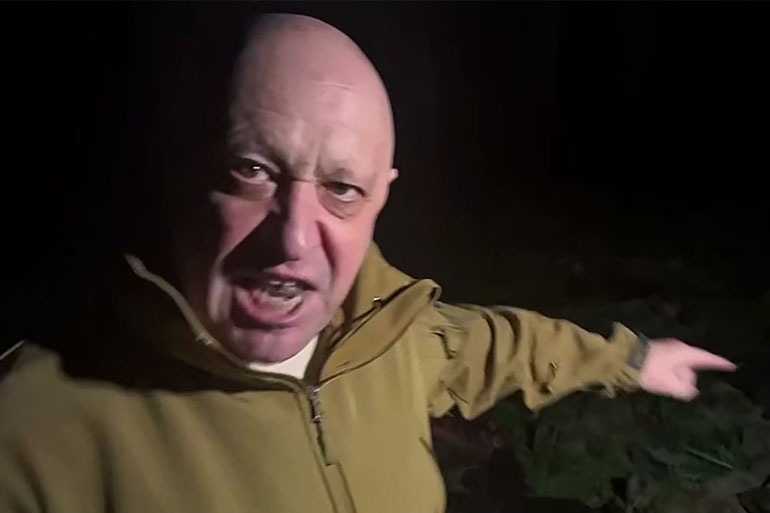
On May 5, 2023, Yevgeny Prigozhin published a video appeal to the leadership of the Russian Defense Ministry demanding ammunition for his armed group, which was fighting for Bakhmut. In the recording he spoke sharply and emotionally, with the bodies of dead fighters behind him. This is not a pre-recorded comedy sketch but part of a public dispute over the war and its supplies.
Later, the frame and the tone were used separately from the full appeal. Some captions play on the gesture and the demanding tone; others connect the surname to the producer Iosif Prigozhin, known for his work in Russian pop music. The shared surname invites wordplay and confusion, but it is no reason to treat the two men as relatives or as participants in the same event.
What makes the frame recognizable
In the local version, a man in field clothing looks ahead and stretches out an arm, as if demanding that something be brought or done immediately. Even without sound, the pose conveys pressure. A caption turns the demand for shells into an everyday request: viewers recognize the familiar situation in which a simple ask sounds like an order of extreme urgency.
The joke contrasts two scales: a loud military context and a small everyday task. However, the original video is tied to real combat and real losses, so it should not be reduced to a lighthearted picture. A parody can work on the surname mix-up or on a categorical manner of speaking without making the war an occasion to mock the dead.
New variations without false quotes
For a chat about home repairs: "I urgently demand a spare screwdriver: the shelf won't wait." The image heightens the drama while the caption remains obviously a joke. For a gaming team: "Who took the last heal? Return the resource before the next round." Here the pressure applies to a fictional game situation, not to a real military report.
The surname mix-up can be played on its own: "Producer Prigozhin heard that shells were needed for a film set and ordered spotlights." The twist rests on the different meanings of the word and shows why it matters to specify which person is meant. These variations were written for this article and are not words from the video appeal.
Context you should not lose
The template is appropriate for parodying a commanding tone, urgent demands, and confusion between namesakes. If a caption touches on the history of the appeal, do not cut the words in a way that changes their meaning or creates a false impression. The frame itself does not explain the course of the fighting and does not confirm any particular account of why ammunition ran short.
When retelling, identify Yevgeny Prigozhin as the founder and head of the Wagner private military company at that time, and do not confuse him with Iosif Prigozhin. Keep the confirmed date of the video separate from assessments of its causes and consequences. The meme conveys the tone quickly but does not replace a description of the military and political context.
If you use the frame in a conversation about work or games, it is better to swap the military words for neutral ones: "where is the deadline," "who took the resource," "why does this task have no owner." For example: "Team, where are the tests you promised? The release is right around the corner." This keeps the recognizable tone of a demand without turning a tragic military episode into a lighthearted joke. Context matters more here than an effective quote.