The pun visible in this picture
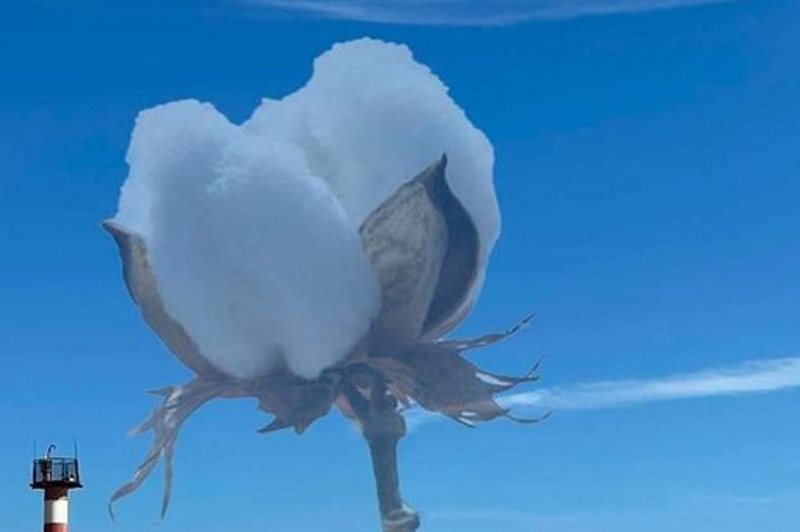
In the local image, a huge cloud shaped like a fluffy ball of cotton hangs in the sky, with a lighthouse standing below. The picture represents the word "bavovna" almost literally: a soft plant image is placed exactly where the viewer expects to see the trace of an explosion. This is an illustration of a word game, not a photograph of a specific incident.
The Ukrainian word "bavovna" means cotton, as both plant and fiber. In Russian, the word "khlopok" has two spellings that coincide — the noun for a popping sound and the name for raw cotton — but the stress differs between them. In Ukrainian memes and public discourse, this play on words became an ironic label for explosions, especially when official statements called them "pops" ("khlopki"). That's how an everyday word turned into an image of something fluffy and almost fairy-tale.
The cloud's silhouette deliberately recalls a familiar mushroom-cloud shape, but the picture remains a drawn metaphor. It gives no way to determine the type of explosion, the scale of damage, or where anything actually happened.
Language and the wartime context
The spread of the pun dates to 2022 and takes place against the backdrop of Russia's invasion of Ukraine. In Ukrainian posts, "bavovna" was used as a sarcastic reaction to reports of explosions and fires at facilities in Russia and in occupied territories. Stories about specific attacks and who carried them out require separate verification: the pun itself proves nothing about the cause of an event.
The reader first sees a harmless cloud of cotton drawn above a lighthouse, then recalls that the word has become a euphemism for an explosion — and the joke lands on that switch. The mismatch between the soft image and the dangerous real context creates irony and expresses an attitude toward the language of official reports. But behind the meme form there remains real damage and human risk; that's no reason to describe actual victims as part of the entertainment.
Examples of the wordplay
For a fictional everyday situation: "There was another 'pop' in the next office — this time the printer spat out the whole paper tray." Here the word's second meaning is returned to a harmless sound and has nothing to do with the war. "A little bavovna over the washing machine" could describe a dust clump that flew out of the filter, as long as it's clear this is a domestic joke.
If the meme is used in a historical discussion, the example should stay precise: "Users ironically called reports of explosions 'bavovna.'" This describes the usage without claiming a cause for the explosion. Don't invent operation names or consequences, and don't pass off an old picture as a photo of the scene. The examples here are invented to explain the pun and don't quote any wartime reports.
How to use the word without causing confusion
When editing, keep the cotton cloud and the lighthouse: they carry the literal visual pun. A short caption can explain the wordplay to someone seeing it for the first time. If the discussion concerns a specific incident, state the date and verifiable details separately, and flag any claim about those responsible as an allegation or assumption if an investigation hasn't established it.
The term was born in a wartime context and provokes different feelings in different readers. It's fine to analyze the humor, the euphemisms, and the language politics, but damage and loss of life shouldn't be reduced to "cute cotton." The meme's irony targets the way an event is named, not its actual nature. Keeping that distinction lets you explain the joke without misleading the reader.