Who is behind the nickname
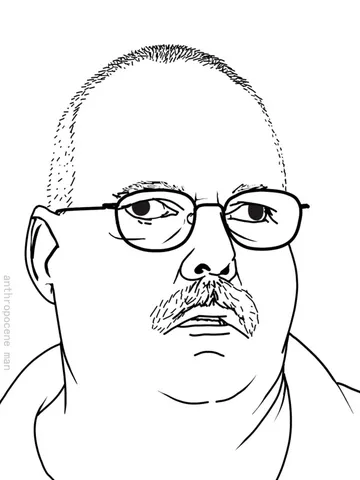
The nickname “Goblin” is tied to Dmitry Puchkov, who was born in 1961 in Kirovohrad. According to biographical notes, in 1992 he returned to St. Petersburg and joined the police: he worked in the prison operations unit and then in criminal investigation. He left the police in 1998 with the rank of senior lieutenant. In 1999 the website oper.ru appeared, which became his main public platform.
He became known through translations. Starting in 1998, Puchkov worked on localizing computer games: he translated texts and directed voice-over work at a time when official Russian versions were still very rare. Later, parody film translations appeared, including a version of “The Lord of the Rings” in which the speech is deliberately crude and emotional. These recordings spread on cassettes and online long before the era of memes.
Accounts of the origin of the nickname differ. According to a common version, journalists called police officers who broke the law “goblins,” and the word stuck to him. This explanation appears in biographical materials, but it cannot be considered the only proven fact.
Rubber pigs and memes around the broadcasts
A noticeable share of the memes is linked to the show “Razvedopros,” where Puchkov and Klim Zhukov discuss historical topics. Rubber toy pigs that squeak when squeezed appeared in the broadcasts. They became a recognizable trademark of the show, and viewers began cutting such moments into short clips.
Some separate jokes grew out of this gag, for example “the people demand pigs.” The exact episode where it began and the date of the first joke are not established by available information, so one can only say with confidence that the pigs have accompanied the broadcasts for a long time.
There are many parodies, photoshops, and clips around the blogger. Some are good-natured, and some are built on mocking his categorical assessments. For your own captions, it is best to keep the tone of a joke and not slide into insults.
What is visible in this frame
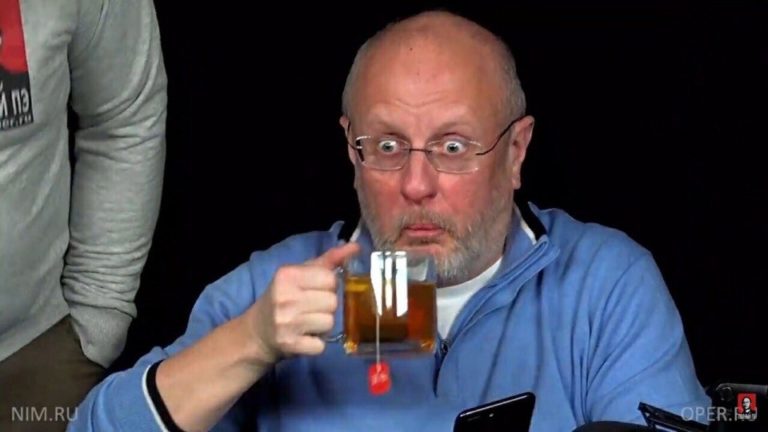
The photo shows a man in glasses sitting against a black wall. He is balding, has a graying beard, and wears a light blue sweater with a zip collar over a white T-shirt. In his hand he holds a transparent cup of tea, from which a tea bag with a small red tag hangs. His eyes are wide open, his lips are pursed into a tube, and his fingers grip the cup handle as if he has frozen mid-sentence.
In the lower corners you can see the NIM.RU and OPER.RU logos; near the bottom edge is a smartphone, and on the left is part of a person in a gray sweater. The name is not written on the frame itself: the link to Puchkov rests on the meme's name and the website logos. What matters more is the facial expression and the object in his hand.
Why the reaction works
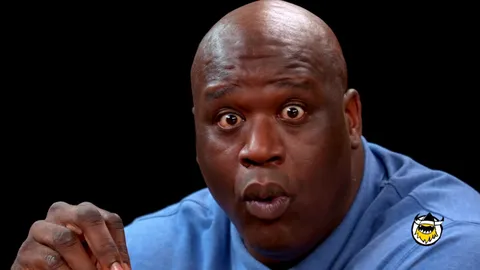
The meaning of the frame rests on contrast. A calm object, a cup of tea, sits next to an exaggeratedly surprised face. The viewer immediately understands that the man has heard something too bold, and the reaction says “what a statement” without words.
The mechanics are simple: the pause, the gaze, and the raised cup work like a small scene. The caption is needed not to describe the picture, but to name the cause of the surprise. Without a caption the frame is just tea drinking; with a caption it becomes a comment.
Examples of captions and how they work
Example 1: “A colleague said the deadline is ‘well, basically, today or tomorrow.’ I looked at him exactly the same way.” The caption retells the colleague's words, while the face delivers the verdict.
Example 2: “Read a five-page report. At the bottom, in small print: attachments of five hundred pages.” It works through the contrast between expectation and the number.
Example 3: “Someone in the chat wrote ‘let's not panic,’ and I'm already finishing my tea.” It's funny because the panic has already happened, while the advice is delivered as if it were calm.
Example 4: “I was promised a quiet update. It rearranged all the buttons.” The expectation sharply diverges from the result, and the frame serves as an honest reaction.
How to apply this template
The template works best for situations where someone makes an unexpectedly loud claim and the author shows the reaction. Don't attach the frame to a real person with an insulting caption: the joke works on surprise, not on someone's humiliation.
Keep the caption short. One phrase with a concrete detail is usually funnier than a long explanation, because the eyes and the tea already explain the emotion.