A press conference, not a staged grimace
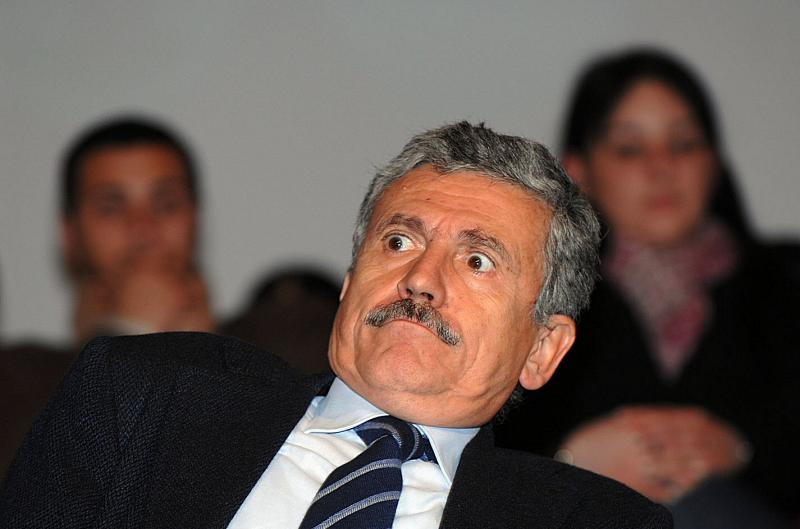
In the picture, Massimo D'Alema is not standing alone in front of the camera: he has leaned back in his chair, looking to the side and upward, and two more people are blurred behind him. This is a photo from a press conference in Doha on January 14, 2007. The image metadata indicates that Italy's foreign minister at the time was listening to his Qatari counterpart; the photo credit is STR/AFP. Out of context, his gaze looks like a reaction to something incredible, although the frame itself does not reveal what he heard.
D'Alema was a prominent figure in Italian politics: from 1998 to 2000 he headed the government, and from 2006 to 2008 he served as deputy prime minister and foreign minister. This helps explain why the photo does not look like a random family portrait: the original scene is public and official. The meme reading was added later, when a single facial expression began to live separately from the diplomatic meeting.
How a face became a reaction
By the late 2000s, the photo was already being used on imageboards as a reply to a strange or baffling post. The exact first uploader has not been reliably established. In such discussions, the picture could replace a short “what?” or “are you serious?”: a person did not describe their own emotion but attached someone else's gaze, which made the reaction instantly visible.
The image is often called Reaction Guy, sometimes “Do Not Want.” The second name links it to refusal, but the frame is broader: D'Alema looks more stunned than simply displeased. He can be responding to absurdity, a sudden piece of news, or a message that demands a pause. In this way, a political photograph stopped serving as an illustration of a particular meeting and became a visual remark without a single meaning.
Head turn and reading the frame
His gaze is directed away from the camera, so the meme seems to notice something beyond the edge of the image. The user supplies the object of surprise, and the viewer reconstructs the invisible event from a short caption. Unlike a close-up with a direct look, this angle creates the feeling that the politician is responding not to the author of the post but to some absurdity happening nearby. The posture, with the body leaning back, strengthens the impression: he seems not to have expected what he heard.
At the same time, it is important not to turn the face into an established record of D'Alema's reaction to the words of the Qatari minister. The caption under the photo points to the press conference and the moment when he listens to his interlocutor, but it does not reveal his thoughts. The comic meaning comes from reusing the expression, not from a guess about the real conversation. It is precisely this separation of the face from the original scene that gives the template room for new stories.
Invented reactions
An invented example: a message “I accidentally bought another identical board game” is sent to the family chat, and D'Alema appears beside it. His gaze can be read as silent astonishment not at the purchase but at the word “accidentally”; the caption itself chooses the object of the reaction.
Another invented version: a schedule announces that three meetings fell on the same day, and the photo carries the phrase “And they're all on opposite sides of the city.” Here the expression becomes a reaction to logistics, although the snapshot was taken at an international press conference. In both examples there is no need to attribute to the politician any real words or emotions: these are new fictional captions on a recognizable public portrait.