The shot and the actor
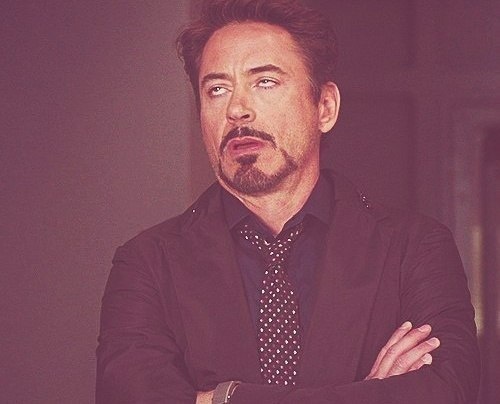
The photograph shows American actor Robert Downey Jr., known for playing Tony Stark, also known as Iron Man, in the Marvel films. The shot captures a distinctive expression: his head tilted slightly, eyes rolled, lips pursed, and arms crossed over his chest. The background is muted, and the image is rendered in pinkish tones typical of many photographs from that era.
The exact date and original source of the photo are not known. The photo dates to 2012.
Name and meaning
The Russian caption "Your face when" is a calque of English-language reaction captions like "Your face when," which describe the moment a person encounters an absurd or unpleasant situation. The name "Tony Stark face" refers to the character the actor played in "Iron Man" and the subsequent films of the franchise.
The grimace itself suits such captions well: it combines skepticism, weariness, and a touch of arrogance. That's why the meme is often read as a reaction to a conversation partner's stupidity or to an obviously bad idea. This is precisely why the Russian versions of the caption read as an ironic description of a situation rather than as a quote from the film.
Spread
Meme faces featuring well-known actors quickly became universal reactions, and Downey's photo was no exception. It spread through Tumblr, forums, and social networks, where it was inserted into comments and captions under screenshots. The convenience of this format lies in the fact that the emotion reads without any text.
As the Marvel franchise's popularity grew, Tony Stark's image became a frequent subject for jokes, and this picture became one of the most common reactions associated with the character. Over time, images like this became part of meme culture, where what matters is not so much specific events as the recognizability of the emotion and the expressiveness of the acting. We found no precise popularity figures or peak dates in open sources.
How it's used
Most often the photo is used as a response to an absurd statement, a poorly thought-out decision, or obvious stupidity. For example, a user responds this way to advice they consider pointless, or to news in which something has clearly gone wrong. This format is convenient in chats because it requires no explanation: the other person understands the reaction instantly.
There's also a more playful use: the picture is posted as a caption for one's own blunders, when a person realizes they themselves did something stupid. This version is softer and relies on self-irony rather than mockery of someone specific.
Cultural context
The meme illustrates well how the image of a public figure turns into a universal language of emotion. The viewer remembers the character, the actor, and the storyline, but in memes that connection fades, and the picture starts working as a standalone reaction.
The meme does not mock the actor as a person: it relies on the role he played and on a facial expression that became part of internet culture. This sets it apart from memes built on mocking someone's appearance or personal life, where the point rests on humiliating a real person. Like any image of a public figure, this picture's meaning depends on the context in which it's used.