What's shown
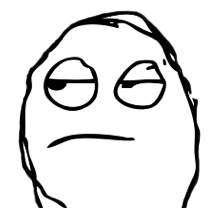
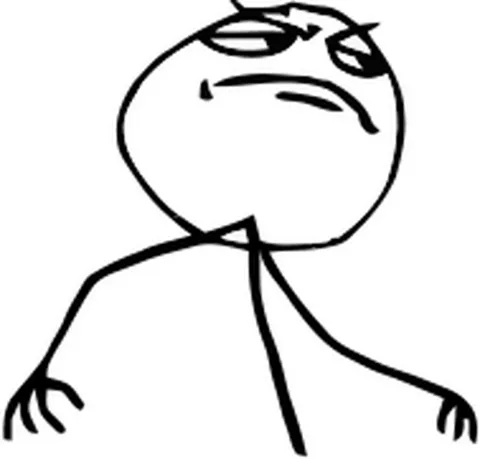
The image shows a simple black-and-white face drawn in thin outlines: the eyes are drowsily half-closed, the eyebrows slightly lowered, and the mouth stretched into a straight line. The expression looks both tired and disappointed, as if the other person just said something obviously unconvincing.
The drawing's minimalism is its key feature. The lack of detail lets the face be paired with any caption, and the emotion reads instantly, so the image works even without text. It's often used as a reaction in comments and chats.
Origin
The face appeared in the rage comics genre — a series of simple comics in which standard characters with recognizable expressions served as quick emotional reactions. The genre took shape in 2008–2009 on English-language forums, including 4chan and Reddit, and became one of the notable phenomena of the early internet.
According to the meme's history, the expression first took hold in a comic captioned "What's your favorite color? aww come on…," posted on Reddit on July 1, 2010. Participants in that same thread started calling the face "dude come on," and the next day another user used it in a comic called "Good night man." That's how the name and the image stuck.
The specific drawing's author isn't named in accounts of the meme, so its origin is better described as collective: the face arose within the user community and spread through reworkings and imitations.
Typical use
The meme is used as a reaction to a situation that causes bewilderment or awkwardness: an absurd suggestion, an unconvincing excuse, a failed joke. The caption is usually short, something like "Dude, come on," and the whole point rests on the contrast between the words and the facial expression.
The face is also used as an indifferent dismissal: when someone tries to convince another of something obviously dubious, the picture works faster than any text. In chats it often replaces long explanations, letting someone express irritation without extra words.
Why the meme spread
The meme quickly caught on in 2010–2012, when rage comics were at their peak and thousands of new variants appeared online every day. The simplicity of the art made it easy to reuse, and its broad emotional applicability let it move beyond its original community.
The face became part of a wider class of meme faces that serve as visual substitutes for text reactions. Such images are valued because they can be dropped in without translation or explanation, and in that sense Dude Come On remains one of the genre's handy examples.
Why the meme works as a joke
The humor is based on a recognizable human feeling — disappointed weariness with someone else's naivety or foolishness. The viewer immediately understands that the reaction is pointedly restrained, and it's exactly that restraint that makes it funny.
The meme works well in comments and chats thanks to its brevity and flexibility. The phrase "Dude, come on" has become a label for situations where the answer is obvious, but the other person keeps insisting on their point anyway.