Description of the meme
Neil deGrasse Tyson is an American astrophysicist and director of the Hayden Planetarium at the American Museum of Natural History in New York. He is known for his popular books, for hosting the 2014 version of the TV series "Cosmos," and for the podcast StarTalk. His public image took shape long before the meme: he speaks to large audiences, answers questions about science on social media, and regularly argues with purveyors of pseudoscience. It is precisely the combination of a calm manner and sharp formulations that made him a recognizable figure for internet jokes.
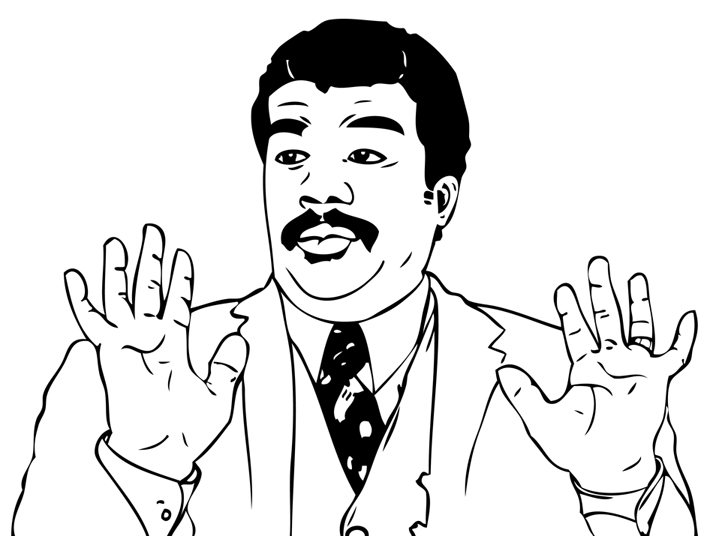
The meme itself is a simple black-and-white drawing in the style of a vector cartoon: a man in a jacket and tie raises both open palms to chest level, turning them toward the viewer. The gesture reads clearly even without a caption: "I give up," "I don't want anything to do with this," or "watch out, something stupid is happening here." Both interpretations appear in user captions, and the choice depends on context. The picture works as a reaction to someone else's words rather than as a statement in its own right.
Origin and the Rage comics era
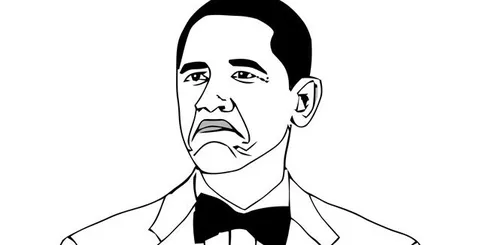
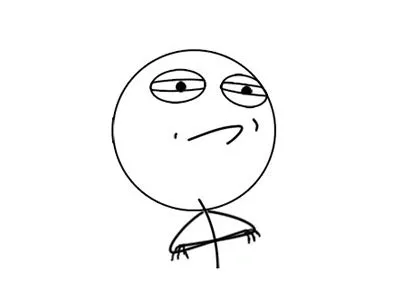
The exact author of the drawing and its first publication have not been fully established. According to this entry's tags, the meme dates to 2011 and is connected to Rage Comics — a form of drawn comic made of stock reaction faces that were mass-produced and circulated on Reddit, 4chan, and social media in the early 2010s. The format itself died out quickly, but individual images outlived it and became standalone templates. For that reason, the dates and circumstances behind this drawing's appearance should be treated as approximate.
Spread
The template transfers easily to any situation. Users applied it to other people's arguments, failed points, obvious stupidity, or their own helplessness in the face of a difficult task. The gesture of raised open palms gradually took hold as a wordless language: it is understood without a caption and conveys roughly the same thing across different languages. In Russian-language discussions, the picture is often posted in comments under contentious news items and in messaging when a discussion has hit a dead end. Importantly, the joke targets the situation rather than Tyson himself: his image serves as a marker that the other party is talking nonsense.
The scientist's figure and the dual effect
For a scientist who has spent many years publicly defending the scientific method and criticizing pseudoscientific claims, the meme produces a dual effect. On one hand, it makes his name recognizable and brings him a new audience. On the other, it reduces serious arguments to a contextless template. This fate is typical of many public scientists whose expressions pass into internet folklore separately from their actual work.
Conclusion
The bottom line is simple: the meme grew out of a drawn comic, outlived its format, and became a universal gesture for irony, surrender, and refusing to argue. To use it correctly, it helps to remember that behind the picture stands a real person whose public statements and work deserve attention in their own right.