Origin of the phrase
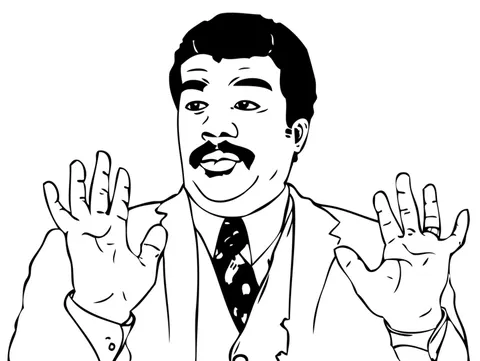
The phrase "Are You a Wizard?" took hold on the internet around 2009. It arose as an English-language macro, that is, a template with a caption over a picture, and was later carried over into the Russian-language environment. The exact primary source and the author of the first caption are not known, so its history is best described based on the most widely circulated versions.
The formula is built on contrast: the other person announces something obvious as though they'd just discovered it, and they're ironically reminded that such a conclusion is banal. The question "are you a wizard?" sounds as though the person has pulled off the impossible, when in fact it's a simple observation. It's exactly this duality that made the phrase so easy to repeat.
The role of Captain Obvious
Captain Obvious is a character from internet folklore, jokingly used to describe someone who constantly points out what everyone already understands. In comments and discussions, such users write things like "water is wet" or "winter is cold," as if sharing a discovery. The meme "Are You a Wizard?" became a response to remarks like these and fixed a recognizable form for them.
It's worth noting that the joke targets not the person as such, but a type of behavior. The caption usually contains no insults and sounds more mocking than mean. That's why the macro is often used in friendly correspondence, where the participants are accustomed to this kind of humor and understand it without further explanation.
How the meme spread
Macros with short captions spread quickly across forums, blogs, and social networks in 2009–2010. The phrase "Are You a Wizard?" fit neatly into this format, since it could be placed under any picture or screenshot. Users added it to posts with banal conclusions, to replies in arguments, and to posts where one participant was clearly restating the obvious.
Over time the phrase moved from the English-language environment into the Russian-language one and became part of the standard set of reactions. It turned out to be short and understandable without translation, so it required no explanation. Thanks to this, the meme kept appearing years after its first publications and retained its recognizability.
Variants of use
Today "Are You a Wizard?" is used in messaging as an ironic response to an obvious remark. For instance, if someone writes "tomorrow will be a day," sending the macro is enough to show that their thought doesn't look like a discovery. The phrase can also be used in reverse, when the author self-deprecatingly admits to their own banality.
More broadly, the meme has become a general label for any situation where someone tries to pass off the obvious as a revelation. This usage keeps the original meaning but extends it to offline conversations, work chats, and comments under news stories. Tone matters: without it the phrase can come across as rude, so it's usually accompanied by an emoji or a friendly context.
Cultural context and conclusion
The meme fits into the tradition of internet humor built on recognizable roles and stock characters. Captain Obvious, like other such figures, allows people to mock the habit of stating banalities without direct conflict. The macro "Are You a Wizard?" makes this joke short, which is why it's convenient to use in quick replies.
The meme remains understandable without a lengthy explanation, which accounts for its longevity. It's a reminder that internet humor often rests on a simple contrast between what is said and how it's perceived. The phrase keeps living precisely because of this recognizable irony.