How the stream became a source of lines
Papich became widely known through his Dota 2 broadcasts. His regular Twitch streams date back to 2015; viewers came both for his style of play and for his emotional commentary. The nickname is tied to Wraith King, one of the streamer's favorite heroes: the audience also started calling this character Papich. The nick Arthas refers to a Warcraft character, so one internet persona has two recognizable names.
By 2017 his streams were no longer limited to Dota 2: PUBG and single-player projects appeared among the games. For the meme story this matters a great deal: the familiar intonations could accompany different in-game situations and gradually detach from one particular match. Viewers saved short clips of shouts, greetings, and reactions to what was happening. Such clips are easier to understand than a long stream: they keep the moment of emotional break, which can be sent on as a ready-made reaction.
An open mouth and a calm background
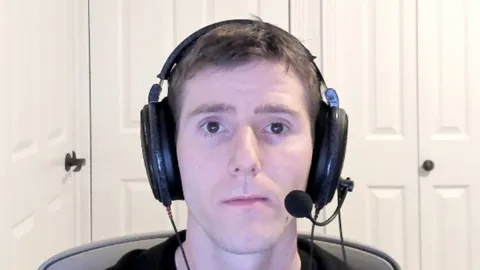
In the image, Papich sits in a black armchair in front of a bluish wall. He wears large dark headphones and a gray T-shirt with a yellow design. His mouth is wide open, and his eyes are wide too; his head occupies the central part of the frame. Behind him there is no complicated scene that would distract from the face. This is a typical webcam portrait: the viewer is almost in the place of the monitor to which the reaction is addressed.
The game interface, the opponent, and the result of the match are not in the frame. From a single snapshot it is impossible to determine what exactly provoked the shout. This uncertainty makes the portrait portable: a caption can suggest either an incredible success or a ridiculous mistake. The visible expression conveys the intensity of the feeling, but its cause is supplied by the new context. That is why the photo also works for a viewer who cannot tell the Dota heroes apart.
The face, the voice, and a personal vocabulary
Papich's memes are recognized by the combination of a loud delivery and unusual speech. He alters words, attaches the endings “-ich” and “-slav,” and uses the expressions “on easies” and “solo-style.” The first formula emphasizes how easy a task is, the second an action done alone. Torn out of the broadcast, they become small markers of confidence: the storyteller seems to speak in the voice of someone for whom any task turns into a decisive game moment.
A static frame keeps only the face, but a familiar viewer mentally supplies the sound. Hence two modes of the joke. In the first, the caption explains the surprise and the grimace amplifies it. In the second, a calm claim is set against a stormy reaction: a person promised to manage easily, yet is already yelling at the first difficulty. This is a comic gap between the stated confidence and the visible tension, and it does not require attributing new real words to the streamer.
Three invented reasons to yell
The invented caption “Stopped by for a minute to check the discount, and there was the last one left” turns the portrait into joy at an unexpected stroke of luck. Another scenario: “Said I'd assemble the wardrobe solo-style, and then opened the bag of fasteners.” A confident gaming formula meets a completely everyday task; the face shows the moment when simple assembly suddenly became a trial.
A third example: “A friend sank a shot into the basket from the other end of the yard and says it was an accident.” Here the reaction conveys disbelief at an implausible success. None of these captions reconstructs the circumstances of the original broadcast: they are invented as new lines from the viewer. The similarity of the situations rests on a sharp change in expectation, not on knowledge of a specific match or the streamer's result.