What's in the picture
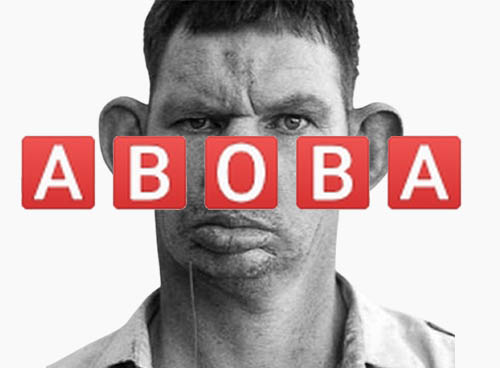
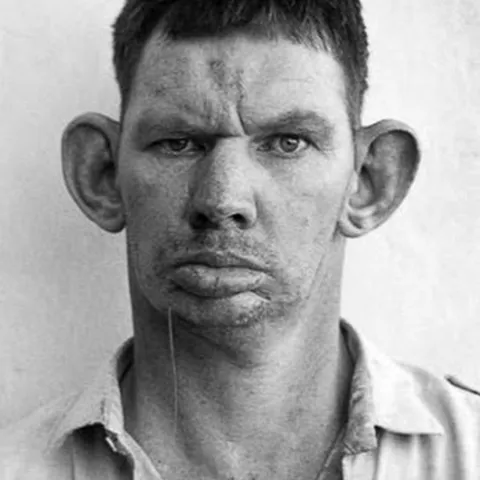
The picture is made up of two parts. The base is a black-and-white photo of a man with a short haircut, large protruding ears, a frowning face, and a pursed lower lip. Over his face are red rounded tiles with white letters A, B, O, B, A, as if assembled from keys or stickers.
Who's shown in the photo and where it's from haven't been established, so his name remains unknown. This matters: the person in the photo may be a private individual with no connection at all to the word. The meaning here is carried not by the face but by the red letters.
Where 'Aboba' came from
According to reports, the meme arose in late January 2021 after a video by the streamer and blogger Glad Valakas from his comedy series. In the video, a character announces his run for president of Russia under the name Valery Aboba. The author had warned in advance that the events and characters were fictional, and the video itself was poking fun at political talk shows and TV programs.
There's no exact date for when the word entered mass comment sections, and no record of the first user to write it outside the video. What's known for certain is this: after the video, viewers started leaving the word "Aboba" under all kinds of videos, at first as simple spam, and then in increasingly inventive ways — for instance, in red capital letters — and it's in that form that it caught on.
Why the word is funny
The trick is simple. "Aboba" means nothing, so any tone of voice can be poured into it. In the video, the surname clashes with the serious topic of elections: a name out of a children's nonsense rhyme is laid over the official tone of a political announcement. That gap is the joke.
From there, the word works like an "Easter egg": users recognize each other through a single comment, like a password. This mechanism repeats constantly online: a meaningless phrase becomes a marker of belonging to the group of people who've seen that particular video.
Caption examples
"My candidate for any election" — the picture with red letters as a campaign poster with no platform.
"When the chat asked who'd come to the cleanup day" — the reaction of a baffled person answering with a single word.
"My Wi-Fi password, which I came up with at two in the morning" — a joke about an absurd but memorable word.
"The new hire at the meeting answering any question" — a caption for when someone says something completely off-topic.
How the word lives on today
The word remains a joking marker in comments, pictures, and videos. It has no fixed meaning, and different people pour different things into it: mockery, surprise, delight, absurdity. That flexibility explains why the joke didn't disappear right after the video.
If you use the template, it's better to make captions where the word replaces a meaningful answer: the more serious the question, the stronger the effect. Don't attribute any personal traits or backstory to the person in the photo: nothing is known about him, and the joke rests on the red letters, not on his appearance.