A little figure with someone else's head
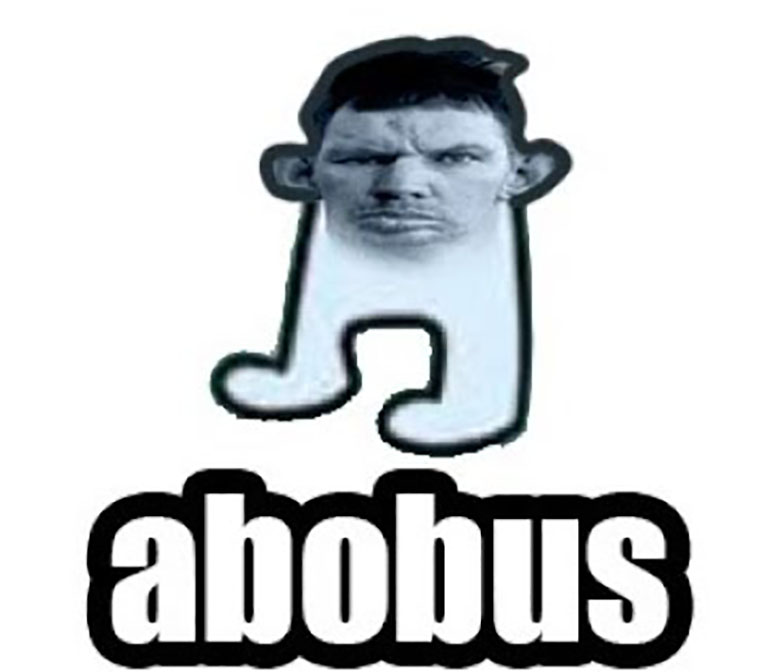
The picture shows a white figure in a black outline: a long torso, one post-like leg, and a wide foot. In place of a head, it has an inset photo of a man's face with furrowed brows and dark bangs, and below it, in large letters, the word "abobus." Who's in the photo can't be determined from the frame, and it doesn't matter for the meme: the face is only there as an expressive grim mask.
The shape of the figure resembles characters from the popular game Among Us. That resemblance also explains the word: it's a cross between "aboba" and the name players have turned into the joking "amogus."
Two words into one
Amogus, according to an English-language wiki, arose from the jokey pronunciation of "Among Us" in late 2020, and became a notable meme in January 2021 after a Reddit post. The word "aboba" in Russian-language internet circles was linked to a streamer and his nickname; by some retellings he's also the one who merged the two words, but the primary source for this version hasn't been confirmed.
In the summer of 2021, a clip of streamer Dasha Koreyka reacting loudly to a comment containing the word "abobus" racked up a lot of views and triggered a new wave of identical comments. That's how the word got wide circulation. Exactly where "abobus" was first said or written hasn't been reliably established.
Why nonsense catches on
The word has no meaning, and that's its main feature. An absurd sound, a funny-sounding syllable, a confident tone: any reader understands they're being teased, without understanding what for. An insult that says nothing is exactly as hurtful as the listener allows it to be.
The word's power also lies in its mass repetition — that's exactly how it spread after the Dasha Koreyka clip: dozens of identical "abobus" comments in a row turned a random line into a recognizable ritual, which people then kept repeating with no tie to that original video at all.
Another reason it stuck is the sound of it. The word is made of open vowels and ends in "-us," and words like that are easy to remember and sound funny on their own. So the joke doesn't need translating: it works in speech, in chat, and in captions.
Example captions and breakdown
"Looking at the price of the new phone: you're all abobuses." An exclamation of irritation that only gets its meaning from tone.
"My cat, when I poured the milk into the wrong bowl: abobus." The word is attributed to an animal, which is where the lightness and gentleness of the joke come from.
"The coworker who said yet again that the meeting will only take five minutes." A plain everyday grievance, where the nonsense word underscores that there's nothing left to explain.
"Saying hi to the boss: abobus." The joke is built on breaking expectations: instead of a greeting, you get absurdity.
How to use it
The meme suits playful banter and amplifying absurdity. Avoid aiming the word seriously at real strangers: it turns into mockery too easily. It's better addressed at things, animals, situations, or yourself.
Note the effect of repetition. One "abobus" means almost nothing, but ten in a row become a ritual. That's why captions on the picture often repeat the word several times or add an exclamation point: sheer volume adds to the joke's power.