Laughter before it was reduced to an emote
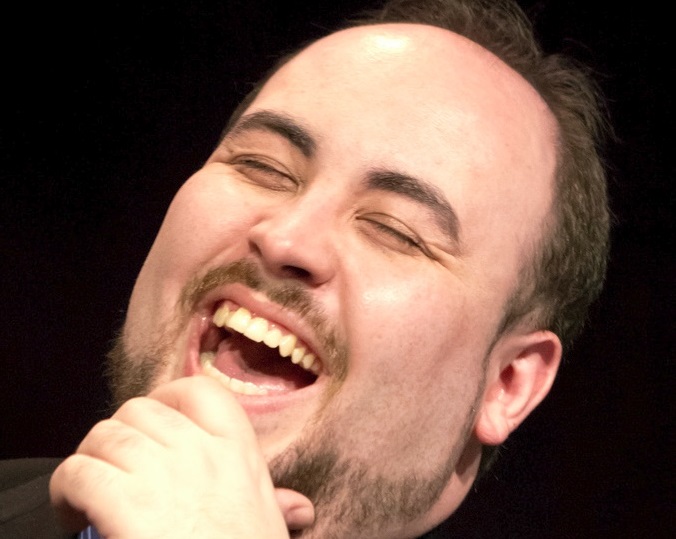
The image shows Bain laughing, his head thrown back and tilted. His eyes are almost completely closed, his mouth wide open with teeth visible, and his hand is raised to his chin. The black background keeps the face as the main content of the photo. There is no LUL caption, no game objects, and no chat interface in the frame. This is a large original portrait from which a recognizable reaction can be extracted, rather than a ready-made small image with a transparent background for a Twitch message.
The meaning is clear even before one knows the person: the expression conveys strong amusement that is hard to hide. When the photo is reduced to an emote, the most noticeable details are preserved: closed eyes, the tilt of the head, and the open mouth. For this reason, the image suits a quick response to a funny moment in a stream. Unlike a written “haha,” it sets a specific expression and allows several viewers to show the same reaction at once.
Photo, channel, and redrawing
The original snapshot is linked to the esports event MLG Anaheim 2013. A photographer under the name itsjustatank posted the image of the laughing TotalBiscuit on Flickr that June. John Bain was known for video game reviews and streams, so his face already had its own audience. In 2014, he began using the cutout as the cynicalLaugh emote for his channel's subscribers. Thus an ordinary reportage portrait turned into part of the communication around a specific creator.
Then a dispute arose over using the photo as a perk of a paid subscription, and the original emote had to be removed. The image kept spreading through chat tools; in 2016, LUL appeared in BetterTTV. In September 2017, Twitch made LUL a global emote available to a wide audience, but in a redrawn form. The recognizable expression therefore persists, while the exact photo in this card relates to the origin of the family rather than to the platform's drawn version.
One reaction and its exaggerations
The word LUL is used much like LOL: the message means the viewer finds something funny. It can support a successful joke, note a random absurdity, or accompany the streamer's own mistake. The image itself does not say who became the object of laughter. During a broadcast, this gap is filled by what is happening at the moment; outside of it, a caption or a previous line is usually needed, otherwise the reader sees only a cheerful face with no clear reason for the reaction.
Derivatives intensify the expression through changes of scale and shape. OMEGALUL stretches the open mouth, turning it into an almost independent round sign; LULW uses another large cropped version of the face. These reworkings differ in appearance and in how they display in chats. Enlargement here works as comic amplification: an ordinary funny episode becomes an occasion for excessive laughter. The original photo has no distortions, and the human gesture remains the natural reference point for all subsequent changes.
Laughter that is clear from context
In an invented stream, a player solemnly explains that he memorized a complicated door password, and then discovers the door was open the whole time. The viewer replies LUL at the exact moment the hero tries the handle. The picture marks the gap between preparation and result; without the earlier explanation, the open door would not be so funny. A second invented scene: a host promises a demonstration of a silent keyboard and accidentally drops a metal spoon nearby.
In a third invented example, a participant in a cooking stream elaborately discusses beautiful plating, after which his perfectly round cheese pancake rolls off the plate. The LUL reaction refers to the unexpected mishap, not to the quality of the dish or the author's personality. In all these cases, Bain's face serves as a short punctuation mark in the general conversation. It closes an episode that viewers already understand, allowing them to express amusement without retelling what has just happened on screen.