What the picture shows
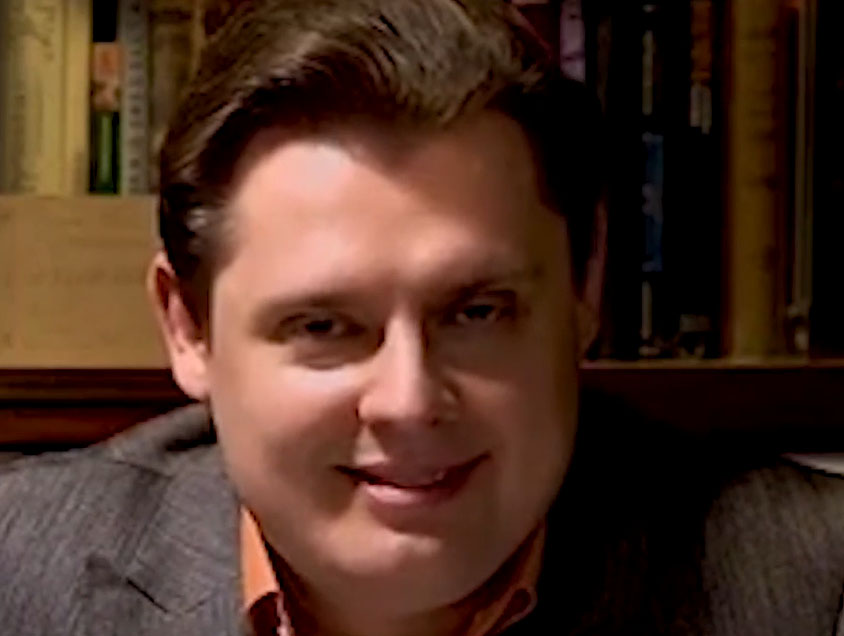
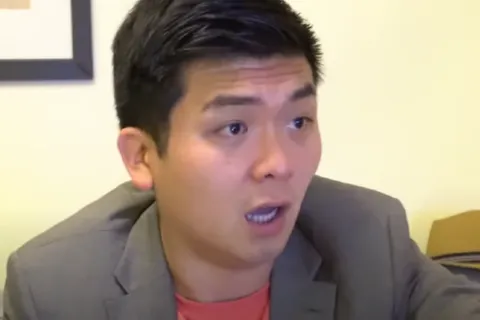
A close-up of a man with chestnut hair combed to the side. He looks straight into the camera and smiles slightly out of the corner of his mouth; the smile carries self-assurance and light irony. He wears a gray jacket with a thin stripe and a shirt with an orange collar. Behind him are shelves of books. The image is heavily enlarged and grainy, but the background of books is still readable.
A frame like this works well as the “face” of the phrase: a confident gaze, a home library, and a hint of superiority.
Who wrote the words
The author of the quote is Evgeny Ponasenkov, a historian and publicist, as he calls himself, known for sharp public statements. Opinions of him online are divided: he has both fans and critics. The meme is built on the intonation of one particular line rather than on a judgment of the person, and what should be discussed is the quote as a public statement, not his private life.
What is known about the origin
The line goes: “Do you think I won’t outplay you, that I won’t destroy you? I will destroy you.” In 2020 it became one of the most noticeable Russian memes: by the end of the year it was listed among the popular items in the VKontakte rankings. Thousands of TikTok videos and music remixes appeared.
Different overviews name the source of the excerpt differently: some link it to a video by the author on the topic of Napoleon’s army, others to a separate address. The very first date and the original source cannot be established with confidence, so they are not given here.
How the meme is used
The line is delivered with a deliberately solemn, slightly theatrical intonation. Most often it is used as a “dramatic response” to minor everyday situations, turning a trifle into a battle. Remixes and edits are popular, with the solemn voice plays over footage of games, films, and everyday videos.
Another device is a parodic “threat” to oneself or to an alarm clock: the more trivial the reason, the funnier the scale of the promise.
Caption examples
“Me looking at a mountain of dishes.” The joke rests on disproportion: a monologue about all-destroying power is aimed at plates.
“When I promised myself I’d be in bed before midnight and it’s 2:00 a.m.” The “threat” is aimed at one’s own weakness, and the contrast between the confident face and an everyday failure makes the caption funny.
“A chess engine after my first move.” The line becomes the reply of a soulless opponent, which works well in games.
“My cat looking at an empty bowl.” The character’s confidence is passed on to a pet, and the cat’s childlike fury rhymes with the solemn threat.
The limits of the joke
The meme is meant as comic bravado, and the best captions are about imaginary or playful opponents. Using it as a real threat against a specific person is not advisable: it is no longer a joke but intimidation, and the point of the template is lost.