What is visible in the frame
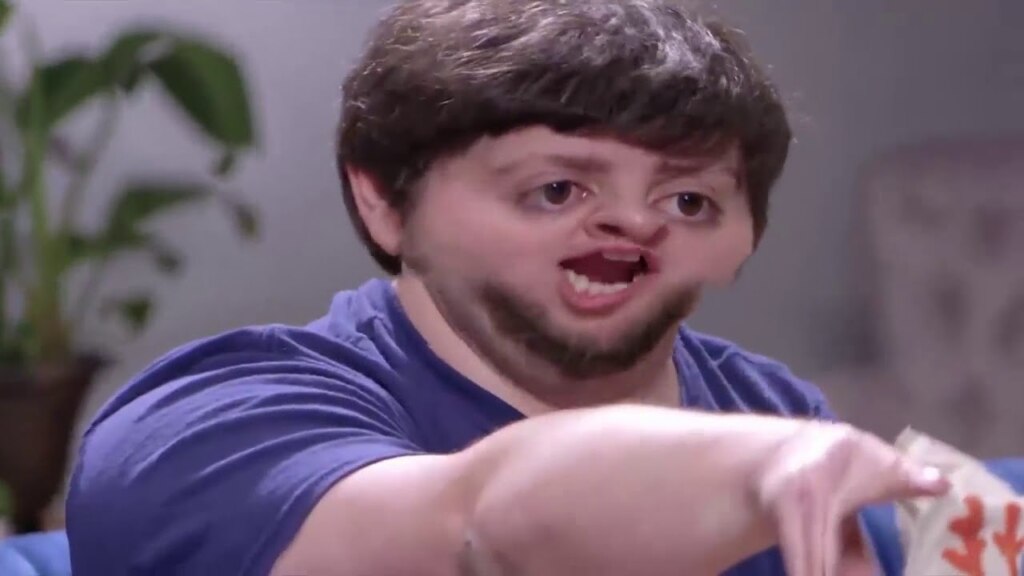
A man in a blue T-shirt sits on a couch and stretches his arm straight toward the viewer, so that his hand is the closest thing to the camera. His face is distorted: his mouth is slightly open, his nose looks shifted, and his gaze is fixed forward. The expression is both eager and bewildered. In the bottom right corner you can see the corner of a package with a red design.
The background is blurred: on the left is a large indoor plant, on the right soft furniture. The image looks like a frame from a video rather than a staged photo, and the meme's force lies in the movement: the arm is already flying forward, and the words are bursting out on their own.
Where the phrase comes from
According to descriptions, the line comes from the JonTron video “Flex Tape II: The Flexening,” uploaded on December 2, 2018. In this video the blogger parodies an ad for Flex Tape duct tape: first he acts indifferent, then, noticing that the tape works underwater, he yells “I'll take your entire stock!”
Russian-language images often use the frame separately from the video, so the link to the original source is easily lost. The meaning survives all the same: the speaker wants to take everything without exception. What matters here is that the meme is built on the line itself and on the gesture, not on the biography of the person in the picture.
Why the gesture works
The main thing is the contrast between a demanding phrase and a trivial occasion. When someone claims everything over a small matter, it sounds grotesque, and the smaller the matter, the funnier it is.
The outstretched arm turns the line into an action. The viewer sees not only the words but also the grab: even without a caption it is clear that the subject is greed, eagerness, or sudden delight. The meme describes a situation rather than judging the person, so it fits decisions and actions, not anyone's appearance.
Examples of captions
“I'll take everything: the last pizza, the last place in line, and the last question at the job interview.” The list moves from concrete things to abstract ones, and the final item breaks expectations, because a question cannot be picked up.
“I'll take everything except the change. Leave the change for the cashier, he's already tired.” The exception becomes the twist: the demand looks complete, and the concession turns out to be unexpectedly caring.
“Someone asked who wants sweets. I'll take everything, even what hasn't been bought yet.” The exaggeration is pushed to absurdity.
“When I see a discount on my favorite cookies at the store.” The caption relies on the recognizable eagerness of a shopper, and the frame captures that impulse precisely.
The gesture and the phrase set up an expectation of grabbing, and the caption shifts it toward something small or toward a qualification. The more mundane the object, the funnier the demand for all of it sounds.
Where the template fits
The frame suits discussions where someone wants to take the common share: the last bonus on a team, all the seats in one row, the whole cake at a party. A short caption works best when the situation is clear without explanation.
It also works well for stories about collections and purchases: a sale, a pre-order, buying out an entire print run. If the caption starts to lecture or condemn a specific person, the joke falls apart, because the original eagerness is the very source of the comedy.