What is in the picture
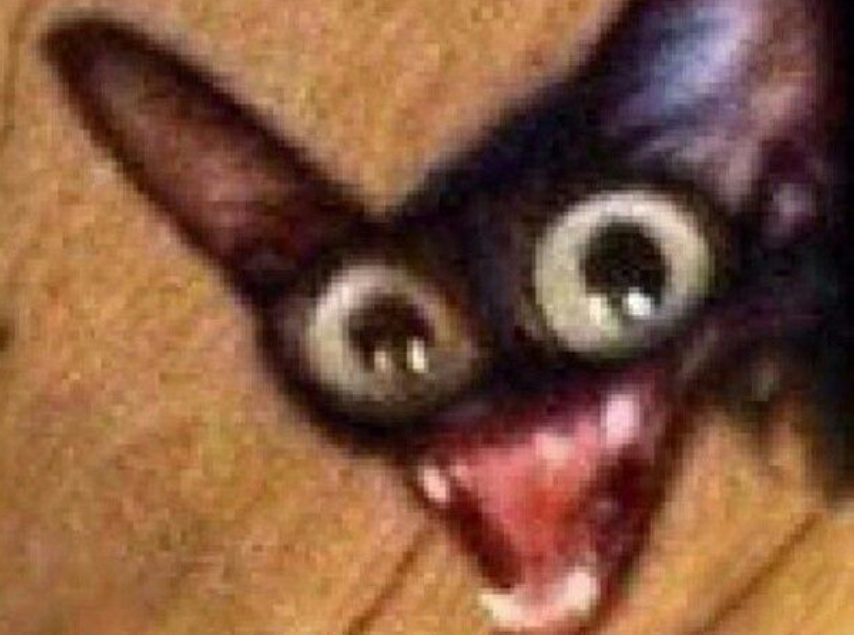
The snapshot is heavily zoomed in and grainy. A dark cat's face fills almost the entire frame, with one big ear sticking up and to the side. The eyes are huge and round, with light irises and small pupils, which makes the gaze look stunned. The mouth is wide open, showing a pink tongue and small teeth. A beige carpet or fabric is visible in the background.
The expression reads as a mix of shouting, delight and madness. It is this distorted facial expression that makes the frame a basis for captions about food.
Where the word comes from
The word “chipseki” is a playful distortion of the word “chipsy” (chips) with a childish suffix. According to meme roundups from 2019, pictures of cats shouting “chipseki,” “sukhareki” and other variations were popular that year. Commentators could not name the exact date of the first post, and it could not be reliably established either.
The cat photo also cannot be linked to any specific author or story: what animal is in the shot and under what circumstances it was photographed is unknown. The emotion the viewer sees may well be a random moment of the shoot.
Why grotesque cat photos are so popular
Photos in which an animal looks stunned have long served as the basis for reactions: viewers easily attribute human feelings to the beast. The same mechanism is at work here. Large eyes and an open mouth are read as a scream, although the cat may simply have been yawning or turning its head.
Because of the graininess and strong zoom, the picture looks accidental rather than staged. This “awkward” aesthetic appeals to the audience: it has no gloss, but it has the feeling of a living moment that is easy to share.
How the format works
The meme is built on a shout. The caption is delivered in a tone as if the word could not be said any other way: the treat is about to fall off the store shelf, and the delight cannot be stopped. The deliberately funny name of the snack turns a craving into something childish and harmless, which underlines the cat's exaggerated expression.
There are many caption variants: you just substitute a favorite food in a diminutive or distorted form. That is why the meme is easy to make yourself and easy to recognize.
When it fits
It fits food and shop situations best. A person on a diet walks past a display case, a friend writes that they brought snacks, or ten minutes remain until lunch and the brain has already switched to “I want it right now” mode.
Beyond food, the picture is applied to any unexpected desire: a new toy, a long-awaited purchase, a discount. The common idea everywhere is the same: the emotion is too big for words.
Caption examples
“When I see crab-flavored chipseki in the store” is the most direct version.
“My stomach at 23:45” transfers the emotion onto the body and works as an admission of weakness.
“My colleague brought cookies to the meeting” shows the reaction of the whole team.
“Dieting while someone opens a bag in the next room” illustrates an inner struggle.
How to use the template
Captions are best kept short and sonorous, in a distorted manner, so that they read as a shout. Do not use the photo for serious topics: the image is too grotesque.
If you need a restrained version, a single word under the picture is enough. The size and graininess of the frame already create the necessary sense of chaos.