What is depicted
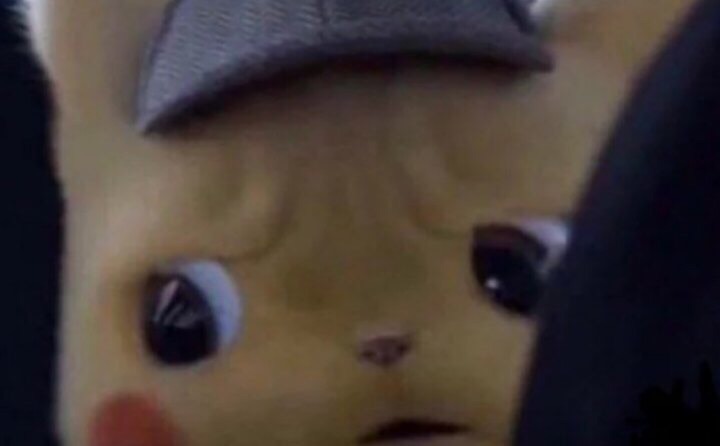
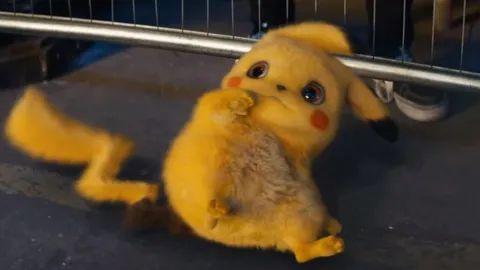
The frame is cropped close: Pikachu in a gray cap with a dark brim takes up almost the whole frame, with the headwear visible from above. Around the face is light-yellow fur, the eyes are large, black with white highlights, and both look to the side. The brows are drawn together, and there are creases on the forehead. At the bottom left a red cheek spot is visible, and in the lower part of the frame the mouth is slightly open. Along the edges, figures resembling the edges of clothing are dark. The image is blurry and grainy, like a freeze-frame from a video.
The expression does not convey a direct threat. It is more like awkwardness or doubt, as if the character has just heard something strange. That is why the image is convenient for reacting to what is happening nearby, rather than for a storyline.
Where the image comes from
The frame is taken from the film “Pokémon: Detective Pikachu” (2019), in which Pikachu was voiced by Ryan Reynolds. On May 1, 2019, Reynolds published a video clip with a fragment of the film, where Pikachu talks with Psyduck, anxiously listens to his incoherent speech and makes a worried face. This moment became the source of the picture.
As a meme, it appeared on Reddit on May 12, 2019, and over the following days spread through themed communities. The image is considered a variation on the earlier “Unsettled Tom” template with the reaction of Tom the cat from “Tom and Jerry”: the mechanism is the same, but a Pokémon appears instead of the cat.
The “Me when” formula
Most often the caption follows the pattern “Me when...”: the first part describes an ordinary situation, and the frame shows the speaker's reaction. Pikachu is silent, but his gaze says more than text. The viewer completes the line on their own, and the caption is needed only as a frame for the situation.
This structure works because the first part sets the everyday frame, and the image adds an emotion that is absent from the text. If the caption is overloaded with details, the character's gaze gets lost. It is better to keep to one situation and one reaction, and then the contrast reads instantly.
Four captions
All the examples are in the “Me when...” format.
“Me when the boss says: let's quickly go over a couple of points at the meeting.” The expectation of a short insert is set against the obvious: the meeting is clearly going to drag on.
“Me when someone in the chat asks: are you coming today? And there are already fifteen people waiting for an answer.” An anxious reaction to group attention turns an everyday question into a small crisis.
“Me when the cat stood on the table and looked me in the eye.” The image is recognized immediately, because the caption names the cause of the alarm in a single sentence.
“Me when I made tea and remembered I hadn't turned off the stove.” The reaction is justified here, and the humor rests on the recognizability of the situation.
How not to miss with the template
The effect is stronger when the caption describes an unexpected event, rather than just setting a tone. Do not use the image to mock real people, their appearance or misfortunes: then Pikachu's worried gaze becomes mockery of a person.
For ordinary stories such as canceled plans, an unexpected call or a neighbor's strange behavior, the image works best. A short caption is preferable to a long one: the blurry picture already does half the work. If the caption explains the cause of the alarm in too much detail, the character's gaze stops being the focus, and the joke loses its speed.