What the photo shows
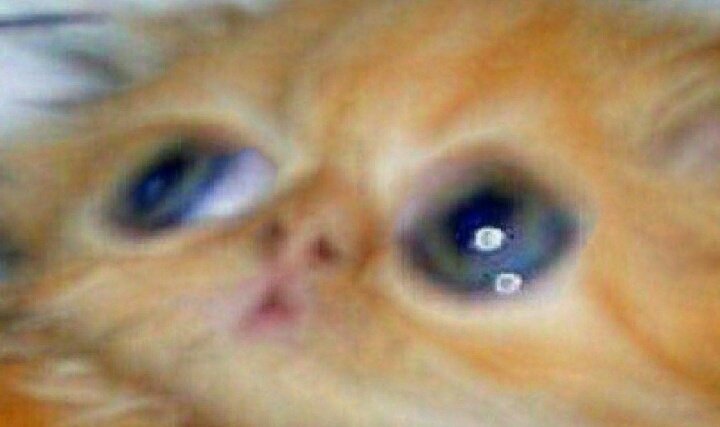
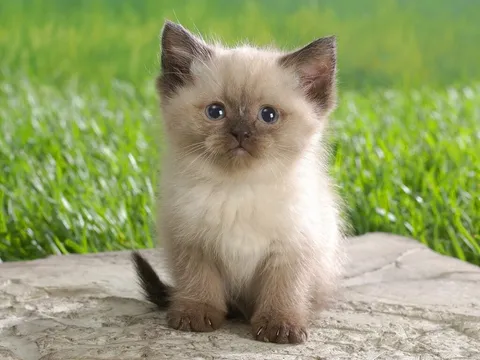
The frame is almost entirely filled with the face of a ginger kitten. The image is soft and heavily blurred, as if enlarged from a small snapshot: fluffy ginger fur, light patches at the edge and two bluish eyes are visible. The right eye has two light highlights, and the left has a white reflection that makes it look half-closed.
The nose and mouth are only guessed at, so the gaze is the main thing in the picture. The expression reads as a plea, but it is not worth overstating the details: the blur makes it impossible to make out the facial expression, and the viewer fills in the pleading look themselves. This effect is what helps the template: the picture leaves room for a caption.
Where the phrase came from
Who took the photo and when, where it was first published, and whether it has an author are not reliably known. Accounts of how the phrase “mozhno nenado” became attached to this kitten conflict: different descriptions name different years and communities.
This meme is most often dated to the late 2010s and to Russian-language social networks. The formula “mozhno nenado” is a request with deliberate grammatical awkwardness: two parts that contradict each other in tone (“can” and “don't need to”) are fused into one word that sounds childish. This intonation is what made the caption recognizable.
Caption examples
“Mozhno nenado… — when someone writes ‘we need to talk’ on Friday evening.” The phrase becomes a signal of bad news, and the kitten's gaze turns the alarm into a comical plea.
“Mozhno nenado… — the teacher said the test will be tomorrow.” A small unpleasantness gets a dramatic reaction. The gap between the scale of the event and the strength of the emotion is what creates the joke.
“Mozhno nenado… — the neighbor has decided to drill the wall at ten in the evening.” The ellipsis leaves a pause in which the viewer understands for themselves what comes next.
“Mozhno nenado… — the accountant asked to recalculate the report from scratch.” The humor lies not in the event but in someone seriously begging for mercy over boring work.
Why the template lasts
A reaction picture is convenient because it can be posted in response to almost any expected inconvenience. A short phrase with an ellipsis carries over into comments, chats and discussions without any explanation.
The second reason is the simplicity of the emotion. A plea not to do something is understood without translation, and a kitten as an image of helplessness works for any audience. The blur even helps: the face turns into an almost abstract symbol of pleading.
How to choose the situation
The caption works better if it describes one expected event that has not happened yet. If the event has already occurred, the phrase loses its tension, and the kitten's gaze just looks sad.
A series of two captions in a row also works well: first a calm description of the situation, then the kitten picture as the reaction. The pause between them gives the viewer time to imagine what will happen next.
It is handy to choose small, understandable annoyances: a test, a phone call, a neighbor with a drill, an unexpected bill. Then the difference between the scale of the problem and the force of the plea is immediately visible. Avoid using the template for serious topics such as illness or loss: the childlike intonation sounds out of place there.