What the frame shows
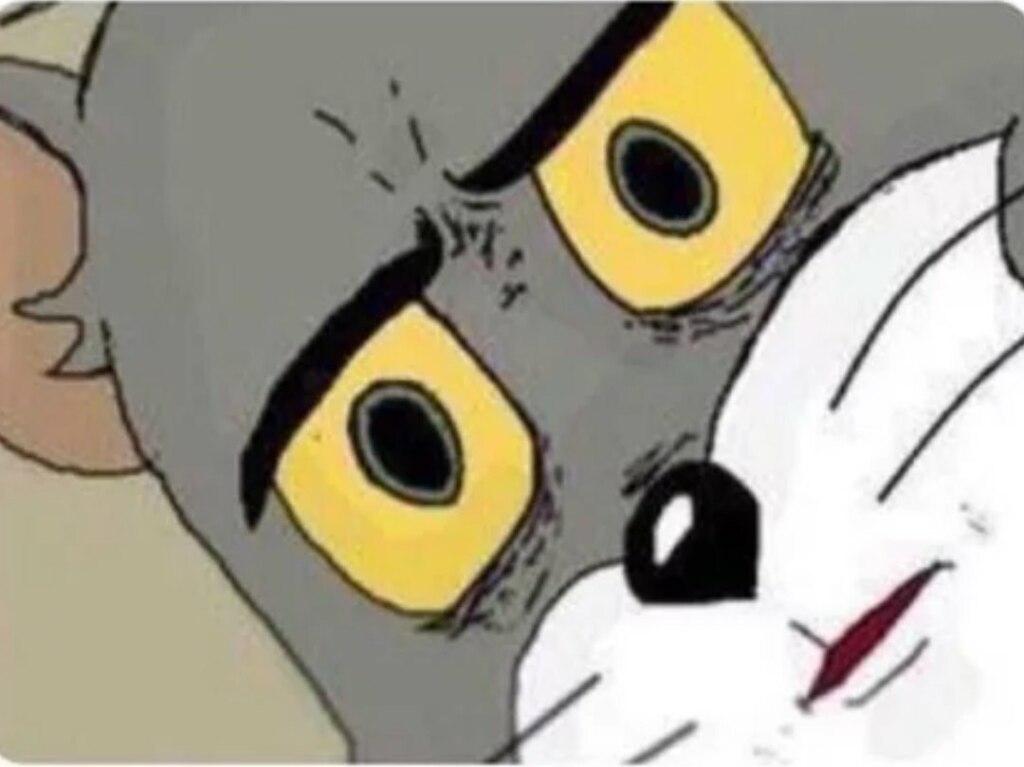
The frame shows the head of a gray cat in close-up. The eyes are yellow, the pupils dark and turned to the side, and above them are thick, sharply knitted brows, while short strokes along the edges indicate tension. The white muzzle and black nose occupy the lower right part, and a thin red line of the mouth is barely visible. On the left you can see a brownish fragment that resembles an ear, but the frame is cropped.
The key to the image is the expression, not the plot. There is no background and no second character, so the viewer fills in for themselves what has happened. This is the strength of the template: the face works as a ready-made reaction to any news.
Where the panel came from
The image depicts Tom, the hero of the cartoon series “Tom and Jerry.” Reportedly, it is not a frame from the cartoon itself but a panel from a fan comic that was published online around 2012. The details vary, so the exact author, title and publication date remain unknown.
When the face was cut out of the comic, its original context disappeared. This is what made the picture universal: the viewer sees only anxiety and does not know what caused it, so any caption fits.
How the panel became a template
The cropped face began to be used on imageboards and social networks, and in the late 2010s it gained notable popularity as a caption for situations in which a person notices something awkward or alarming. The image circulates under various names, including Unsettled Tom.
The template clearly illustrates a common mechanism: a character from a familiar cartoon, whose face reads without words, gets a new life outside the original story. A caption is enough, and the emotion becomes clear: anxiety, suspicion, mild horror.
Four captions and why they work
The logic of the examples is the same: a calm situation in the caption, and the face adds the alarm.
“When someone in the chat writes: let's call tomorrow at eight in the morning.” An ordinary sentence becomes frightening thanks to the reaction: the time was chosen badly. Nothing terrible has happened, but the face looks as if it has.
“When you realize you sent an internal email to the whole company instead of one colleague.” The caption names a specific mistake, the face becomes its second half, and the viewer sees that the person has grasped it all.
“When a notification arrives on vacation: the report has been sent for review.” The contrast between rest and work makes the reaction understandable.
“When the neighbor said he'd drop by for a minute and stayed until dinner.” The alarm is caused not by a disaster but by an intrusion into everyday routine. The joke rests on a recognizable situation.
How to pair this face with a caption
The template works best with a short caption describing a situation that can be imagined in a second. The face reads as bewilderment and alarm rather than anger, so captions with aggression don't suit it: the cat looks puzzled, not aggressive.
The template is not suitable for serious news or other people's misfortunes: it makes the event funny, and the alarm in the caption sounds like mockery. It works best for everyday unpleasant surprises.