A scene under a bright sign
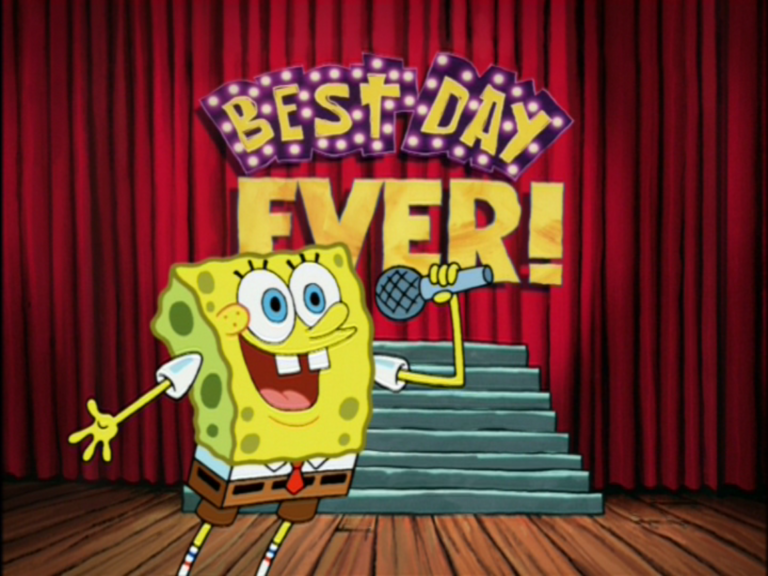
In the picture, SpongeBob stands on a wooden stage in front of a red curtain. Above him is a light-bulb sign: a purple shield with yellow letters “BEST DAY” and the large yellow word “EVER!”. The character smiles broadly, holds a microphone in one hand and sweeps the other to the side as if inviting the audience. Behind him are greenish-gray steps.
The frame looks like a title card rather than a moment from the middle of an episode. This matters for the template: the sign already sets the tone, so the caption should complement it rather than repeat it.
The episode and the song
The frame belongs to the episode “Best Day Ever” from the fourth season of the series. The song from it is credited to Tom Kenny and Andy Paley. Accounts of the song's release and the episode's plot differ, so the exact dates and numbers remain unknown.
The melody is upbeat and ceremonial, and it is precisely this contrast with what happens on screen that became the basis of the meme. The song creates a cheerful mood that is easy to transfer to any plot, including one that is anything but cheerful.
From the stage to YouTube videos
Reportedly, the meme spread on YouTube in remixes that lay the song over serious or dramatic scenes. The titles of such videos often follow the pattern “put Best Day Ever over…” with a description of the scene. The exact date of the first video and its view counts are not confirmed.
The principle is simple: cheerful music and a grim image are incompatible, and the comic effect arises from that collision. Something similar happens with a still frame: the sign promises a celebration, while the caption describes a minor misfortune.
Caption templates and their logic
Below are four invented captions. Each is built the same way: a small everyday failure, and the sign declares it a holiday.
“Monday started, the coffee ran out, and the elevator is broken.” The list of failures sounds like a list of joys, and the effect comes from the sign not noticing any problems.
“Submitted the report one minute before the deadline, and inside are last quarter's numbers.” The pause between success and error makes the caption funny: the viewer expects triumph and gets embarrassment.
“First day at the new job: the password doesn't work, and the colleagues have gone out for lunch.” A domestic glitch is presented as a major event.
“Called a taxi, and it arrived at the neighboring entrance.” The scene looks like a show, and the specificity of the caption brings the viewer back to reality.
When the template works
The frame works best with minor failures that look silly but are not painful. If the caption describes someone's serious trouble, the cheerful sign becomes cruel, and such a version is better avoided.
The caption is conveniently placed above or below the image: the sign and the curtain fill the whole frame, while the character himself is in the center and should not be covered.
Oxymoron captions also work well, where the word “best” sits next to an obvious nuisance: “best day” with a missed commuter train or a keyboard soaked in coffee. The smaller and more recognizable the failure, the easier it is for the viewer to smile along with the hero rather than feel sorry for him.