The old rhyme and the new animation
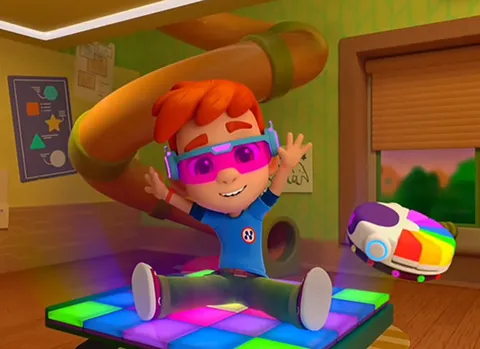
The short question-and-answer rhyme “Johny Johny Yes Papa” lives in the children’s song tradition: a father notices the child eating sugar, asks him about it, and the child answers with a denial. Various channels made their own animations of this counting rhyme long before the meme wave. In May 2018, BillionSurpriseToys published its own 3D version of the song. The date refers to that channel’s upload, not to the origin of the rhyme; the exact source of the kitchen frame shown has not been established.
That summer, videos with this song began a second life. In August, a montage of a BillionSurpriseToys clip with “Baby Shark” spread on Twitter: the familiar children’s chorus suddenly sounded in an absurd combination, and the audience started cutting, redubbing and cross-breeding the clips. By 2018 the song had a noticeable adult afterlife in parodies and montages, though that doesn’t make one video the start of all the variants. The children’s scene and its adult meme reading are different layers of the same story.
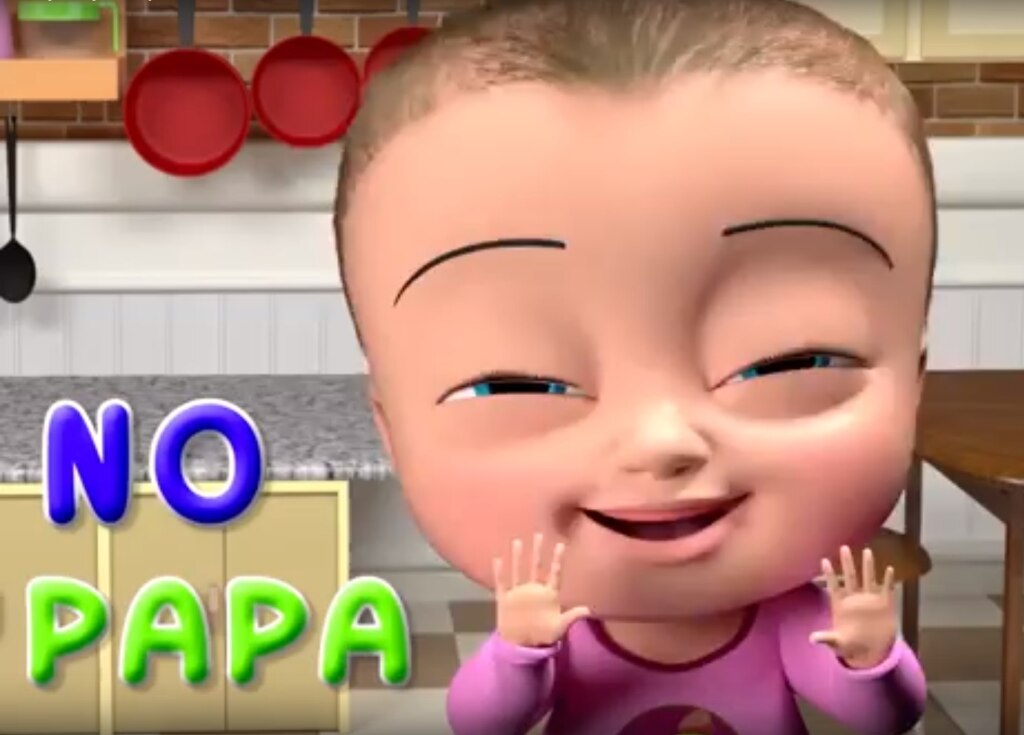
Close-up and two palms
In this picture, almost the whole space is taken up by the child’s face: half-closed eyes, raised eyebrows and an open smile. Small raised palms are visible at the edges, and kitchen furniture stands behind the head; on the left, the words “NO PAPA” are set large. The frame keeps its cartoon innocence, but the caption ties it directly to the moment of denial. It doesn’t show what the boy supposedly did: the joke only needs the most confident intonation of “no, Dad” once the viewer already knows the rhyme’s context.
This expressive simplicity explains why a single frame is easy to separate from a long video. There is an address, a reaction, and a ready-made denial, but no need to retell the whole plot or add new lines to the song. In some versions the childish denial is the funny part; in others it is the overly serious tone of an adult who addresses the animated toddler as if it were a witness.
How the chorus became raw material for parody
The contrast works on several levels: the children’s melody promises a calm repetition, while the large faces, bright kitchen and deliberately simple 3D animation create a sense of excess. Adult parody changes the addressee: what in a children’s video should help follow a short scene becomes material for a strange montage. When “Baby Shark” is attached to the chorus, the joke arises not from a new story but from the collision of two recognizable children’s sounds, as if a video platform’s recommendations had glued together incompatible clips.
The preserved caption “NO PAPA” is especially convenient for redubbing: the short denial already contains a conflict between the words and what the viewer sees. It can be left in the picture while only the surrounding situation is replaced, without continuing the song or quoting its lines. That is why the same gesture works in different clips: the reaction stays recognizable even when the original sugar plot disappears.
Invented family excuses
“Did you put the cartoon on autoplay again?” — “NO PAPA,” even though the same chorus has been playing from the room for the sixth time. “Who left all the cupboards open?” — the boy smiles and raises his palms, as if the camera caught him at the scene. “Did you eat the chocolate?” — instead of an explanation, there is only a big denial and a crumb on the cheek. All these captions are invented. Their humor is built on the gap between how obvious everything looks from the outside and how calmly the character says his “no”; the song provides a familiar framework, while the specific mischief is new each time.