A scream from the February teaser
The scene was presented in the teaser for Ralph Breaks the Internet, released on February 28, 2018. The sequel to Ralph's adventures was created by Disney Animation, with Rich Moore and Phil Johnston as directors. In the new story, Ralph and Vanellope leave the world of arcade machines and enter the internet. One of the comedic episodes takes them into a children's game called Pancake Milkshake.
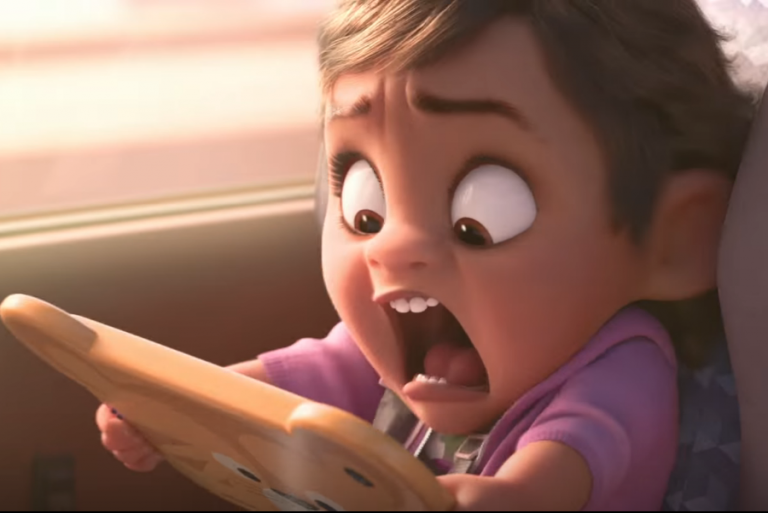
In the game, players have to feed animals the appropriate treats, but Ralph overzealously gives the bunny far too many pancakes. The animal swells up, and the girl playing on a tablet in the car is frightened by the result. Two linked templates came out of a single scene: the bunny stands for excessive strain, and the girl for the observer's reaction. The images began spreading even before the full film premiered in the US on November 21, 2018.
The scene had an unusual afterlife
Rich Moore later recalled that this game episode had been animated early and used in advertising, but was cut from the main storyline for the sake of its pacing. Phil Johnston proposed bringing the scene back during the end credits. The popular promotional fragment thus gained an extra joke: the girl is dissatisfied that the film she has just watched lacked the event she knew from the trailer, and then turns back to the game.
This history matters for recognizing the meme. Some viewers came to know the bunny and the scream through the short ad, some through ready-made captions, and some saw the episode only while watching the film. That is why the reaction could become familiar before the heroes' adventures themselves did. Its spread online belongs to the scene's life in advertising, while its appearance during the credits belongs to how the finished work is structured.
We see the face but not the cause
The image shows only a girl in purple clothing. She holds the tablet with both hands, looks down, and opens her mouth wide; her big eyes and raised eyebrows heighten the fright. On the left is the car window, on the right the back of a seat. The tablet is turned so its back faces the viewer, so what is on the screen is hidden. There is no bunny, no pancakes, and no Ralph in the image.
The hidden screen leaves room for a new cause of the reaction. In a three-panel edit it is shown between a calm opening and the scream, while in a single picture the caption explains it. A short unexpected detail is enough for the viewer to mentally reconstruct the shift from ordinary viewing to horror. A large emotional reaction is especially funny next to a small, everyday annoyance.
What might appear on the imagined screen
The first invented variant is a family calendar. A person opens the weekend plan and discovers that a meeting with friends, a furniture delivery, and a plumbing repair are all scheduled for the same hour. The girl expresses the moment when a neatly planned schedule suddenly turns out to be impossible. The screen serves only as a conventional place where the news is revealed.
In another invented sketch, a player receives a reward for a long quest: instead of the coveted item, they are offered the chance to repeat the same task ten more times. The reaction responds to the contrast between the promised completion and a new obligation.
The third invented example is browsing a family photo archive. In a beautiful album, a close-up photo of a finger covering the lens during the most important group shot accidentally appears. The scream exaggerates the disappointment over one ruined photograph. In all three cases the new plot fits into the invisible screen, while the animated face keeps a clear point of unexpected discovery.