The image
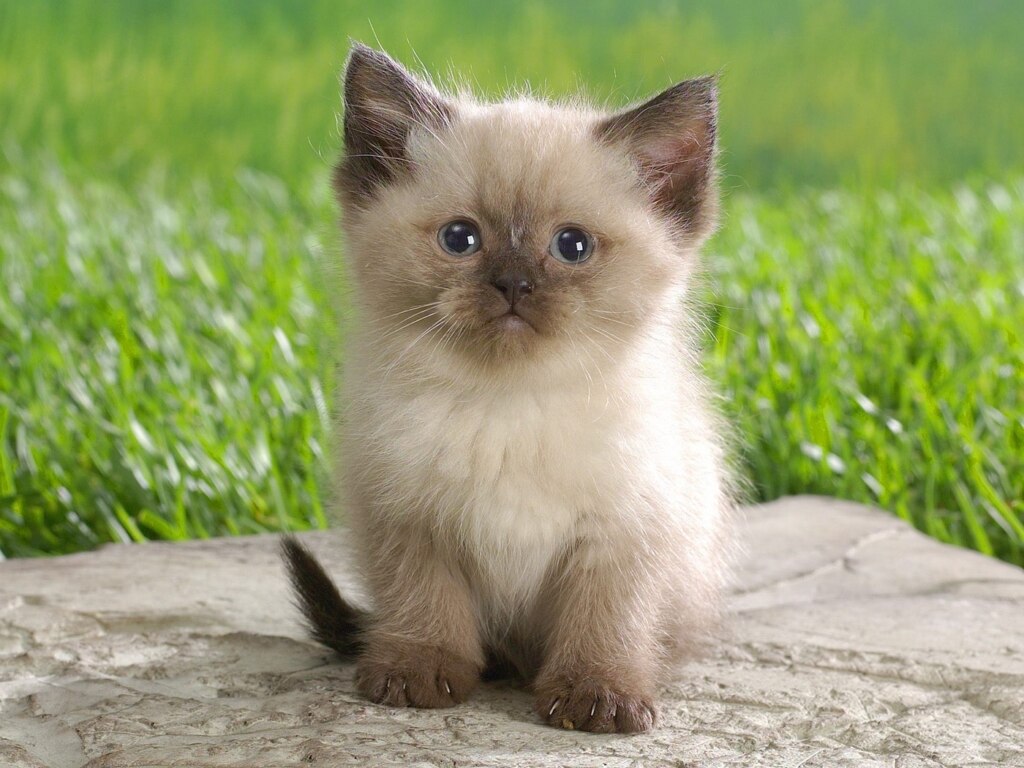
The picture shows a small kitten with cream-colored fur and dark ears, muzzle, and tail, sitting on a light-colored stone. The background is bright green grass, shot with shallow depth of field. The kitten looks straight into the camera with wide-open eyes. For a meme this is a neutral image: there is no action or emotion in the frame that needs decoding, so only the caption adds meaning.
The kitten’s coloring matches the Himalayan breed description in the catalog: a light body with darker extremities. A picture like this easily reads as an ordinary photo rather than a staged shot for a meme.
Name and track
The meme’s name comes from the title of a track by Toshita Mun. The word resembles the Yiddish endearment “bubele,” but no link between that word and the meme is confirmed. Names like this, taken from sound, often catch on faster than names with meaning: users repeat the word rather than explain it.
No confirmed data about the track’s release date or about how it connects to the kitten in the picture is available in open sources. So it is best to rely on the catalog’s description and to note that the origin of the name is not established.
The abstract format
Abstract memes are built on the absence of explanation. Babulex is used as a reaction to things that resist description: a strange situation, an awkward pause, an illogical act. The kitten picture works as a blank response that each person fills with their own meaning. That is the format’s main feature.
This approach is handy because it requires no context. A reader can grasp the reaction from the tone of the conversation rather than from the picture’s content, which is why the meme works in very different chats.
How it is used
The typical use is a short caption under the picture or a reply to a message. Stylized examples: “— What was that? — Babulex.” and “Deadline moved to yesterday. Babulex.” Its brevity makes the meme convenient for a quick reply, and the lack of context lets it be used in any conversation.
Sometimes the picture is swapped for another kitten or another animal while the name stays. This way the format keeps its recognizability even when the image changes, and it stays tied to the original word.
Why the meme lasts
Abstract memes with cats tend to last longer because the image is simple and pleasant. A kitten on green grass evokes no negative associations, which makes the picture safe for any audience. A name that doesn’t need translating helps the format survive moves between platforms: the word is remembered by its sound and travels easily.
The mix of a harmless image and empty meaning leaves room for new readings. That is why babulex stays understandable even to people seeing it for the first time, and it needs no separate explanation.
As long as the format is not tied to an event or storyline, it does not go stale along with them. New users find their own meaning in it, while older ones use it as a familiar signal that explains a reaction without extra words. For an abstract meme this is a rare quality, and it explains why the picture keeps appearing in discussions.