A cat you're supposed to spot
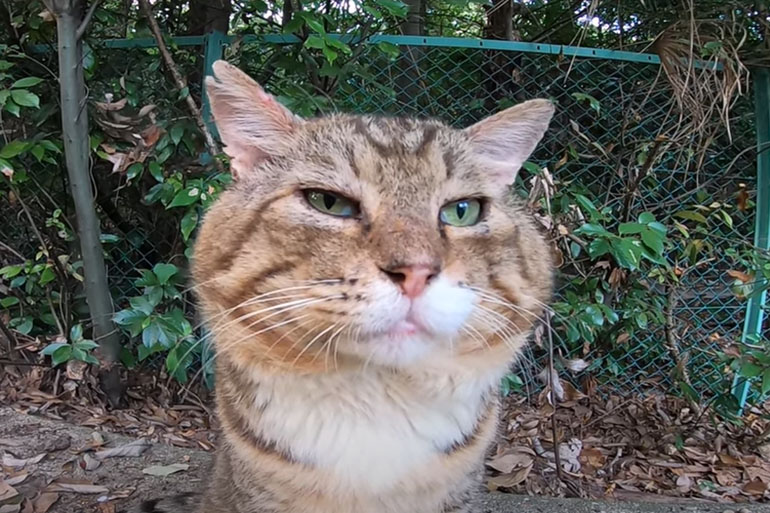
In the photo, a ginger-and-white cat sits among branches and foliage. In versions like this, a red arrow points to it, even though the animal already takes up a noticeable part of the frame. That's the whole simple visual joke: the framing promises a difficult search or a puzzle, and the answer turns up almost immediately. The name "Sock" fixes the character as a specific hero of online posts, but doesn't necessarily reveal its real name.
Users often take the photos and place the cat in non-obvious spots: next to a fence, on a roof, among furniture, or directly behind an object. The arrow turns an ordinary sighting into a little game. In other cases, the cat is deliberately front and center, and no searching is required at all. Then the disproportionately serious hint combined with how obvious the subject is only heightens the post-irony.
What is known about the source
Secondary accounts link the early versions to Japanese cat videos and to a separate picture culture where arrows mark hidden objects. However, the exact first publication, the animal's owner, and the cat's original name are not established. The format's history is therefore best told with caution: the photo became recognizable through remixes, but there is no solid basis for attributing it to a specific author without confirmation.
This distinction matters for animal memes. The same cat can appear in several posts, and its nickname and story are often passed along with the picture without a source. If the creator has the original publication, it's worth keeping that attribution separate; otherwise it's better to call the character simply an online image. The expression on the cat's face also doesn't reliably indicate that the animal was deliberately posed or filmed on command.
Why the arrow itself became part of the joke
An arrow is a familiar tool of interfaces and explanatory images: it shows where to look. Here it's applied to an object so obvious that the hint is redundant. The result is comic dissonance between an important visual marker and a trivial task. When the cat is almost completely hidden, on the other hand, the marker genuinely helps spot it and turns the photo into a mini-game.
The name Sock adds another layer: a familiar character becomes a recurring participant in new places and stories. The post-irony comes from the mismatch between the serious presentation, the recurring hero, and the often meaningless location. Sometimes the caption gives coordinates that explain nothing; sometimes the arrow points at the obvious. The audience can join in by guessing where the cat will turn up next.
How to make your own version
For your own version, choose a safe photo with a noticeable object and place the arrow as if it were hard to spot. For example, a large cat sits on an empty windowsill, and the caption insists: "found it on the third try." For a harder search, you could hide a small toy among similar objects and make the arrow genuinely useful. The contrast between an easy and a hard task sets the tone.
The cat can be moved to an office scene, lying next to a keyboard, labeled "chief deadline-monitoring specialist." Or you could show an empty couch with the arrow pointing at a barely visible tail sticking out from behind a cushion. These variants preserve the mechanic of discovery and don't require any claims about a real cat. You shouldn't invent a dangerous situation for the animal or pass off a staged scene as proof that it got into trouble.
Post-irony and the ethics of the image
The cat is easy to caption in any language, or with no text at all, because the ginger silhouette and the red arrow need no explanation. Some versions really do invite you to find the cat; others poke fun at the "spot the object" genre itself. If the caption explains in too much detail why the arrow is funny, it kills the effect. It's enough to set up the task and let the viewer notice how obvious or how hidden the object is.
The online image shouldn't erase concern for the real animal's wellbeing. If a photo looks worrying, it's best not to joke about possible harm or to accuse the owner of cruelty without evidence. It's fine to talk about the composition — the branches, the background, the arrow, and the contrast — and leave the cat's biography unknown. That way the description preserves the meme's main appeal: a recurring ginger character who each time ends up in a new, slightly ridiculous spot in the frame.