What is in the photo
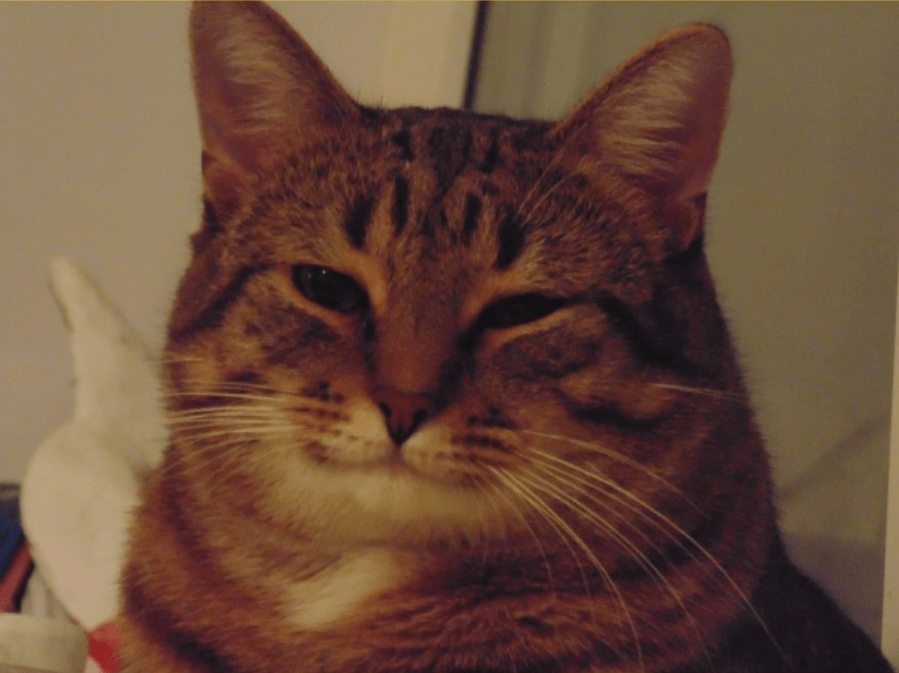
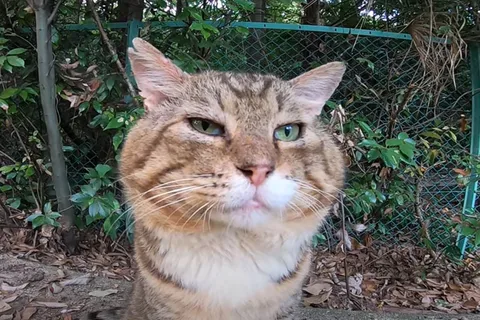
The image is a single frame, not two: a close portrait of a striped cat with a rounded face. The coat is gray-brown with dark stripes and light patches near the nose and on the chest. The eyes are especially expressive: they are narrowed, the left slightly wider than the right, and this asymmetric squint creates the feeling of a thoughtful, sly gaze. The mouth is closed and the corners of the muzzle are raised, which gives the effect of a faint smile.
The lighting is warm and muted, a yellow-red glow is visible in the frame, and in the background behind the cat's head something light and fluffy shows. The shot was clearly taken at home without a professional studio; the face fills almost the whole frame, so all the details of the gaze are clearly visible.
What is known about its origin
Who first posted this photograph and when could not be established precisely, nor could the cat's name or its owner. Common retellings about the date the picture appeared or the story behind the shot are not confirmed. It is only known that the frame is used as a reaction image.
This is normal for cat memes: home photos often lose their authorship once they end up in other people's collections. The cat was most likely simply squinting against the light or blinking rather than smirking — but exactly that asymmetry of the gaze and the raised corners of the muzzle, described above, read as a knowing smile without any explanation.
How the humor works
The joke rests on human perception: thoughts and intentions are attributed to the cat. The squint becomes “I know everything,” and the raised corner of the mouth becomes “I did it and I don't regret it.” The calmer the cat, the sharper the contrast with a caption that describes a misdeed, a violation, or a ridiculous secret.
The image is related to those cat memes in which the animal portrays smugness: it needs neither text nor special design, so it is easy to insert into a conversation as a reaction. A good caption is usually short and built on a confession or a secret that only the pictured cat knows.
Examples of captions
“When I said I cleaned my room, but I stuffed everything into the closet.” The sly squint confirms the secret.
“Me after my sister found my secret candy stash but blamed my brother.” A joke about innocent gloating.
“Accounting: who set the alarm for 5:30 again? Me:” The cat pretends it has nothing to do with it.
“My weekend plan. Nobody knows I'm lying in bed all day.” Quiet joy at planned laziness.
The photo is best sent in reply to an obviously incomplete confession: a person writes “it wasn't me,” and the cat has already said everything with its expression. The contrast between the words and the gaze makes the joke without any further explanation.
How to use the picture
The photo suits short first-person captions well. Place the text at the top so it does not cover the muzzle: the eyes carry the whole joke. Since the shot is somewhat dark and warm, white letters with a thin outline read best. Do not attribute real deeds to the cat: this is just a funny face, not evidence of the animal's character.
Any small “guilt” will do for a caption: a stolen yogurt, a quietly moved deadline, a secretly bought dessert. The smaller the offense, the better it pairs with the animal's smug look.