Two cats and a long stare
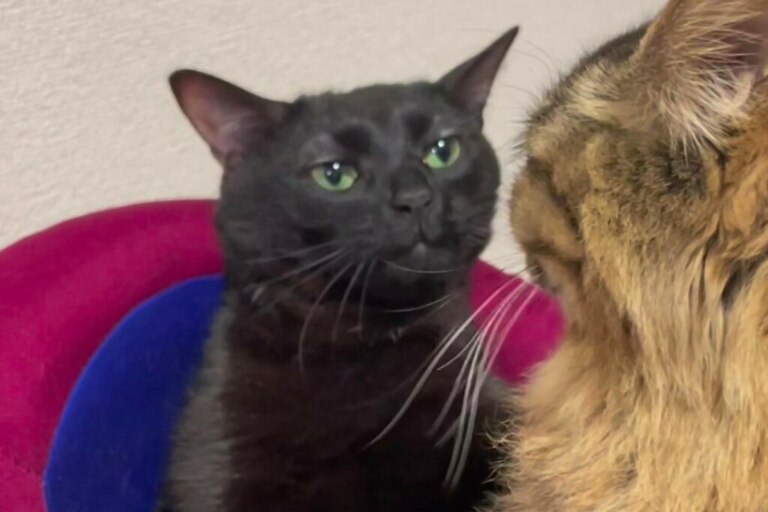
The original scene is a video of two cats, one black and the other light brown. On March 1, 2023, a Japanese user posted a clip in which the black cat stares intently at the other for several seconds and then attacks it. For the meme version, people usually trim the calm part before the movement: viewers see an empty gaze and fill in a state of absent attention.
Later, video creators started cropping the footage, adding sound, and placing the cats over new backgrounds. One version, posted in late March 2023, spread widely and helped cement the association "the cat zoned out." So it is worth separating the original episode of the animals' interaction from the meme fragment, which often ends before the attack. The point is about how people read the image, not a reliable assessment of the cat's actual state.
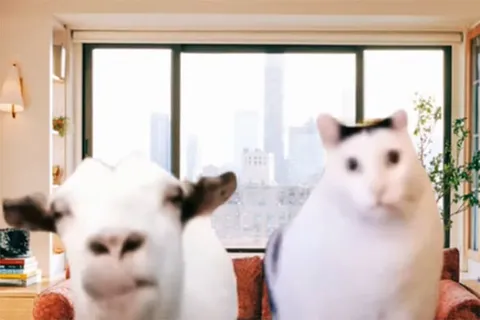
The frame shows both animals side by side and keeps the everyday feel of the scene. In captions they can be cast as conversation partners, but the cats are not acting out a written dialogue: the text is invented by the meme's author. The distinction matters because it is easy to attribute human boredom or intent to pets, and a single stare cannot establish either.
What losing the thread looks like
The cat shows no obvious reaction even though something interesting is going on nearby. That stillness resembles a familiar state: a person hears the words, but their attention has already moved to a shopping list, a song, or a task in their head. A caption can start with a long explanation, after which the black cat appears: "me listening to a coworker list six versions of the file"; "someone telling me the plot of season four, which I never watched."
The joke can describe disinterest or mild overload, not just rude ignoring. For example, someone is trying to choose a meeting place among twelve restaurants, and the hero has completely lost the thread. A good caption specifies the situation; otherwise readers won't know who exactly "checked out." The blank stare is universal in itself, but it needs a short anchor in the text or a familiar sound.
From a real video to a reaction template
At first the clip was shared as a brief interaction between two cats; then fragments were edited for vertical video and laid over everyday scenes. A green screen made it possible to put the staring cat "inside" a lecture, a meeting, or a family conversation. This is a typical path for a reaction video: the original gesture stays, and each new background and caption sets its meaning.
The audio changed too: sometimes calm music was used, sometimes a popular clip was added, sometimes there was silence. So not every post with this image has one required sound or author. The short version as a still picture is just a frozen moment of a longer scene. When describing the origin, talk about the video and its early posts rather than declaring one particular screenshot the original.
Captions for your own conversation
Pick a situation where the explanation runs longer than attention can last: "mom explaining how to set up the new TV"; "a friend carefully recalling every change to the game rules"; "me after work, listening to an eight-minute voice message." Then place the cat's gaze at the moment the mind has already wandered off. For a gentler version, you can caption both cats: the striped one is explaining, the black one is mentally looking for tea.
Don't use the image to accuse someone of not caring about the conversation: distraction can be involuntary, and the scene's context is made up. If you want to joke at your own expense, the format is especially clear: the author admits to losing the thread and offers to continue later. The cat remains a reaction, not an expert on human attention.