The cat café becomes the setting for a serious question
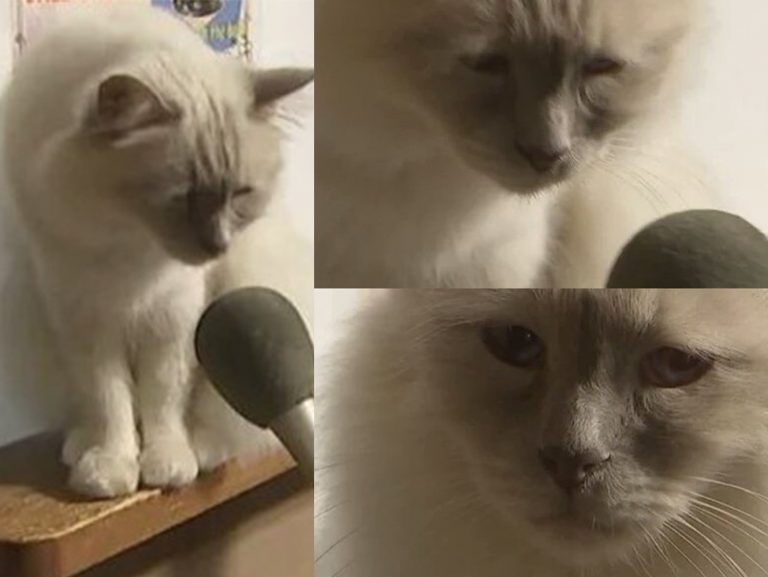
The origin of the footage is linked to a Japanese TV segment from spring 2016 about a cat café: journalists discussed whether the cats living there get enough rest. A microphone was also held up to one of the animals, as if it were a full participant in a proper interview. In late April a set of four frames spread on Twitter, posted by the account @IoryHamon. The cat’s name and the exact channel are not established in the commonly circulated history of the meme.
In early May the set appeared on the Russian-speaking internet, including on Pikabu. The frames were cleared of the original captions and assembled into short scenes, to which people invented their own questions and answers. In this way a TV conversation about cats’ rest turned into a universal interview with someone who has barely gathered his strength. The date of this meme wave does not tell us on which day the animal was filmed.
Three frames and not a single ready-made line
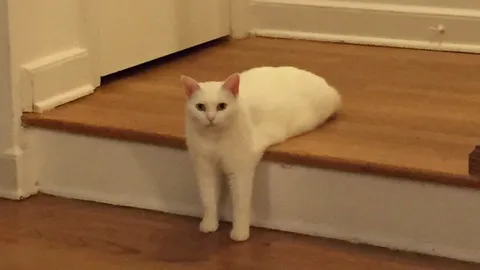
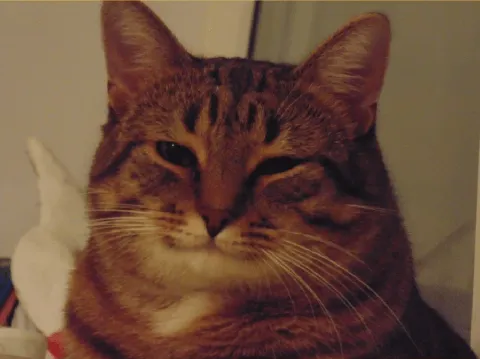
In this collage, the large frame on the left shows a light-colored cat sitting on a wooden surface. A dark microphone is held near its muzzle. On the right are two tighter close-ups of the head: in the upper one the eyes are almost closed, in the lower one they are open. The image has no Japanese subtitles, no name for the hero, and no dialogue already written. Therefore the text of a new joke can take the place of the original television context.
The name “sad cat” describes the viewer’s reading of the pose and gaze. It does not establish that the animal actually felt sadness. Drooping eyelids, stillness, and the change in framing help a person imagine a tired interlocutor. The bottom frame looks like the moment of returning to the conversation, when the hero has finally decided to say a short answer or ask a question in return.
Silence becomes part of the dialogue
The microphone sets the rules of the scene: a comment must follow now. The cat does not share these rules, and the mismatch is already funny in itself. The meme develops it by attributing human speech to the animal. The result is a hero who is capable of answering but chooses words too slowly, or considers what is happening so unfortunate that he does not know where to start.
A few frames allow this pause to be stretched. The first introduces the interview situation, the second delays the answer, and the third gives way to the resolution. At the same time, the editing does not have to retell the real movement from the original segment. The author of the caption creates their own sequence: the same facial expressions can become a silent protest, a dry statement of fact, or an attempt to keep up politeness after an unpleasant event.
A short final line works especially well here. A long explanation fills the pause with details, while a laconic answer leaves the cat its unflappable look. TV seriousness keeps supporting the scene even when the topic of conversation is completely mundane and does not deserve a separate report.
Three conversations after a small catastrophe
In the first sketch a reporter asks: “How did the move go?” In the second frame the cat is silent, and in the third it answers: “The kettle arrived. The lid chose a different city.” One lost item explains the fatigue more convincingly than a general statement about a hard life: the reader fills in the boxes, the searching, and the unpacking on their own.
In the second sketch the question concerns rest: “Did you manage to get some sleep over the weekend?” After a pause comes the answer: “Yes. In line at the tire shop.” The expected domestic calm is replaced by accidental sleep during a mandatory errand. The hero’s tired look makes this modest victory doubtful.
The third variant begins with praise: “You were the first to send a finished report. What helped?” The cat opens its eyes and answers: “I attached the delivery menu.” The pause here turns into the realization of a mistake. From an interview with a model performer it becomes the confession of a person who now has to explain his premature success all over again.