What the image shows
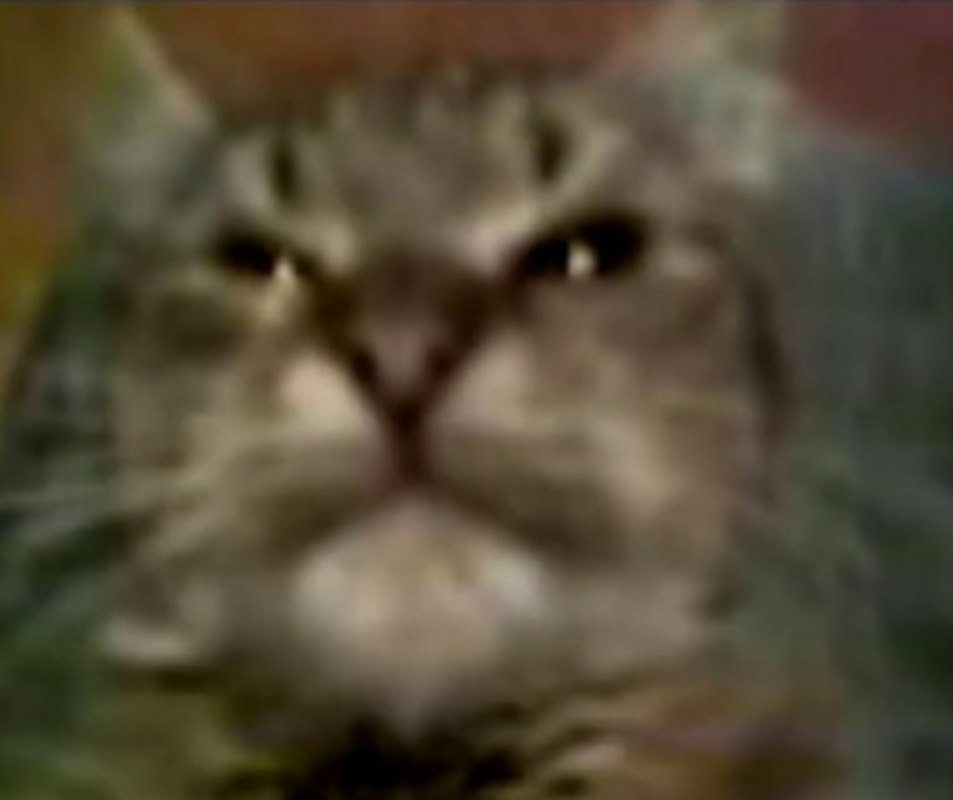
The frame is heavily blurred and enlarged: the face of a gray striped cat is very close to the camera, eyes slightly narrowed, nose and whiskers smeared, with a multicoloured background behind it. The quality is poor, as expected of a shot from an old video filmed on a cheap camera.
The cat's expression is focused and a little displeased, so every question sounds like a serious interrogation.
The video's history
According to a Ukrainian publication, the original clip was recorded back in 2013. In it a boy asks the cat questions: “Ty mamu mav?” (“Did you have a mother?”), “Ty papu mav?” (“Did you have a father?”), “Ty brata mav?” (“Did you have a brother?”). The cat answers with a short sound resembling “mav.” The creator of the clip is not named in publications, so they are not named here.
The video regained popularity from late July 2020 on YouTube. Music parodies then appeared based on it, in which the cat performs as a singer and answers the boy in rhythm.
The scene itself adds to this. The child asks, and the cat answers with the calm of someone under interrogation. The serious tone of the questions, the repeated answer and its meaninglessness create a steady comic rhythm that is easy to reproduce in any other format, for example in a two-person chat conversation.
Why “mav”
“Mav” is the past-tense form of the verb “maty” (“to have”), that is, “had.” The question “Kit, ty mamu mav?” roughly means “Cat, did you have a mother?” A Russian speaker finds such a calque unfamiliar, and it is exactly this slightly odd phrasing that makes the question funny, while the answer, a meow, happens to match the form of the word.
The key point is that the cat does not answer meaningfully: the viewer only seems to think it understands. The meme is built on a coincidence that looks like a dialogue, and on the seriousness of the little questioner.
How the meme spread
The videos were reposted with captions, cut into fragments and used as audio tracks. The questions carried on as a list: who else did the cat have? The answer “mav” stayed the same, and that is what gave the clip its rhythm.
Its popularity in Russian and Ukrainian can be explained by how close the languages are: the word is understood without translation but sounds unfamiliar.
Caption examples
“When you answer ‘did you learn everything?’ with the same single word every time.” The cat's uniform answer becomes a model of exam-day behavior.
“Tax office: did you have an apartment? A car? A country house? Me:” The picture supplies the answer without words.
“A colleague who gets asked about the report.” The caption turns the cat into a person who has decided not to go into details.
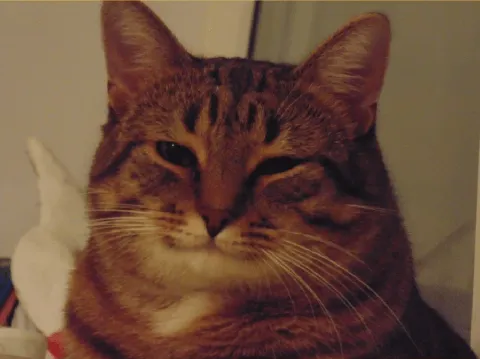
“My reaction to every question from my parents about my personal life.” The expression conveys stubborn restraint.
Because of the repetition the meme works well as a series: each line is a question and the last part is always the same answer. The shorter the questions, the better the rhythm works. You can vary the topics (household, work, study), but avoid mixing too many topics in one post.
How to use the template
It is built on repetition: several questions in a row and the same short answer. The effect is stronger if the questions become more and more unexpected.
There is no need to insert a language you do not know just for effect. It is better to quote the originals “mav” and “ty mamu mav” exactly and without distortion.