Character and color palette of the frame
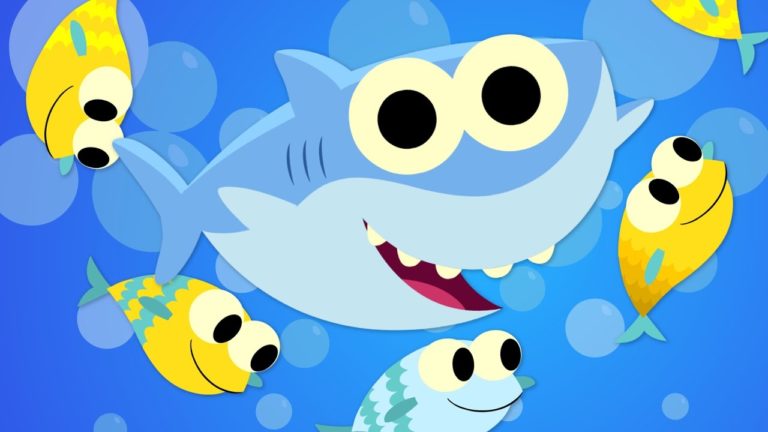
The image shows a cartoon shark in light blue with huge round eyes, a wide smile and white teeth. Around it swim several little fish with equally large eyes: four yellow and one blue. The background is blue, with semi-transparent bubbles. The palette is bright and high-contrast, and the characters look as if they were drawn for little viewers.
This look makes the topic harmless: big eyes and an open smile set a friendly tone, so even a toothy shark becomes a cheerful hero. From a single frame it is impossible to say which version of the song it comes from, so the text describes it as a typical illustration of the topic.
Where the song came from
The melody itself existed for many years as a simple children’s song for singing together with gestures, and its versions appeared long before internet memes. Mass fame came with the version by the South Korean company Pinkfong, uploaded to YouTube in the mid-2010s under the title “Baby Shark Dance”.
The internet wave came after the video’s release: in 2018 the song became popular first in Asia and then in the West. Retellings often mix up dates, so it is useful to distinguish three moments: the creation of the song, the release of a specific version, and the period of mass spread.
Chart, challenge and records
In January 2019 the song appeared on the American Billboard Hot 100 chart and entered the top half of the table. For a children’s song this is rare, and the media then actively discussed how such a thing was possible.
In parallel a dance flash mob arose, which people called the Baby Shark Challenge: people filmed themselves to the melody and repeated the moves from the video. Later the Pinkfong version became one of the most-watched videos on YouTube; exact view counts change quickly, so they are not given here.
Why the tune sticks
The song is built on a short repeated phrase and a simple rhythm that is easy to keep time with by clapping and moving. Such structures are memorized quickly, and online they are easy to rework: it is enough to change the character or the words, and the tune stays recognizable.
The meme itself rests on a combination of childlike innocence and pushiness. The video looks harmless, but the repetition brings it to an almost obsessive state, and exactly this effect turns the song into a subject of jokes and parodies.
Caption examples
Below are examples invented for this template.
“Asked a colleague to briefly retell the report, and he replied by singing two verses of Baby Shark.” The joke works through transfer: an obsessive children’s song becomes an unexpected answer to a business question, and the shark’s toothy grin from the picture completes the absurdity.
“The kid learned Baby Shark in one evening, and now that shark has been swimming in my head for the fifth day.” The caption uses the admission of fatigue from repetition: what is funny is not the song itself but an honest description of how the tune gets stuck.
“Arrived at the party on time, and everyone was already clapping to Baby Shark.” The caption combines a children’s image with an adult situation, so the contrast comes out gentle and recognizable.
Careful with real people
The shark template works well in everyday scenes where the topic is minor irritation or a cheerful mood. Don’t use it to mock real children or specific parents: the meme is meant for cartoon characters, and transferring it to living people quickly changes the tone.
If a caption mentions specific performers or authors of versions, it is better to name them carefully and rely on verified facts rather than on retellings from other people’s feeds.