A song older than the trend
"Three Sisters" by the Ukrainian artist Vlad Darwin came out in 2013. The story of the three heroines is presented as a musical parable, and the video plays with the style of an old melodramatic TV series. In 2024 the track spread across TikTok again: participants synced simple moves to the verse and showed different groups of three characters. A Ukrainian-language version and a new video appeared later. The first dance video has not been identified.
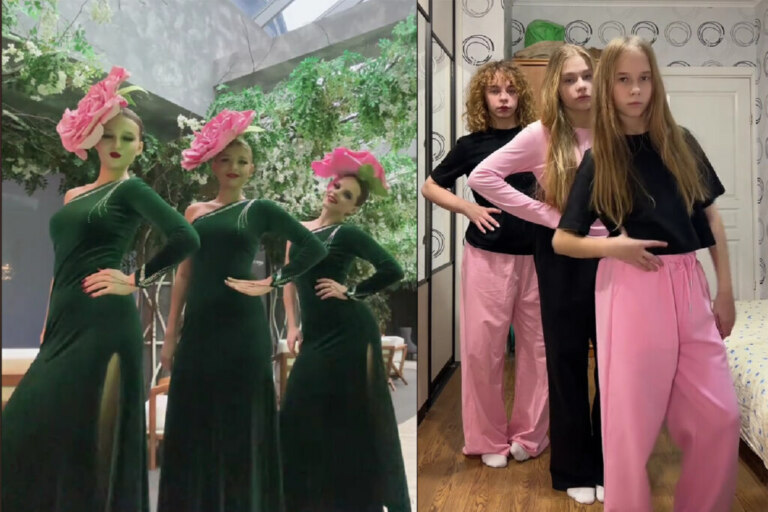
The catalog image shows two trios: on the left, girls in identical green dresses with pink flowers in their hair; on the right, teenagers in black tops and pink pants. The visual cut matters in itself: the three-figure composition stays similar, but the age, clothes, and mood change. The song names Amanda, Linda, and Rose, and the viewer gets a reason to put their own trio in their place.
The rule of three and the visual swap
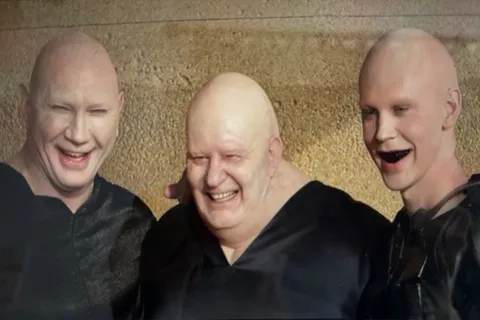
The basis of the trend is simple: a line of the song gives the names of three sisters, then the frame presents a trio, sometimes nothing like the song's literal heroines. The synchronized dance gives the videos a common skeleton, and the choice of characters becomes the main content. You can show three friends, three versions of yourself, three identical objects, or three stages of getting ready. It can be funny both when the match is exact and when there is a contrast, for example when the grand delivery of the song accompanies a group that clearly did not prepare for a photo shoot.
How captions reveal 'Amanda, Linda, and Rose'
A version about the morning before a trip: three frames of one person in a bathrobe, with a suitcase, and already at the door, captioned "Amanda, Linda, and Rose: me before the alarm, after the alarm, and when the taxi has already arrived." The three figures are formally one character but show a change of states. Another option is three work chats named "urgent," "very urgent," and "could have been an email": the song's triad becomes a short classification of chaos.
You can also gather three friends with different weekend plans and caption it: "Amanda wants to go to a museum, Linda wants to sleep, Rose has already bought tickets." Here the chorus creates an expectation of one shared dance, while the text underlines how different the characters are. All the examples are new illustrations of the format, not claims about specific viral videos.
How to film your own "Amanda, Linda, and Rose"
First, choose a group of three that a viewer can recognize in a single viewing. Then arrange the participants so that the number and the change of shots read without explanation, and sync a simple move to a noticeable moment in the melody. The caption can reveal the overall theme, but it is better not to state the obvious: if three coworkers are on screen, it is funnier to explain why they make a team than to simply write "three coworkers." The trend allows both a literal dance and an editing joke.
The song originally tells about specific sisters and their life paths, while the meme version often uses it only as a musical frame. Do not present arbitrary trios as the plot of the original song, and do not credit the artist with authorship of the later dance without confirmation. When filming acquaintances, get their consent and do not use their images for a demeaning comparison. A short, recognizable trio and a good-natured contrast usually give enough material.