Three villains off stage
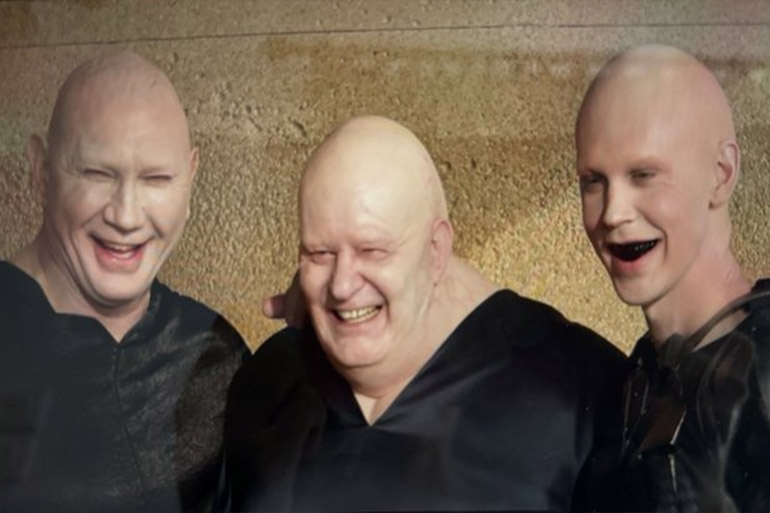
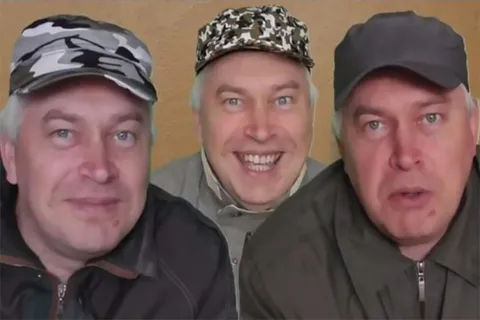
The behind-the-scenes photo shows Dave Bautista, Stellan Skarsgard, and Austin Butler in Harkonnen makeup and costumes for Denis Villeneuve's "Dune: Part Two," released in 2024. In the frame, the actors are laughing, while their on-screen characters, Baron Vladimir, Rabban, and Feyd-Rautha, are tied to brutal power and feuding. The contrast between the grim look and the relaxed smiles made the photo a handy reaction for a friendly group or a moment when people finally relax.
The local file is cropped around three heads and shoulders against a neutral background; the actors stand side by side, laughing, and look removed from any tense scene. The source of the image is described as a filming photo, but this version does not show the set, equipment, or anything happening between takes. So it is more accurate to call the frame a behind-the-scenes portrait, without guessing who said what before the shot.
A villainous crew becomes one of the gang
The template is often reinterpreted as "the guys got together and are having a good time." The meaning comes from the change of frame: in the story, these faces inspire fear, while in the meme caption they turn out to be friends, colleagues, or a crew after a successful event. The cheerful faces add warmth; the contrast with the recognizable pale costumes makes an ordinary get-together theatrically menacing. It is a handy photo for a moment when a group looks impressive but clearly has no plans to attack anyone.
The humor does not require knowing the whole plot of "Dune," but recognizing the characters' names strengthens it. The photo documents a shared shot of actors on the project, not the real behavior of the people outside filming.
The picture sets a menacing screen image against off-camera informality; the laughter does not cancel the villain roles, but for a moment lets you see the actors outside a scripted scene. It is a contrast between the film's fiction and the ordinary mood on a set.
Captions for a team and for friends
"When the whole team finished the presentation an hour before the deadline and nobody started an argument about the font." The line turns ordinary relief into a satisfied gathering of movie villains. Another example: "Us after getting together for a picnic where everyone actually brought the food they promised." Here the actors' joy becomes a visual equivalent of rare team discipline.
For a family chat: "Three cousins who have already settled who is driving grandma to the dacha." This is a new caption for the template; it does not claim that the actors are really friends outside work or that they feel anything specific beyond the visible smile at the moment of the shot.
Keep the contrast without spoiling the photo
Use the frame for a trio where shared success, mutual support, or the unexpectedly friendly look of a "scary" team matters. A short caption lets the viewer match the three actors to their own group; a long explanation of the plot is not needed if the faces and costumes are recognizable. In a comment, you can note that these are actors in Harkonnen costumes when the film is the subject, so that no one mistakes the picture for a real meeting of fictional characters.
Do not use the image for claims about the actors' personalities, political views, or relationships with each other: a smile in one photo proves only that the people were smiling when it was taken. It is better to make the contrast between a sinister image and harmless everyday joy the target of the joke.