What is visible in the frame
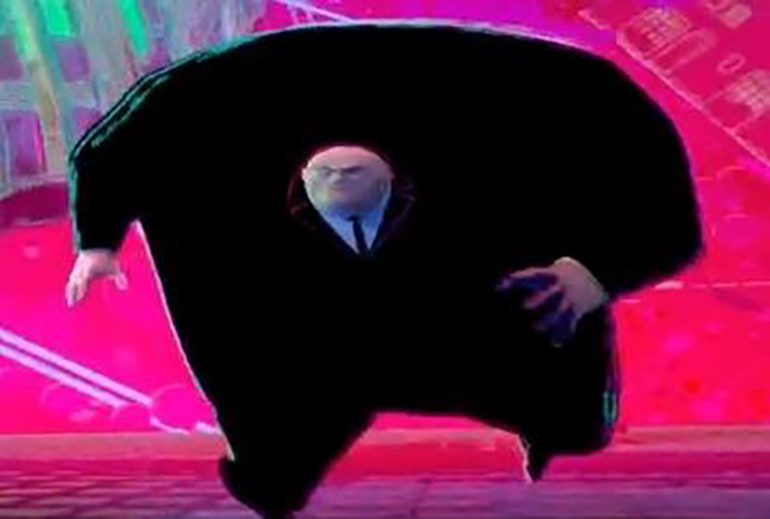
Almost the whole space of the picture is taken by a massive black figure. It is so dark that it practically loses detail: only large rounded shapes of clothing and two arms at the sides are visible. In the center, as if in a small window, is a pale bald head with a stern expression; above the collar of a light shirt a dark tie is visible.
The background is bright pink and crimson, with neon glints and geometric patterns. Because of this contrast the dark silhouette reads instantly, even when the picture is reduced to the size of an icon. The frame is slightly blurred, and it is this blur that creates the feeling of sharp forward motion.
Where the frame comes from
The image is from the animated film Spider-Man: Into the Spider-Verse, which opened in US theaters on December 14, 2018. The character in the picture is Kingpin, aka Wilson Fisk, the film's main antagonist. His technological ambitions set off the events that bring heroes from different universes into one city.
To understand the joke, knowing this plot is not necessary. The frame lives apart from the scene: the viewer only needs to see that a huge figure is rushing somewhere, and the caption supplies the rest. When and by whom the frame was first turned into a template has not been reliably established; it is only known that it began to spread after the film's release.
Why the image is funny
The main source of comedy is the mismatch between scale and speed. A heavy, bulky figure is usually associated with slowness, yet here it charges forward as if it cannot be stopped. This gap between expectation and image makes the frame funny even without text.
The second layer is threat. Kingpin is a dangerous opponent in the film, and the viewer reads serious intent into his running. But because the face is small and motionless while the body is inflated and absurd, the threat turns into comedy. The caption chooses which side to amplify: fear, resolve, or pure absurdity.
Captions that work
Below are a few invented examples.
“When I heard someone opened the cookie package in the kitchen.” Running turns into a reaction to a small but very desired occasion. It's funny that the full might of a huge figure is put to such a goal.
“My deadline, which I thought was far away.” Here the picture plays the role of the deadline itself: it looms over the caption's hero inexorably and heavily. The dark mass conveys the sense of inevitability well.
“The weekend, which ends on Sunday evening.” The device is the same, but time becomes the source of pressure. One line is enough, because the image tells the rest itself.
In all three variants the caption names the occasion, and the picture adds the intonation: resolve, inevitability and a touch of absurdity.
How to use the template
The frame is best suited to jokes about haste, inevitable events, and the rapid approach of something unpleasant or desired. The shorter the caption, the faster the viewer connects the text with the motion.
Do not caption the frame in a way that turns the joke into mockery of real people's appearance or build. The character is fictional, but his shape easily invites crude comparisons; it is funnier and kinder to play on the situation itself: the chase, the rush, the deadline, or hunger.