A scene from the 2004 film
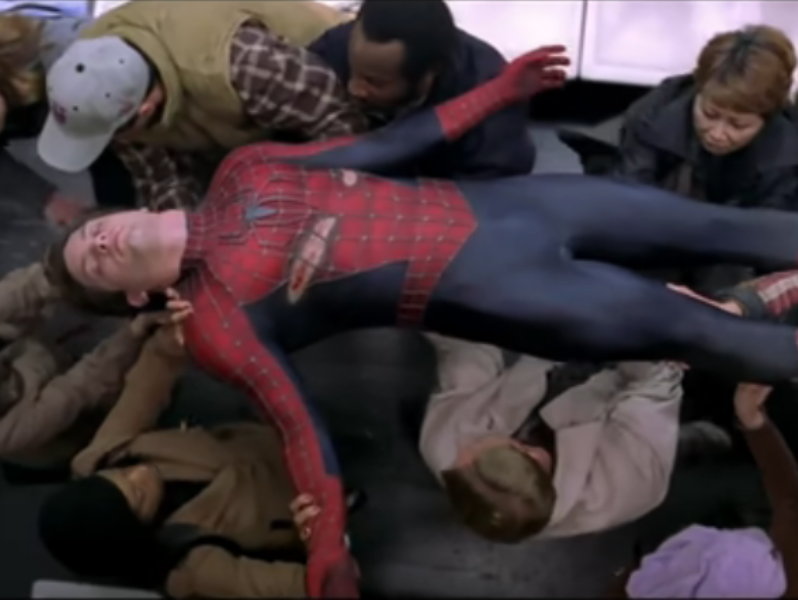
The picture shows a man lying horizontally in the red-and-blue Spider-Man suit with his head thrown back: the mask is removed, the face is calm, the eyes are closed. He is held in the arms of subway passengers, who lean over him from all sides: in jackets and a cap, with palms carefully extended. Tears are visible on the suit.
The scene is taken from “Spider-Man 2,” released in the US on June 30, 2004. In the plot, the hero stops a runaway train, loses consciousness from the effort, and the passengers he saved carry him in their arms. This touching, almost solemn picture became the basis of the meme.
Where the caption came from
The earliest post with this caption that has been found is dated September 7, 2017: a screenshot of the scene was posted on Reddit at that time. This does not prove that this post was the first; it only indicates when the formula became noticeable.
The first caption was a joke on a separate topic, which does not define the whole template. Soon after, the frame began to be used for a wide variety of occasions. The author of the formula itself has not been reliably established.
How the formula works
The template has two parts. The upper one describes a strange, awkward, or excessively zealous episode; the lower one solemnly states that whoever did it deserves honor. The gap between the scale of the act and the level of praise creates the irony.
The frame suits because it already contains everything needed: the hero lies unconscious, a crowd surrounds him, and the whole scene looks like a ceremonial carry-out. The caption transfers this solemnity to any minor act. The word “careful” sounds like a warning about fragile cargo and adds comic tension.
Examples of captions and how they work
1. Top: “When I took out the trash and also put the kettle on.” Bottom: “Careful, he's a hero.” An everyday act gets a solemn status. The contrast between a trifle and honor works because the viewer sees the procession.
2. Top: “Hit ‘send’ before I had time to think.” Here the surprise is funny: an instant mistake is called a feat, and the disproportion produces laughter.
3. Top: “The cat sat on the keyboard and sent an email to my boss.” The animal becomes a hero, and the caption turns the story into an epic.
4. Top: “Came to the office on time, even though the alarm didn't go off.” The praise sounds almost serious, and that adds irony.
Why the joke holds up
The main spring of the template is the irony of praise. The caption says “careful” as if the hero faces danger, while the picture shows a solemn carry-out. This tone creates comic tension.
The film matters here only as the basis of the frame. It is better to write captions about the situation in the picture, not about people's personal qualities. Then the joke stays light and understandable even to those who don't remember the plot.
For your own caption, it is convenient to choose an act that is insignificant in itself but described with full seriousness: that way the gap between the deed and the honor becomes maximal. The top line should be short, so the reader has time to move on to the bottom, where the irony takes effect.