Reflection on the facade
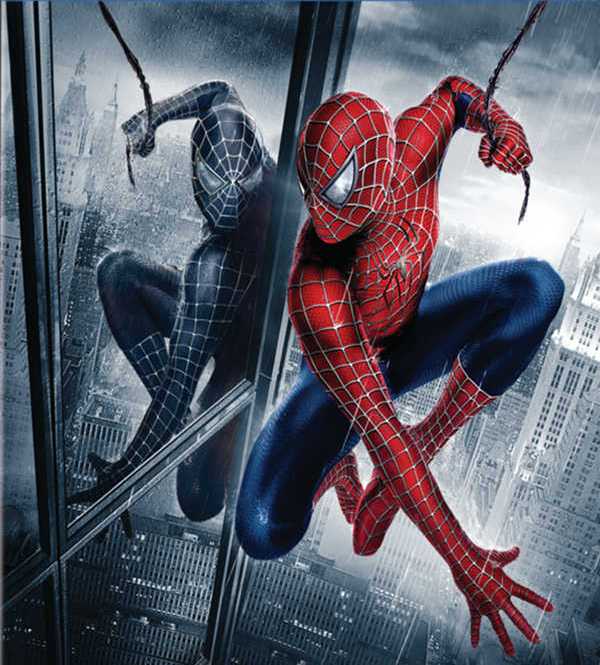
Spider-Man in the red-and-blue suit occupies the right side of the composition. He hangs at height against a glass wall, one arm spread wide; around him are skyscrapers, a gray sky, and rain. On the left, the glass shows a figure in a black suit with the same web pattern. A vertical frame divides the two Spiders and at the same time joins them as a person and his reflection.
There are no pasted-in celebrity faces or captions assigning new roles to the sides. The promotional picture already contains a ready-made structure for comparison: an identical silhouette, a similar pose, and a sharp contrast of colors. The reflection looks close and foreign at once. It resembles the hero enough that the viewer looks for differences rather than taking the images as a random pair.
What links the two suits in the film
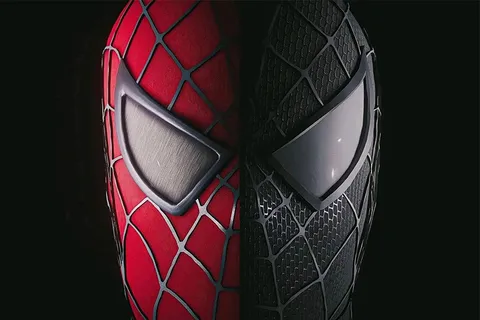
The source is Sam Raimi's film Spider-Man 3, released in 2007. Peter Parker is played by Tobey Maguire. An alien symbiote turns Peter's suit black and amplifies the dark sides of his behavior. Later the symbiote passes to Eddie Brock, who becomes Venom. So the black figure in this promotional composition stands for another version of Peter himself, not for Venom as a separate character.
The Russian wave of remakes with this image is noticeable in March 2018. Among the early described variants is a post by “Orlyonok,” in which the red Spider was given Feduk's face and the black one Drake's. The comparison relied on the musicians' outward resemblance. The composition was then applied to other pairs; the specific first inventor of the general device has not been established.
Resemblance with an assigned verdict
The facade plays the role of a boundary between two versions. In many remakes the bright side receives the status of the beloved original, and the dark side that of a dubious double. This verdict comes from the joke's author assigning roles: a similar haircut or pose by itself says nothing about the qualities of two people. The film only provides a convenient visual language for the contrast.
The comparison can rest on one noticeable trait. Two objects of identical shape look like relatives even if they serve different purposes; one person before and after a small decision also fits this pair. The repeated silhouette makes the difference clear without a long explanation. The joke lies in the scale of the dramatic conflict: an ordinary difference is presented as if the hero were meeting a dangerous side of himself.
The reflection adds a meaning that a simple collage of two photos lacks. The bad version seems already to be inside the good one. That is why the template easily turns from a comparison of celebrities into a conversation about temptation, habit, or a change of mood. The names of the sides allow the plot to change while the tense composition stays the same.
Three invented pairs
The first example is two mugs: on the right “my tea,” on the left “my tea after a spoon of instant coffee.” One object gets an almost identical double, but a small addition creates new contents. Superhero seriousness turns a kitchen experiment into the appearance of a dark version of a familiar drink.
The second plot compares buying a book with a trip to a bookstore. The red side gets “went in for one volume,” the black side “came out with a sequel, a prequel, and an atlas.” The reflection depicts an expanded desire: the buyer recognizes himself, but only after the symbiote of collecting has taken over the budget.
The third pair is “a project I show to friends” and “a folder with twenty drafts of this project.” The resemblance remains, and the dramatic double becomes a hidden working history. Here the black side is not worse in quality: it simply reveals what stayed behind the attractive outer version.