The 1967 animated series
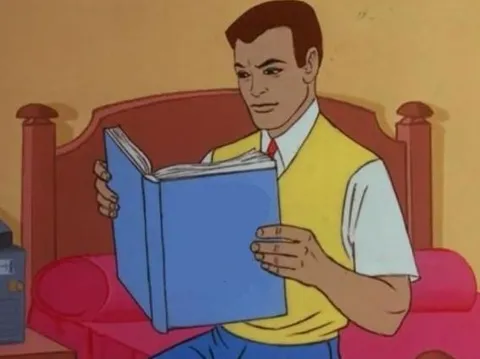
The Spider-Man animated series premiered in 1967 and aired on the American network ABC until 1970. The animation was done by the studio Grantray-Lawrence, and the plots were based on Marvel comics about Peter Parker, a high-schooler who gains spider powers and juggles fighting crime with ordinary life. The series stood out for its simple, expressive art style, bright colors, and naive drama typical of television animation of the era. It's exactly this pronouncedly old-fashioned aesthetic that made its frames recognizable decades later, once the internet started turning fragments of old cartoons into memes.
Where the frames came from
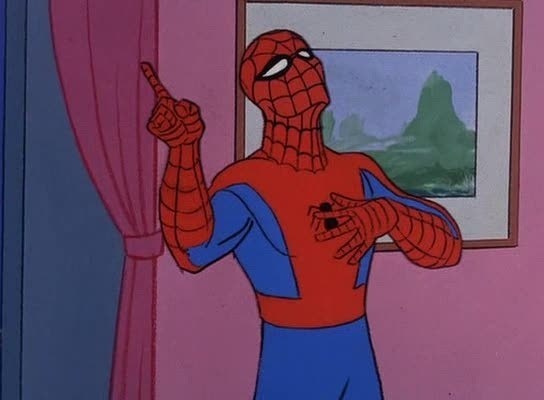
The frames that later became a meme are usually associated with episodes of the series where the hero stands in a room with pink walls, a curtain, and a painting on the wall, raises a finger in his signature gesture, and delivers a line notable for its theatricality. However, the exact episode each frame is taken from is not confirmed in the materials available to me, so I won't name a specific episode. The meme's spread is dated to around 2009, when images like this began appearing on forums and in themed communities, where users looked for short reactions to use in arguments and discussions.
The format with absurd captions
The format's main feature is the mismatch between the seriousness of the image and the absurdity of the text. The character looks at the viewer like someone making an important discovery, while the captions deliver completely ridiculous statements, pieces of advice, or disjointed musings. This device allows ironic, almost philosophical conclusions to be drawn from everyday situations. The captions could be very short, but they always sounded confident, as if the character were revealing a truth no one else had noticed. It's exactly this confidence that makes the joke funny, since the message's actual logic is completely absent.
Russian-language adaptation
In the Russian-language internet the name "Spider-Meme" stuck to this set of frames with the spider hero and became a convenient label for jokes in the format of "serious character — ridiculous caption." Images like these are often used in comments, in replies to obvious questions, and in situations where someone makes an overly confident statement. The format works well in messengers and on social networks, because a short caption reads instantly, and Spider-Man's expressive pose sets the comic tone by itself. Over time the template came to be filled with original captions, and almost every new version became its own small joke.
Why the frames are funny
Why are these retro frames still funny? First, the animation itself looks naive: flat colors, simplified backgrounds, and slightly stiff movement create a sense of old television aesthetics that's instantly recognizable. Second, the hero's pose is theatrical, which amplifies the effect: the gesture looks solemn even though the occasion is almost always trivial. Third, the character has a familiar image, so viewers don't need an explanation of who's shown. Finally, the combination of a deliberately important-looking image and absurd text produces exactly the kind of mismatched expectation that most internet humor runs on.
The meme's legacy
Spider-Meme became one of the early examples of 1960s animation getting a second life online. It shows that old cartoons can be just as much a source of templates as modern shows, and that a simple gesture in a frame can set the tone for dozens of different jokes. Even today, as new versions keep appearing, the hero's recognizable pose remains a quick way to say that something sounds too confident for what it's actually saying.